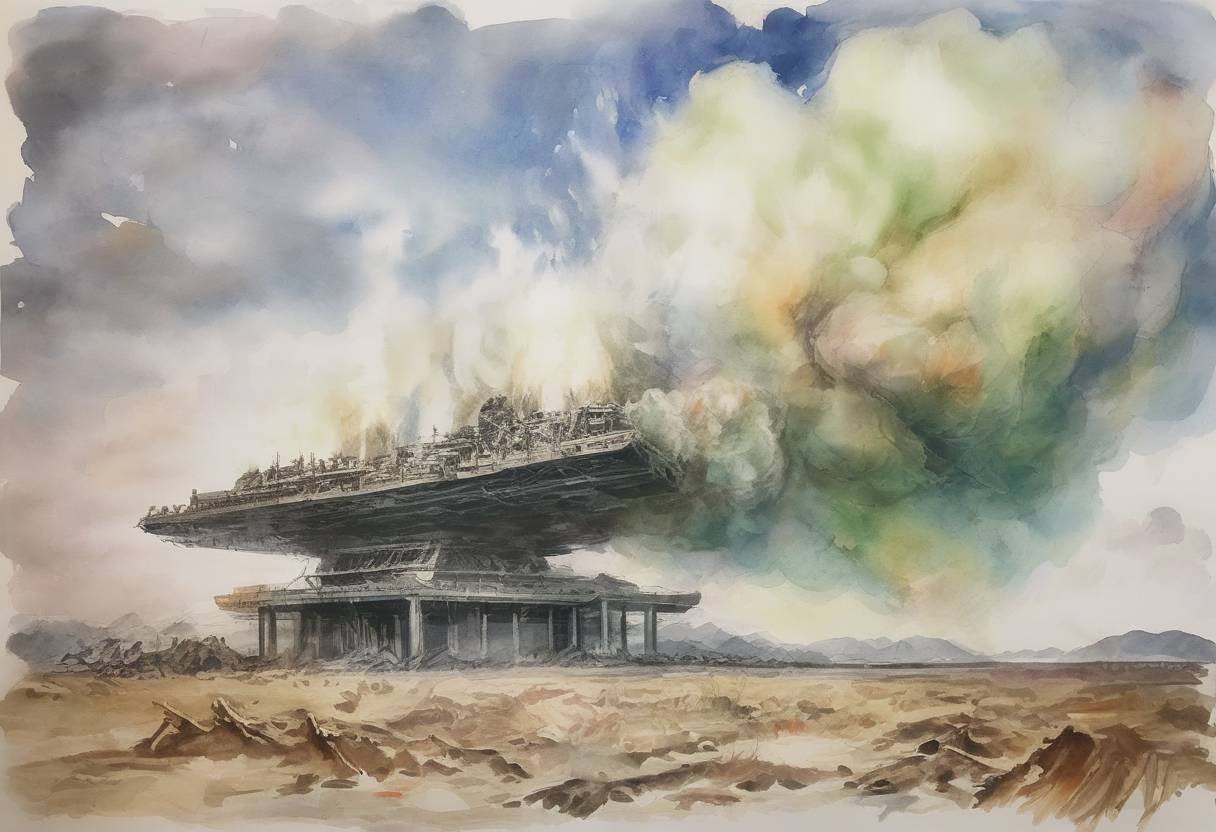
North Korea’s Fourth Nuclear Test: January 5, 2016
On January 5, 2016, North Korea announced that it had successfully conducted its fourth nuclear test, claiming it was a hydrogen bomb. This event marked a significant escalation in North Korea’s nuclear capabilities and drew widespread international condemnation.
Context Leading Up to the Test
North Korea’s nuclear ambitions date back to the mid-20th century, with its first nuclear test occurring in 2006. By 2016, North Korea had already conducted three nuclear tests, each demonstrating incremental advancements in their nuclear technology. The regime, led by Kim Jong-un, sought to develop nuclear weapons as a means of deterring perceived threats from the United States and its allies, and to bolster its international standing.
The Test and Its Claims
- Date and Location: The test was conducted on January 5, 2016, at the Punggye-ri Nuclear Test Site, located in the northeastern part of North Korea.
- Claim: North Korea claimed that the test involved a hydrogen bomb, a more advanced and powerful type of nuclear weapon compared to the atomic bombs used in previous tests.
- Seismic Activity: The test was detected by seismic monitoring stations around the world, which recorded a magnitude 5.1 earthquake, consistent with a nuclear detonation.
International Reaction
The announcement of the test was met with immediate international condemnation:
- United Nations: The UN Security Council held an emergency meeting and condemned the test, considering it a violation of previous UN resolutions that prohibited North Korea from conducting nuclear tests.
- United States: The U.S. government, along with South Korea and Japan, expressed strong disapproval and called for increased sanctions and diplomatic pressure on North Korea.
- Skepticism: Many experts and governments expressed skepticism about North Korea’s claim that the test was a hydrogen bomb, citing the relatively low yield of the explosion compared to typical hydrogen bomb tests.
Aftermath and Consequences
- Increased Tensions: The test heightened tensions on the Korean Peninsula and contributed to a cycle of provocations and military posturing between North Korea and its adversaries.
- Sanctions: In response, the UN Security Council adopted Resolution 2270 in March 2016, imposing some of the toughest sanctions on North Korea to date, targeting its trade and financial activities.
- Nuclear Program Advancements: Despite international efforts to curb its nuclear program, North Korea continued to develop its nuclear and missile capabilities, conducting additional tests in subsequent years.
Broader Historical Significance
The 2016 nuclear test underscored the challenges of denuclearization and the complexities of diplomatic engagement with North Korea. It highlighted the limitations of sanctions and international pressure in altering North Korea’s strategic calculus. The event also contributed to ongoing debates about regional security dynamics in East Asia and the role of major powers in addressing nuclear proliferation.
In summary, North Korea’s fourth nuclear test on January 5, 2016, was a pivotal moment in its nuclear development, with significant implications for regional and global security.