The Adoption of the 15th Amendment: March 30, 1870
1870 · Washington, D.C., United States
The 15th Amendment to the United States Constitution was formally adopted, granting African American men the right to vote.
July 28, 1868
The 14th Amendment to the United States Constitution was certified, granting citizenship to all persons born or naturalized in the United States, including former slaves.
Washington, D.C., United States | United States Government
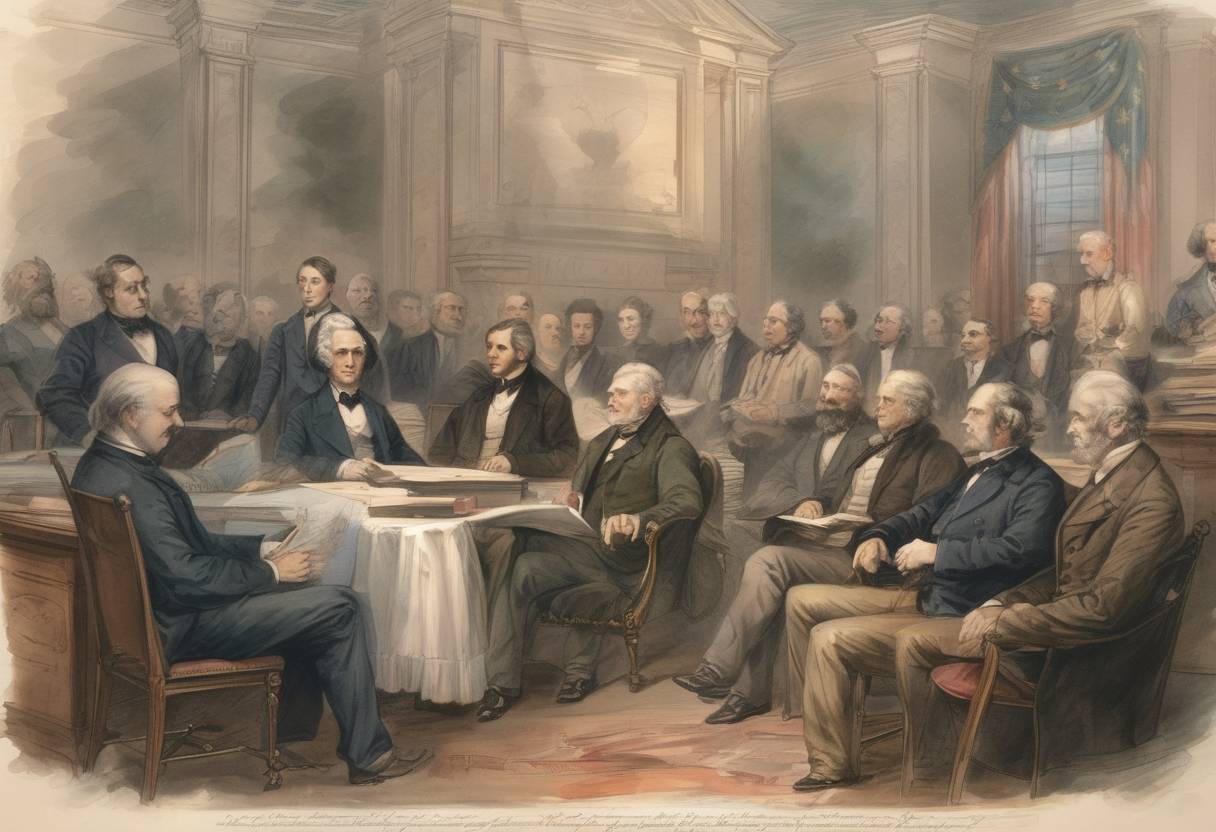
On July 28, 1868, the 14th Amendment to the United States Constitution was officially certified, marking a pivotal moment in American history. This amendment was a cornerstone of the Reconstruction Era, fundamentally reshaping the legal landscape of the United States by addressing citizenship rights and equal protection under the law.
The 14th Amendment was introduced in the aftermath of the Civil War, a period marked by intense political and social upheaval. The amendment was part of a series of measures aimed at integrating formerly enslaved individuals into American society and ensuring their rights as citizens. It was proposed by Congress on June 13, 1866, and ratified by the necessary three-fourths of the states by July 9, 1868.
The 14th Amendment comprises several sections, with the most significant being:
Citizenship Clause: This clause grants citizenship to “all persons born or naturalized in the United States,” which included former slaves. It overturned the Dred Scott v. Sandford (1857) decision, which had declared that African Americans could not be citizens.
Due Process Clause: It prohibits state and local governments from depriving persons of life, liberty, or property without a fair procedure.
Equal Protection Clause: This clause requires each state to provide equal protection under the law to all people within its jurisdiction, laying the groundwork for future civil rights advancements.
The certification of the 14th Amendment was a monumental step in the struggle for civil rights in the United States. It provided a constitutional foundation for numerous landmark Supreme Court decisions, including Brown v. Board of Education (1954), which declared racial segregation in public schools unconstitutional.
The amendment also played a crucial role in shaping the legal arguments for various civil rights movements, influencing legislation and judicial interpretations that sought to dismantle systemic discrimination and promote equality.
Despite its promise, the implementation of the 14th Amendment faced significant resistance, particularly in the Southern states, where Jim Crow laws and other discriminatory practices persisted. It would take nearly a century and the efforts of the Civil Rights Movement to fully realize the amendment’s potential.
In summary, the certification of the 14th Amendment on July 28, 1868, was a transformative event in American history, establishing principles of citizenship and equality that continue to influence the nation’s legal and social fabric.
Source: en.wikipedia.org