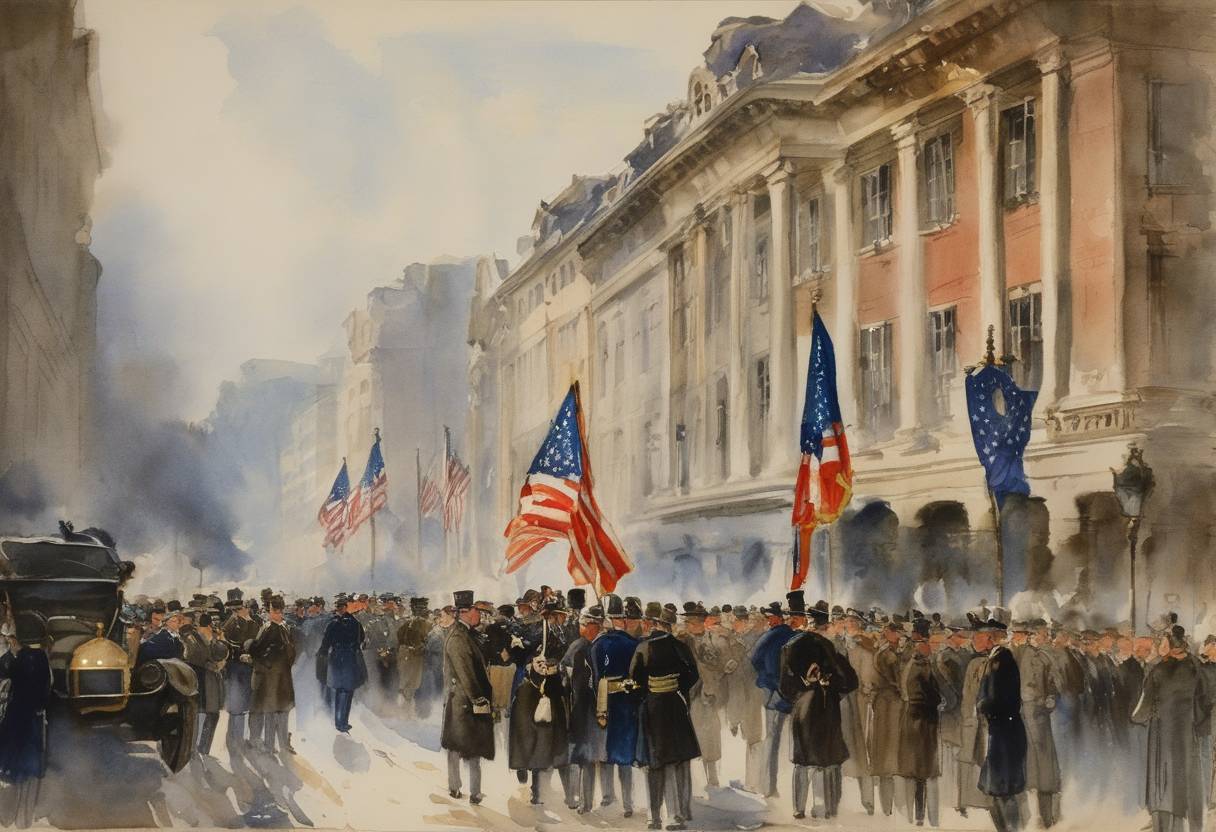
The U.S.-Germany Treaty on Rhineland Evacuation: December 8, 1923
The treaty signed on December 8, 1923, between the United States and Germany focused on addressing the post-World War I occupation dynamics in the Rhineland, a region heavily affected by the war and subsequent peace settlements.
Context and Background
At the end of World War I, the Treaty of Versailles had significant implications for Germany, including the occupation of the Rhineland by Allied forces to ensure compliance with the treaty terms. The Rhineland was considered a strategic buffer zone between Germany and France, and its occupation symbolized Allied commitment to maintaining peace in the region.
Over time, the continued presence of foreign troops became a sensitive issue, particularly for Germany, as it struggled to reestablish its sovereignty and economy under the onerous reparations and restrictions imposed by the Treaty of Versailles. The United States, having played a key role in World War I but without a direct interest in European territorial affairs, sought to redefine its international relations within this context.
Key Elements of the Treaty
Withdrawal of American Troops: The treaty stipulated the evacuation of American forces from the Rhineland, highlighting the U.S. intent to withdraw from direct military involvement in European territorial issues post-war.
Reaffirmation of Peace aims: It underscored the U.S. commitment to supporting peaceful resolutions and stable governance in post-war Europe without a prolonged occupation.
Diplomatic Relations: The accord paved the way for smoother diplomatic relations between Germany and the United States, helping to stabilize interactions amidst the complex post-war settlement landscape.
Broader Significance
This treaty played a part in restructuring post-war diplomacy by indicating a shift towards normalization in international relations. It aligned with broader geopolitical moves where nations sought to heal the divisions created by the war and address contentious issues like military occupations.
In a larger context, the agreement also exemplified the United States’ evolving role on the world stage, increasingly focused on diplomatic engagement rather than military alliances, setting precedents that would influence future international policy-making.
The treaty is an instance of significant post-war diplomacy illustrating the complexities of international relations in the interwar period, with implications for both U.S. foreign policy and European political stability.