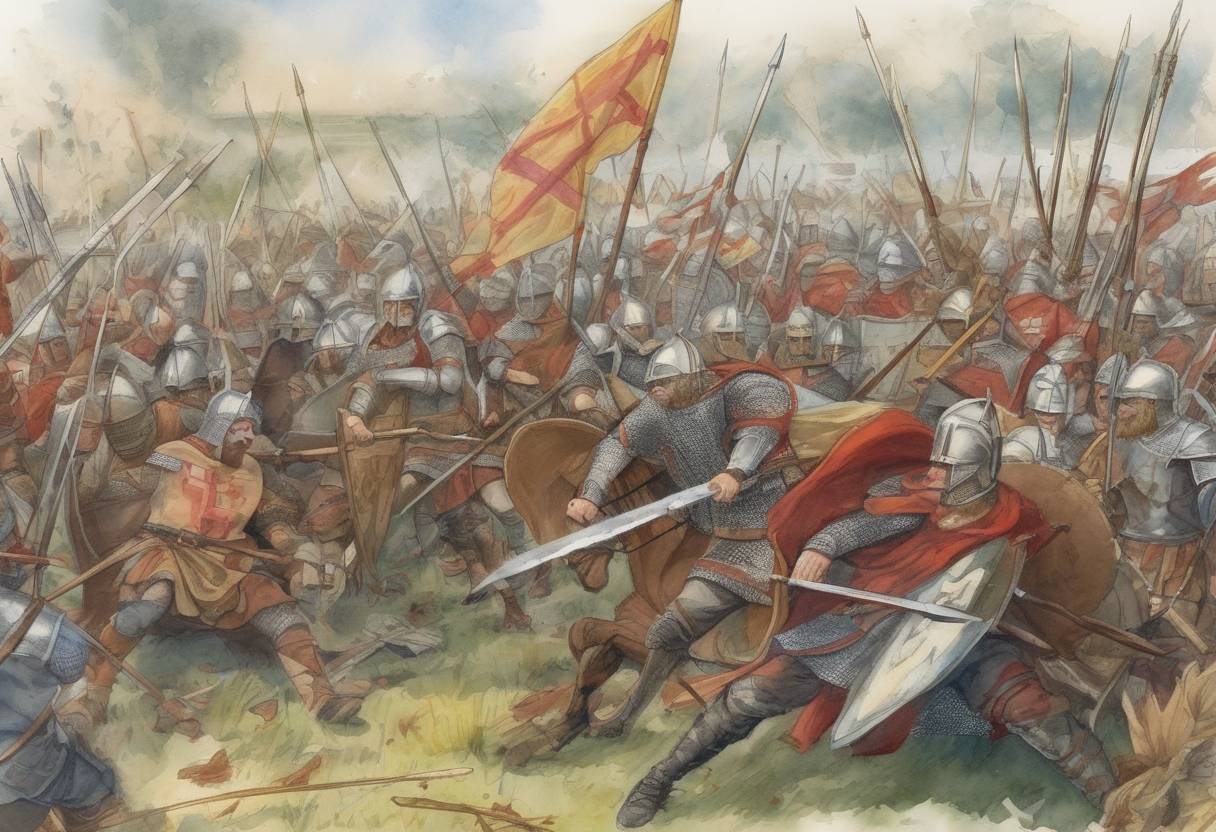
The Battle of Reading - January 4, 871
The Battle of Reading, fought on January 4, 871, was a significant engagement during the Viking invasions of England, marking a crucial moment in the struggle between the West Saxons and the invading Viking forces. This battle was part of the larger series of conflicts known as the Viking invasions, which had profound impacts on the political landscape of England during the late 9th century.
Context and Background
Viking Invasions: By the late 9th century, Viking raids had intensified across England, with Norse warriors seeking to expand their territories and plunder wealth. The Great Heathen Army, a coalition of Norse warriors, had been particularly active in England since 865.
West Saxon Resistance: The Kingdom of Wessex, under the leadership of King Æthelred and his younger brother Alfred (later known as Alfred the Great), was one of the primary resistors against the Viking incursions. The West Saxons had been engaged in a series of battles to defend their territory.
The Battle
Location: The battle took place at Reading, a strategic location due to its proximity to the River Thames and its position as a gateway to the heart of Wessex.
Forces Involved: The West Saxon army was led by King Æthelred and his brother Alfred. The Viking forces were commanded by several leaders, including the renowned chieftains Halfdan and Bagsecg.
Course of the Battle: The West Saxons attempted to dislodge the Vikings from their fortified position at Reading. Despite their efforts, the Saxons were unable to breach the Viking defenses. The battle resulted in a decisive victory for the Vikings, who managed to repel the Saxon assault.
Aftermath and Consequences
Strategic Impact: The defeat at Reading was a setback for the West Saxons, as it allowed the Vikings to maintain their stronghold in the region. This battle was part of a series of engagements that year, which saw fluctuating fortunes for both sides.
Alfred’s Rise: Although the battle was a loss for the West Saxons, it was part of the formative experiences for Alfred, who would later become one of England’s most celebrated monarchs. His leadership and reforms would eventually lead to significant victories against the Vikings.
Continued Conflict: The Battle of Reading was followed by several other battles in 871, including the Battle of Ashdown, where the West Saxons achieved a notable victory. The ongoing conflict underscored the persistent threat posed by the Vikings and the resilience of the Saxon resistance.
Historical Significance
The Battle of Reading is emblematic of the intense and protracted struggle between the Anglo-Saxon kingdoms and the Viking invaders. It highlights the challenges faced by the Saxons in defending their lands and the strategic acumen required to eventually turn the tide against the Norsemen. The events of 871, including the Battle of Reading, were pivotal in shaping the future of England and the legacy of Alfred the Great.