Millard Fillmore Sworn in as the 13th President of the United States
1850 · Washington, D.C., United States
Millard Fillmore is sworn in as the 13th President of the United States following the death of President Zachary Taylor.
March 4, 1849
On the date that Zachary Taylor was supposed to be inaugurated as the 12th President of the United States, he reportedly postponed the ceremony to March 5 due to it being a Sunday, leading to the alternate claim of David Rice Atchison being President for a day.
Washington, D.C., United States | United States Government
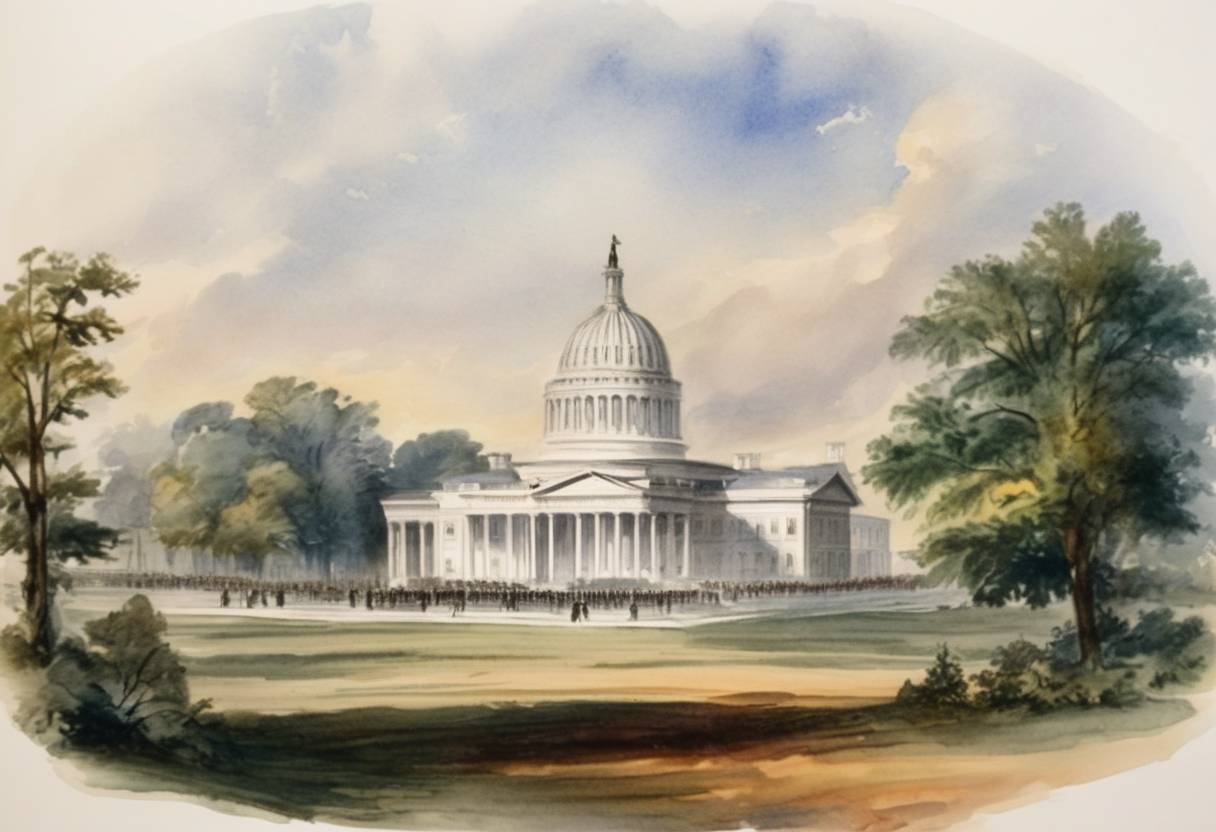
On March 4, 1849, Zachary Taylor, the President-elect of the United States, was scheduled to be inaugurated as the 12th President. However, due to that date falling on a Sunday, Taylor, a devout Episcopalian, chose to postpone his inauguration ceremony to the following day, March 5, 1849. This decision stemmed from both personal religious beliefs and a broader respect for observing the Sabbath.
In response to Taylor’s postponement, a unique situation emerged in American history with the speculation that Sen. David Rice Atchison might have briefly assumed the presidency for a day. The reasoning behind this claim rests on the fact that both James K. Polk’s term expired at noon on March 4 and Taylor’s formal assumption of the presidency via oath of office occurred later, technically leaving a potential power vacuum for that day.
Atchison, a Senator from Missouri, was President pro tempore of the Senate. According to the Presidential Succession Act of 1792, following the Vice President, this position was next in line for the presidency. Consequently, during this unusual political interregnum, Atchison was humorously dubbed “President for a Day.” However, this claim has no legal standing, as Atchison himself never took the presidential oath of office, nor was there any formal acknowledgment of his supposed presidency.
While the notion of Atchison serving as acting president for a day is a popular anecdote in U.S. history, it remains more a curiosity than a constitutional reality. During this period, no constitutional guidance addressed such a gap in presidential authority. The eventual passage of the 20th Amendment rectified this by setting January 20th as the inauguration date and establishing clearer succession protocols.
This episode underscores both a historical peculiarity in U.S. presidential transitions and the evolving constitutional understandings of presidential succession. Ultimately, with Taylor’s inauguration on March 5, the United States resolved the immediate uncertainty, with Taylor officially beginning his presidential term.