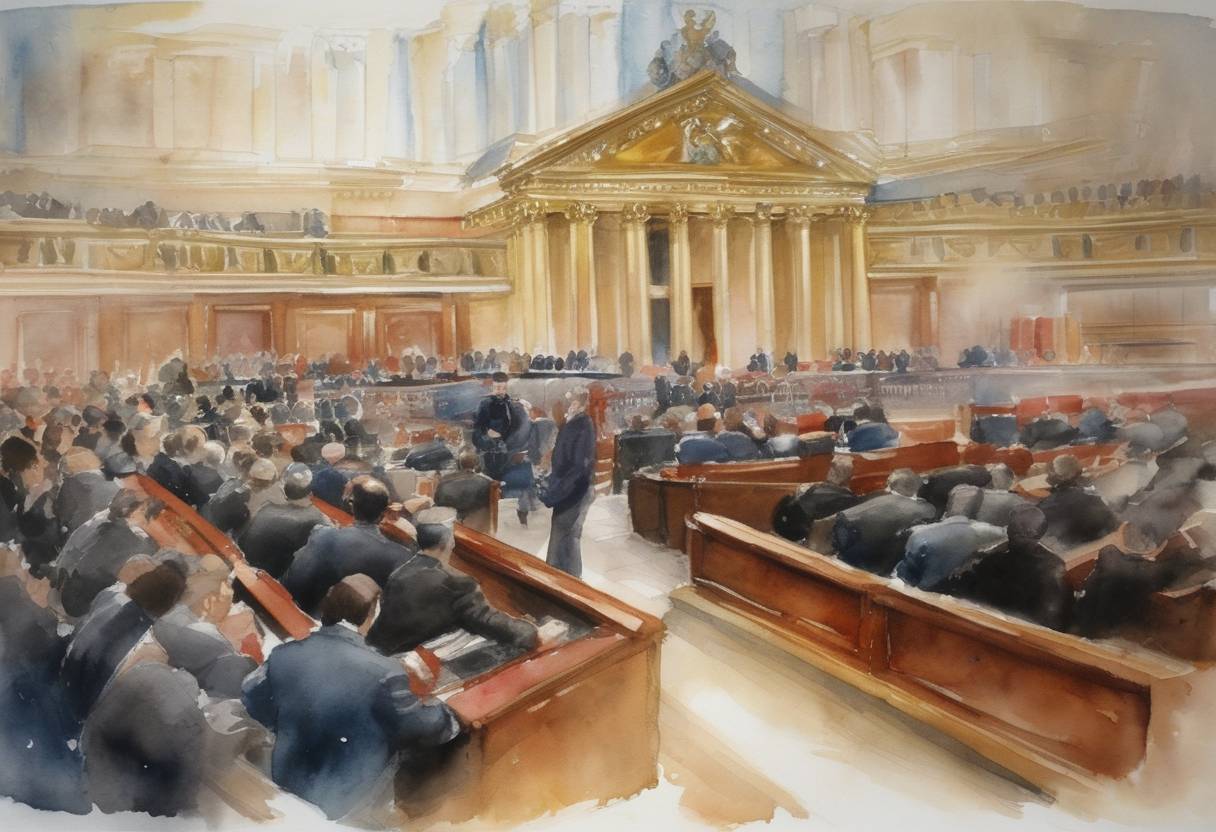
Supreme Court of Russia Upholds the Dissolution of the National Bolshevik Party
On June 10, 2005, the Supreme Court of Russia upheld a decision to dissolve the National Bolshevik Party (NBP), affirming a ruling that categorized the organization as an extremist entity. This judicial action was a part of the Russian government’s broader crackdown on groups deemed to be operating outside the bounds of lawful political activity.
Background of the National Bolshevik Party
Founded in the early 1990s, the National Bolshevik Party was established by Eduard Limonov. The party’s ideology was a blend of radical nationalism and Bolshevik-style socialism, characterized by its controversial and provocative rhetoric. The NBP was known for engaging in theatrical political demonstrations and sometimes violent protests aimed at criticizing the government and promoting its radical agenda.
Legal Proceedings and Government Stance
The legal proceedings against the NBP began with the Russian Ministry of Justice moving to formally ban the party, alleging that it incited public disorder and posed a threat to the constitutional order of Russia. The ministry, along with other state prosecutors, argued that the party’s activities and rhetoric violated Russian laws aimed at countering extremism.
In April 2005, a lower court had initially ruled against the NBP, and the Supreme Court’s decision on June 10th was to uphold this ruling. The case was emblematic of the Russian state’s increasing efforts to limit political extremism and maintain tighter control over political discourse. The decision highlighted the government’s position that the NBP’s activities were not compatible with the stability and security of the state.
Significance and Aftermath
The decision to uphold the party’s dissolution was significant because it demonstrated the Russian judiciary’s alignment with government policies in curbing political movements perceived as radical or subversive. This legal action was part of a sequence of measures aimed at reinforcing state authority over the political landscape, often criticized by international observers and human rights organizations as restrictive to political freedoms and dissent.
The aftermath of the ban saw the dispersal of NBP members, with some attempting to continue their activism through informal means or by joining other political organizations. The dissolution of the National Bolshevik Party marked a notable moment in the Russian Federation’s post-Soviet political history, exemplifying the tensions between state security interests and the freedoms of political expression and association.