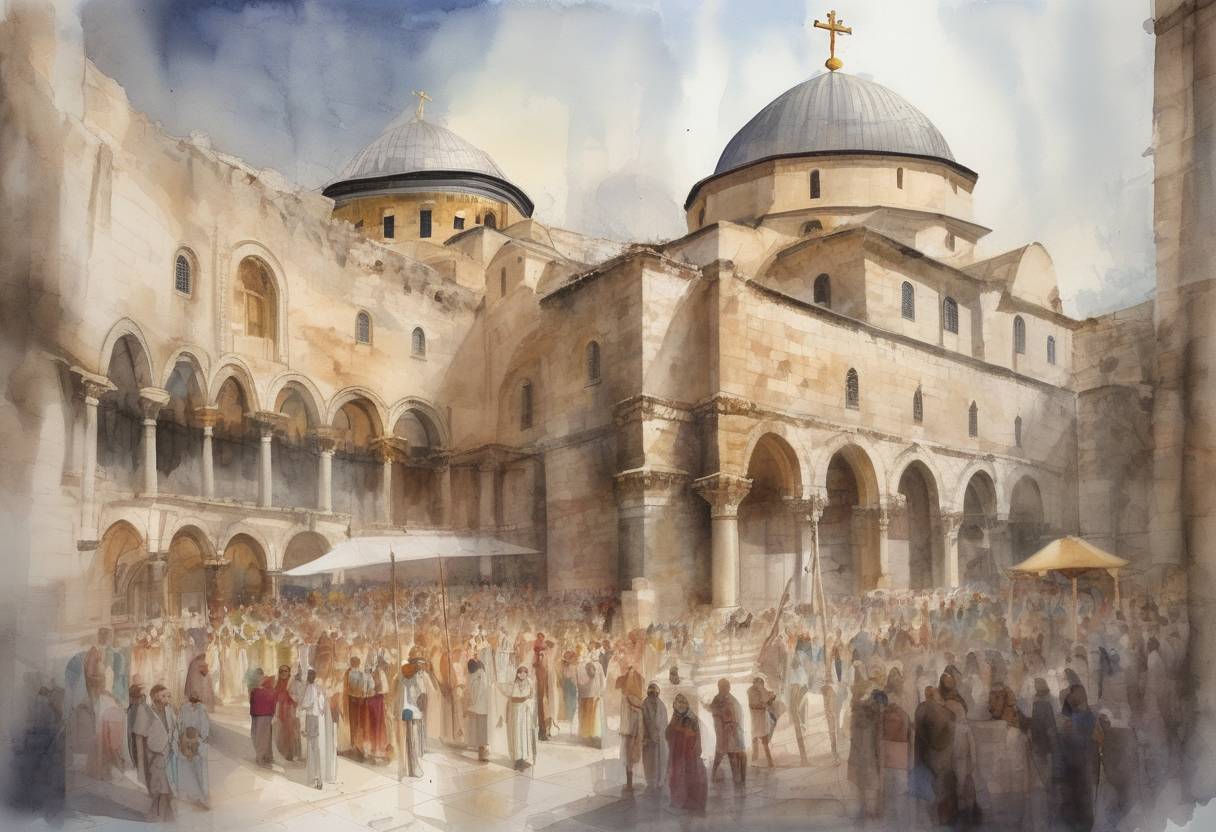
The Construction of the Church of the Holy Sepulchre
Historical Context
On May 9, 328, Emperor Constantine the Great ordered the construction of the Church of the Holy Sepulchre in Jerusalem. This event marked a significant moment in Christian history, as the church was intended to commemorate the site of Jesus Christ’s crucifixion, burial, and resurrection, making it one of the most sacred locations in Christianity.
Background
Emperor Constantine the Great: Constantine was the first Roman emperor to convert to Christianity. His reign marked a turning point for the Christian faith, transitioning it from a persecuted religion to one that was officially endorsed by the Roman Empire.
Helena’s Pilgrimage: Constantine’s mother, Helena, was a devout Christian who embarked on a pilgrimage to the Holy Land around 326-328 AD. During her journey, she is credited with discovering the True Cross, the cross upon which Jesus was crucified. Her findings and influence played a crucial role in Constantine’s decision to construct the church.
Construction of the Church
Location: The Church of the Holy Sepulchre was built on the site believed to be Golgotha, the place of Jesus’ crucifixion, and the nearby tomb where he was buried and resurrected. This site was identified by Helena during her pilgrimage.
Architectural Significance: The church’s construction was a monumental architectural endeavor of its time. It was designed to encompass both the site of the crucifixion and the tomb, creating a large complex that included a rotunda, known as the Anastasis, over the tomb, and a basilica, called the Martyrium.
Dedication: The church was completed and consecrated in 335 AD, during a grand ceremony attended by bishops from across the Christian world. This dedication further solidified its importance as a central place of pilgrimage for Christians.
Broader Historical Significance
Christian Pilgrimage: The Church of the Holy Sepulchre quickly became a major pilgrimage destination, drawing Christians from across the Roman Empire and beyond. It played a pivotal role in the development of Christian liturgy and the tradition of pilgrimage.
Cultural and Religious Impact: The construction of the church symbolized the growing acceptance and establishment of Christianity within the Roman Empire. It also marked a shift in the religious landscape of Jerusalem, which had been predominantly Jewish and pagan prior to Constantine’s reign.
Legacy: Despite being damaged and rebuilt several times over the centuries due to invasions and natural disasters, the Church of the Holy Sepulchre remains a vital religious site. It continues to be a focal point for Christian worship and a symbol of the enduring legacy of Constantine’s conversion to Christianity.
In summary, the order by Emperor Constantine to construct the Church of the Holy Sepulchre was a defining moment in Christian history, reflecting the newfound prominence of Christianity in the Roman Empire and establishing a lasting religious and cultural landmark.