The Death of King Edward the Elder and the Succession of Æthelstan
924 · Farndon, England
King Edward the Elder of England died, leading to the succession of his son Æthelstan, who would become the first King of a unified England.
April 18, 0796
The death of Æthelred I, King of Northumbria, occurred on this date. Æthelred I was a king of Northumbria, a kingdom in what is now northern England and southeastern Scotland. His reign was marked by internal strife and external threats, particularly from the Vikings.
Northumbria, England | Northumbrian monarchy
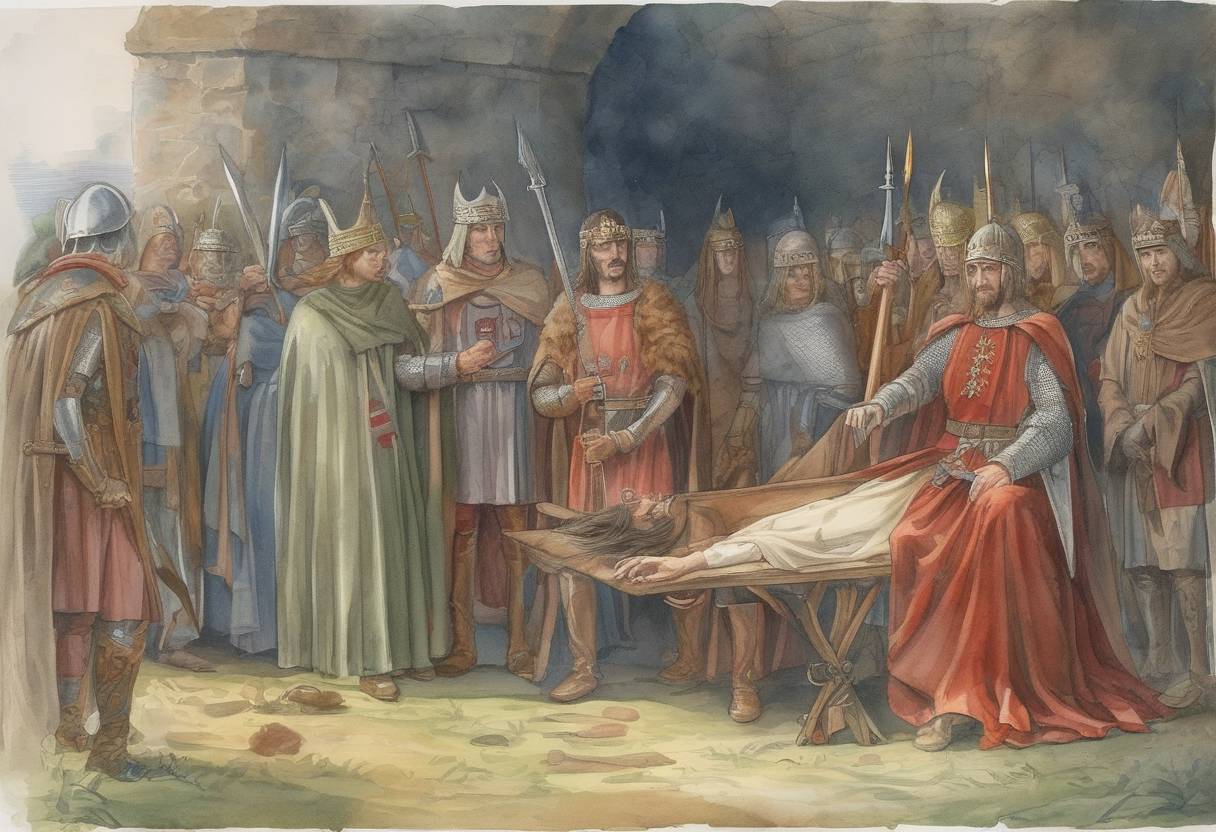
On April 18, 796, Æthelred I, King of Northumbria, met his demise, marking a turbulent period in the history of the Northumbrian kingdom. Æthelred’s reign, which began in 774, was characterized by significant internal discord and external threats, particularly from Viking incursions.
Northumbria, during the 8th century, was one of the prominent Anglo-Saxon kingdoms in what is now northern England and southeastern Scotland. The region was frequently embroiled in dynastic struggles and power shifts, which often led to instability.
Æthelred I ascended to the throne in 774, following the deposition of Alhred. His rule was initially marked by efforts to consolidate power and manage the internal factions that plagued the kingdom. However, his reign was continually challenged by rival claimants and noble factions, reflecting the volatile nature of Northumbrian politics.
Æthelred’s rule was notably impacted by the increasing threat of Viking raids. The late 8th century saw the beginning of Viking incursions into the British Isles, with monasteries and coastal settlements being frequent targets due to their wealth and relative lack of defenses. These raids posed a significant threat to Æthelred’s kingdom, demanding military responses and strategic defenses.
Internally, Æthelred faced opposition from various noble factions. His reign was interrupted in 778 when he was deposed, only to be restored to the throne in 790. This period of exile and restoration highlights the unstable political environment of Northumbria, where kingship was often contested and short-lived.
Æthelred I’s death on April 18, 796, was reportedly the result of assassination, a common fate for Northumbrian kings during this era. His assassination underscores the intense political rivalries and the precarious nature of kingship in Northumbria.
Following his death, the kingdom continued to experience instability. Æthelred was succeeded by Osbald, who reigned for only 27 days before being deposed. This rapid turnover of rulers further exemplifies the ongoing internal strife within Northumbria.
The reign and death of Æthelred I highlight the challenges faced by early medieval kings in maintaining control over their territories amidst both internal and external pressures. The Viking threat would continue to grow, eventually leading to significant changes in the political landscape of the British Isles.
Æthelred’s tumultuous reign is a reflection of the broader patterns of instability and conflict that characterized the Anglo-Saxon period, setting the stage for the eventual Viking conquests and the unification efforts that followed in subsequent centuries.
Source: en.wikipedia.org