United Nations General Assembly 73rd Session - September 27, 2018
2018 · New York City, United States
The United Nations General Assembly held its 73rd session, where global leaders discussed pressing international issues.
June 15, 2006
The United Nations General Assembly establishes the Human Rights Council, replacing the United Nations Commission on Human Rights, to address human rights violations.
New York City, United States | United Nations
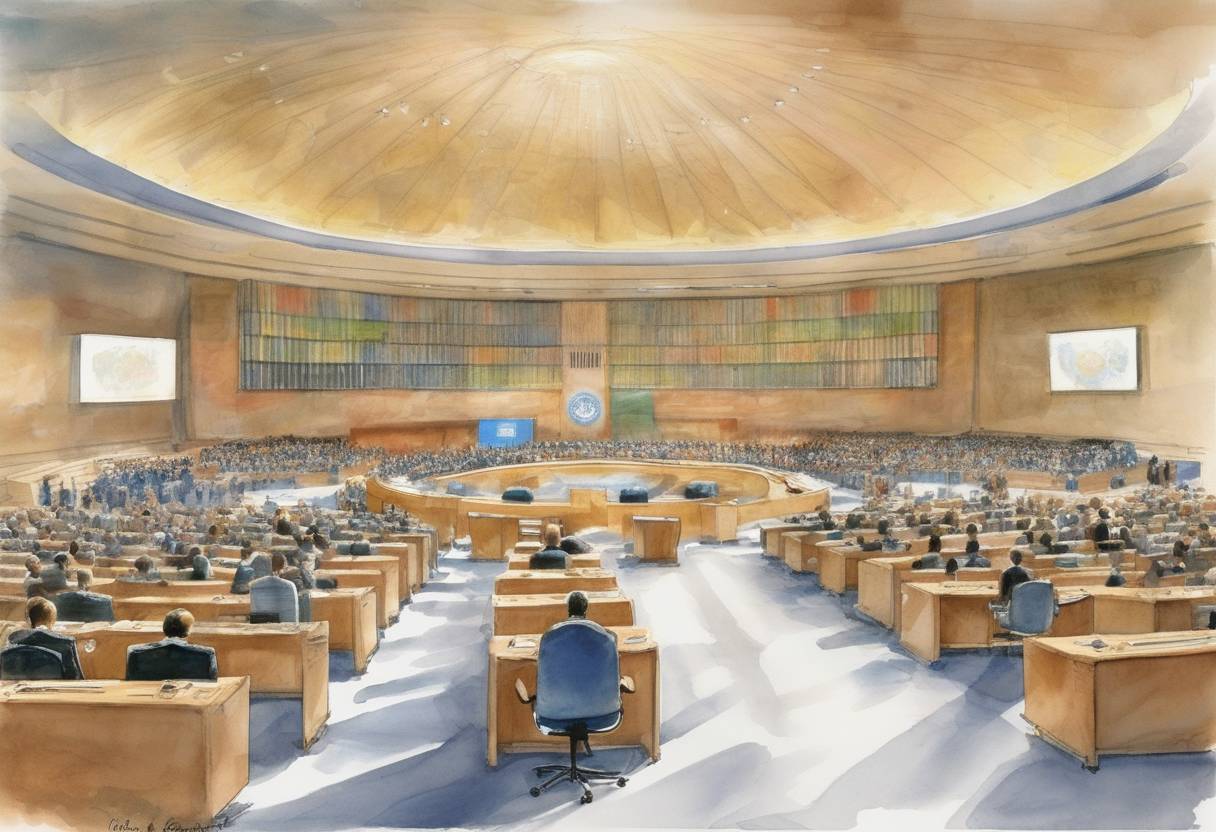
On June 15, 2006, the United Nations General Assembly officially established the Human Rights Council, marking a significant reform in the UN’s approach to addressing human rights issues globally. This new body was created to replace the United Nations Commission on Human Rights, which had faced criticism over its effectiveness and credibility.
The United Nations Commission on Human Rights was established in 1946 and played a pivotal role in the development of international human rights standards. However, over the years, it faced increasing criticism for its perceived politicization and the inclusion of member states with poor human rights records. This led to calls for reform to enhance the UN’s ability to address human rights violations more effectively.
2005 World Summit: During the 2005 World Summit, world leaders recognized the need for a more effective human rights body. This summit laid the groundwork for the creation of the Human Rights Council.
UN General Assembly Resolution 60⁄251: On March 15, 2006, the General Assembly adopted Resolution 60⁄251, which outlined the establishment of the Human Rights Council. The resolution was passed with 170 votes in favor, 4 against, and 3 abstentions.
Membership: The Human Rights Council consists of 47 member states elected by the General Assembly. Membership is based on equitable geographical distribution, with seats allocated to different regions.
Mandate: The Council is tasked with promoting and protecting human rights around the globe. It addresses situations of human rights violations and makes recommendations. It also works to prevent abuses, respond to emergencies, and serve as a forum for dialogue on thematic human rights issues.
Universal Periodic Review (UPR): One of the Council’s key mechanisms is the Universal Periodic Review, which assesses the human rights records of all UN member states on a regular basis.
The establishment of the Human Rights Council represented a commitment by the international community to strengthen the UN’s human rights machinery. By replacing the Commission with a more robust and accountable body, the UN aimed to enhance its ability to address human rights violations and promote global human rights standards.
Since its inception, the Human Rights Council has played a crucial role in highlighting human rights issues and holding countries accountable. It has conducted numerous special sessions on urgent human rights situations and has established various fact-finding missions and commissions of inquiry.
Despite its achievements, the Council has faced its own criticisms, including accusations of politicization and bias. Nonetheless, it remains a central platform for international human rights advocacy and dialogue.
In summary, the establishment of the Human Rights Council on June 15, 2006, marked a pivotal moment in the evolution of the UN’s human rights efforts, aiming to create a more effective and credible body to address human rights challenges worldwide.
Source: www.un.org