Liberia's First Presidential Election - August 26, 1847
1847 · Monrovia, Liberia
Liberia celebrates its first official election after becoming independent earlier that year, voting for its first president, Joseph Jenkins Roberts.
January 16, 2006
Ellen Johnson Sirleaf was sworn in as President of Liberia, becoming Africa's first elected female head of state.
Monrovia, Liberia | Liberian government
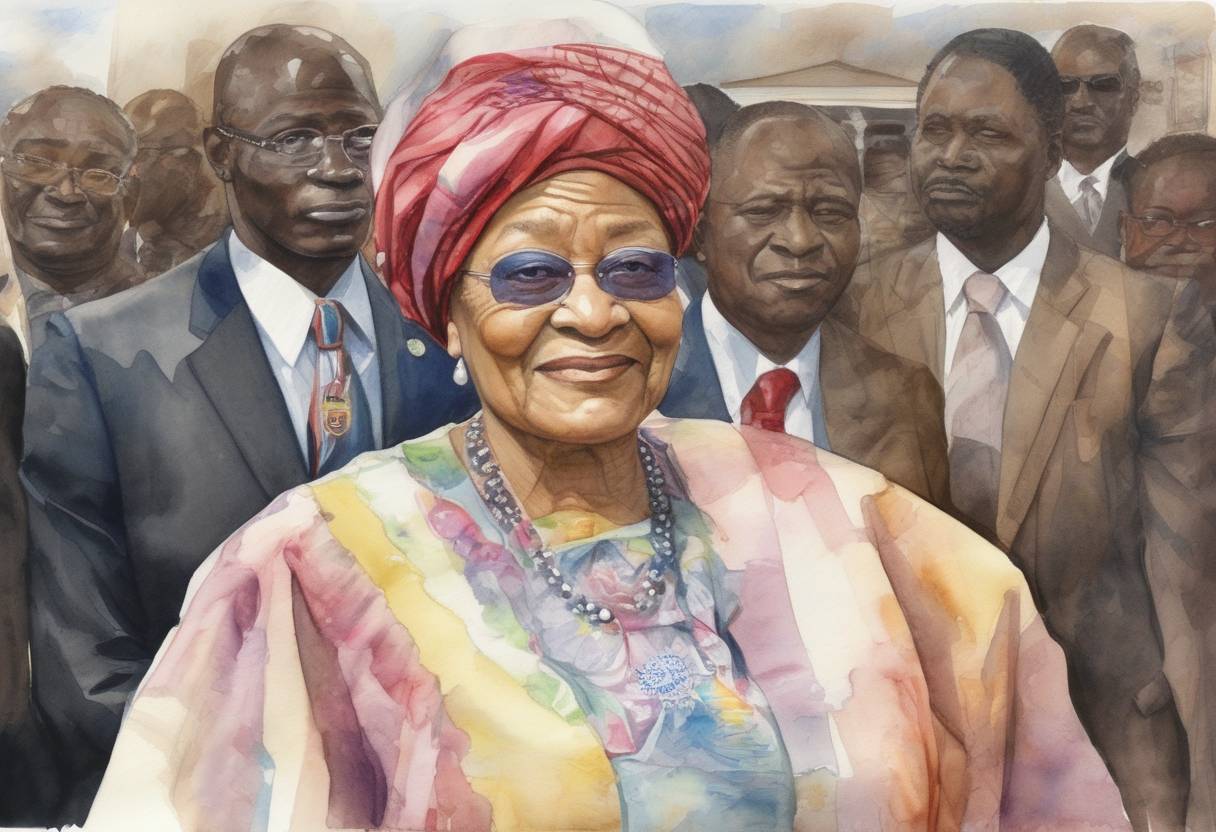
On January 16, 2006, Ellen Johnson Sirleaf was inaugurated as the President of Liberia, marking a historic moment as she became Africa’s first elected female head of state. Her election and subsequent swearing-in were significant not only for Liberia but also for the entire continent, symbolizing a step forward in gender equality and democratic governance.
Ellen Johnson Sirleaf, often referred to as the “Iron Lady,” was born on October 29, 1938, in Monrovia, Liberia. She was educated in the United States, earning a degree in economics from Harvard University. Before her presidency, Sirleaf had a distinguished career in international finance and development, including roles at the World Bank and the United Nations Development Programme.
Liberia, at the time of her election, was emerging from a devastating civil war that lasted from 1989 to 2003, leaving the country in economic ruin and with a deeply fractured society. The election of 2005 was a pivotal moment for Liberia, as it was the first democratic election since the end of the conflict.
The 2005 presidential election was a landmark event in Liberia’s history. Ellen Johnson Sirleaf ran as the candidate for the Unity Party. Her main opponent was George Weah, a former international football star. Sirleaf’s campaign focused on rebuilding the nation, promoting peace, and fostering economic development. Her victory in the runoff election, held in November 2005, was seen as a triumph of experience and vision over celebrity appeal.
Sirleaf’s inauguration on January 16, 2006, was attended by numerous international dignitaries, reflecting the global significance of her election. Her presidency was characterized by efforts to stabilize the country, combat corruption, and attract foreign investment. She also prioritized education and women’s rights, aiming to empower women in a society that had long marginalized them.
During her two terms in office, Sirleaf made significant strides in improving Liberia’s infrastructure and governance. She worked to reduce the national debt and secured substantial international aid. Her administration also established the Truth and Reconciliation Commission to address the atrocities committed during the civil war.
However, her presidency was not without challenges. Sirleaf faced criticism for not doing enough to tackle corruption and for her handling of the Ebola outbreak in 2014. Despite these challenges, her leadership was pivotal in maintaining peace and setting Liberia on a path toward recovery.
Ellen Johnson Sirleaf’s presidency is remembered as a groundbreaking period in African politics. Her leadership paved the way for greater female participation in politics across the continent. In 2011, she was awarded the Nobel Peace Prize, alongside Leymah Gbowee and Tawakkol Karman, for their non-violent struggle for the safety of women and for women’s rights to full participation in peace-building work.
Her legacy continues to inspire women and leaders worldwide, demonstrating the impact of determined and visionary leadership in the face of adversity.
Source: www.britannica.com