Louis XVI Declares War on Great Britain: July 10, 1778
1778 · Paris, France
Louis XVI of France declared war on the Kingdom of Great Britain, entering the American Revolutionary War.
February 6, 1778
The Treaty of Alliance and the Treaty of Amity and Commerce were signed between the United States and France during the American Revolutionary War.
Paris, France | United States, France
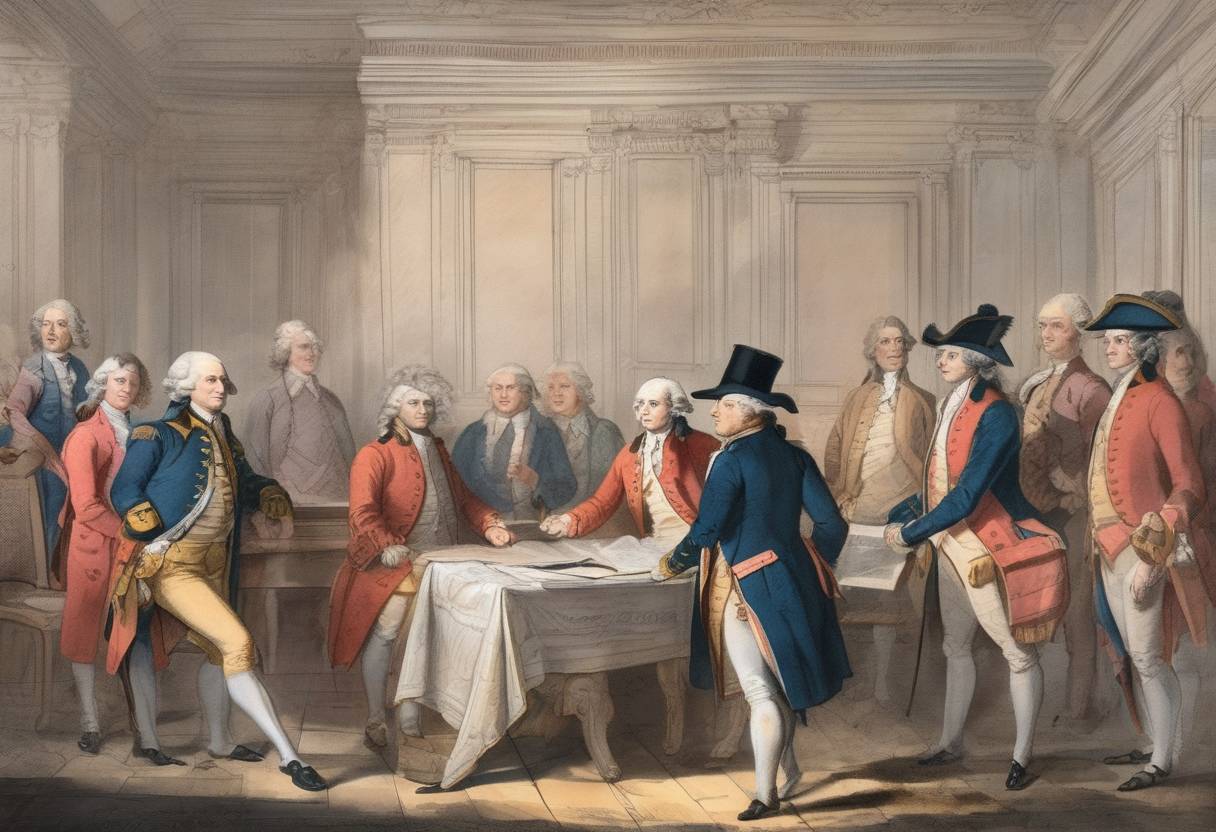
On February 6, 1778, two significant treaties were signed between the United States and France: the Treaty of Alliance and the Treaty of Amity and Commerce. These agreements marked a pivotal moment in the American Revolutionary War, as they formalized the Franco-American alliance and provided crucial support to the American colonies in their struggle for independence from Great Britain.
The American Revolutionary War, which began in 1775, saw the thirteen American colonies fighting against British rule. The colonies sought international support to bolster their military efforts and gain legitimacy. France, a long-time rival of Britain, saw an opportunity to weaken its adversary by supporting the American cause.
The American victory at the Battle of Saratoga in October 1777 was a turning point that convinced France of the viability of the American fight for independence. This victory demonstrated the potential for American success and prompted France to enter into formal negotiations with the United States.
The Treaty of Amity and Commerce established a commercial relationship between the United States and France. Key provisions included:
The Treaty of Alliance was a military pact that outlined the terms of French military support for the United States. Key elements included:
The signing of these treaties had profound implications for the American Revolutionary War:
The Franco-American alliance played a critical role in the eventual American victory, culminating in the British surrender at Yorktown in 1781. The treaties of February 6, 1778, thus stand as a testament to the importance of international alliances in shaping the course of history.
Source: www.britannica.com