Coronation of Charlemagne and Carloman I as Kings of the Franks
768 · Noyon, France
Charlemagne and his brother Carloman I are crowned Kings of the Franks following the death of their father, Pepin the Short.
January 6, 0754
Pope Stephen II anointed Pepin the Short as King of the Franks, marking the first time a pope had crowned a king, which set a precedent for the divine right of kings and strengthened the alliance between the Frankish kingdom and the papacy.
Saint-Denis, Frankish Kingdom | Catholic Church
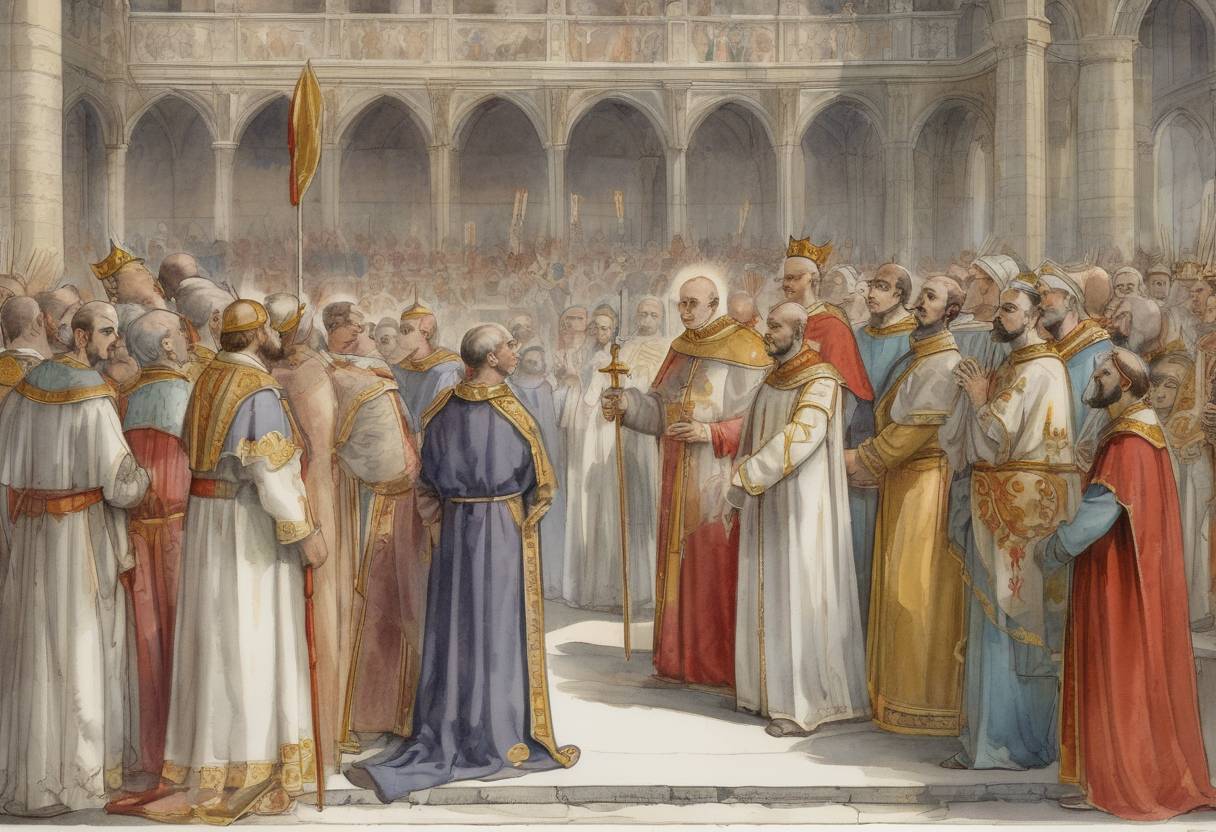
On January 6, 754, a significant event in European history took place when Pope Stephen II anointed Pepin the Short as King of the Franks. This momentous occasion marked the first time a pope had crowned a king, establishing a precedent for the divine right of kings and significantly strengthening the alliance between the Frankish kingdom and the papacy.
Pepin the Short: Before becoming king, Pepin was the Mayor of the Palace under the Merovingian dynasty, effectively holding the real power behind the throne. The Merovingian kings had become figureheads, and Pepin sought to legitimize his rule.
The Papacy’s Position: At this time, the papacy was under threat from the Lombards, a Germanic people who had invaded parts of Italy. Pope Stephen II sought protection and support from a powerful ally.
The Frankish-Papal Alliance: Pepin saw an opportunity to strengthen his position by aligning with the papacy. In return for papal endorsement, Pepin promised to protect Rome and the papal territories from the Lombards.
Location and Ceremony: The anointing took place at the Basilica of Saint-Denis, near Paris. This ceremony was not just a political act but also a religious one, as it involved the sacred rite of anointing, which conferred a divine sanction on Pepin’s kingship.
Significance: By anointing Pepin, Pope Stephen II provided a religious legitimacy to Pepin’s rule, which was crucial in a time when divine favor was seen as essential for a ruler’s legitimacy. This act also set a precedent for the involvement of the Church in the crowning of kings, intertwining religious authority with royal power.
Strengthened Frankish-Papal Relations: The alliance between the Franks and the papacy was solidified, leading to mutual benefits. Pepin’s military support helped secure the papal territories, while the papacy’s endorsement strengthened Pepin’s rule.
Foundation for the Carolingian Empire: Pepin’s anointing laid the groundwork for the Carolingian Empire, which would reach its zenith under his son, Charlemagne. The alliance with the papacy would continue to play a crucial role in the expansion and consolidation of Carolingian power.
Precedent for the Divine Right of Kings: This event marked the beginning of the concept of the divine right of kings in Western Europe, where monarchs were seen as ruling by the will of God, a notion that would influence European political thought for centuries.
In summary, the anointing of Pepin the Short by Pope Stephen II was a pivotal moment in medieval history, shaping the relationship between the Church and state and setting the stage for the rise of the Carolingian Empire. This event underscored the growing influence of the papacy in secular affairs and the increasing sanctification of royal authority.
Source: en.wikipedia.org