The Kansas-Nebraska Act of 1854
1854 · Washington, D.C., United States
The Kansas-Nebraska Act was signed into law by U.S. President Franklin Pierce, allowing territories to decide on the legality of slavery through popular sovereignty.
March 15, 1820
Maine was admitted as the 23rd state of the United States under the Missouri Compromise.
Washington, D.C., United States | U.S. Congress
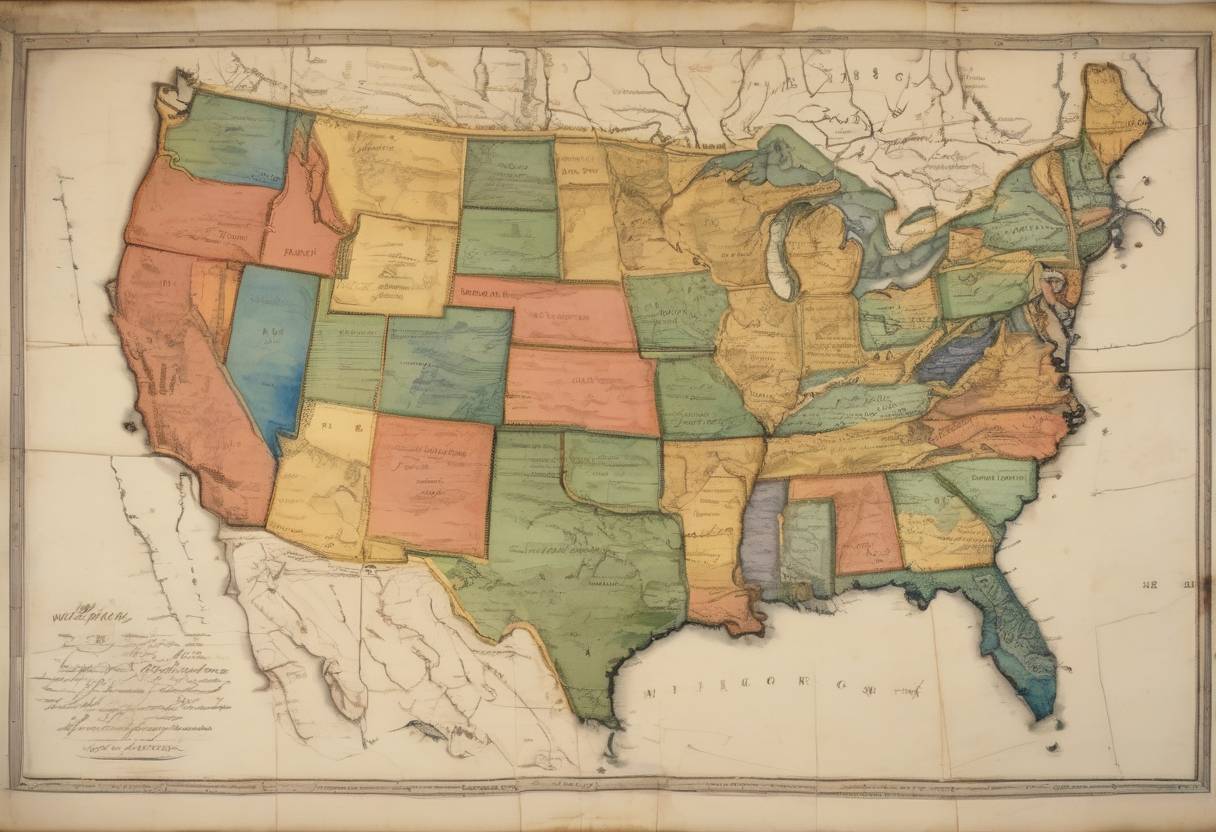
On March 15, 1820, Maine was officially admitted to the United States as the 23rd state. This event was a significant milestone in American history, closely tied to the Missouri Compromise, a pivotal legislative agreement that addressed the contentious issue of slavery in the expanding nation.
Before its statehood, Maine was part of the Commonwealth of Massachusetts. The region had been seeking independence from Massachusetts for several decades due to geographical, economic, and political differences. The push for statehood gained momentum in the early 19th century, as the population grew and the desire for self-governance increased.
The admission of Maine as a free state was intricately linked to the Missouri Compromise, a legislative effort to maintain the balance of power between free and slave states in the Union. The Compromise, enacted in 1820, was primarily driven by the following factors:
The Missouri Compromise was a temporary solution to the sectional conflicts over slavery. It maintained the balance of power in Congress and delayed the onset of more severe national conflicts over slavery. However, it also highlighted the deep divisions within the country, foreshadowing the intense debates and conflicts that would eventually lead to the Civil War.
Maine’s admission as a state was significant not only for its own residents, who gained political autonomy and representation, but also as a crucial element in the broader national struggle over slavery and state rights.
In summary, Maine’s statehood on March 15, 1820, under the Missouri Compromise, was a critical event in the United States’ history, reflecting the complex interplay of regional interests and the ongoing national debate over slavery.
Source: en.wikipedia.org