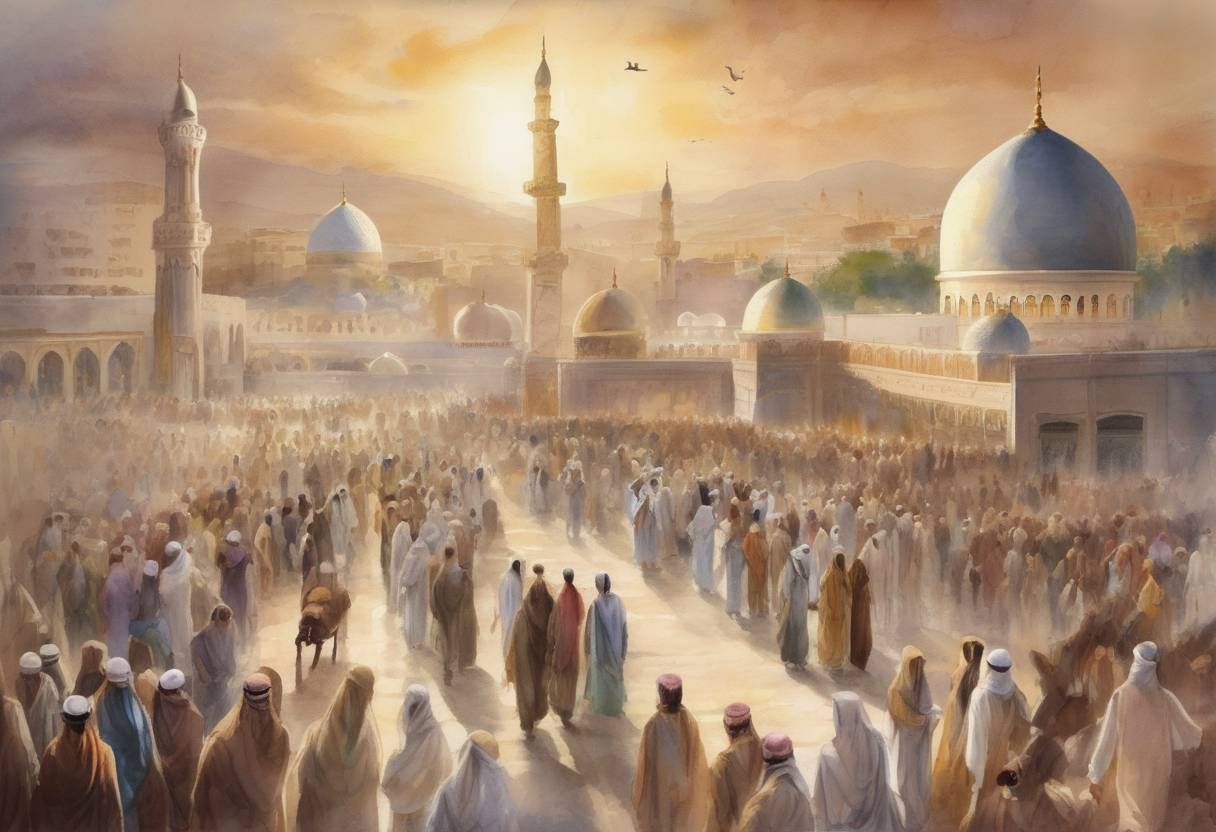
The Hijra: Muhammad’s Migration from Mecca to Medina
On September 24, 622 CE, the Prophet Muhammad completed his migration, known as the Hijra, from Mecca to Medina. This pivotal event marks the beginning of the Islamic calendar, designated as 1 AH (Anno Hegirae, “in the year of the Hijra”). The Hijra was not merely a physical journey but a significant turning point in Islamic history, laying the foundation for the establishment of the first Muslim community and state.
Context Leading to the Hijra
Pre-Hijra Mecca
- Religious Tensions: Muhammad began preaching the message of Islam in Mecca around 610 CE. His monotheistic teachings challenged the polytheistic beliefs of the Quraysh tribe, the dominant power in Mecca, leading to increasing hostility.
- Persecution: As Muhammad’s followers grew, they faced persecution, social ostracism, and economic sanctions from the Quraysh. This environment made it increasingly difficult for Muslims to practice their faith openly.
The Invitation from Yathrib (Medina)
- Diplomatic Efforts: In 620 CE, Muhammad began seeking support outside Mecca. He found a receptive audience among the tribes of Yathrib, a city north of Mecca, who were embroiled in internal conflicts and sought a unifying leader.
- Pledge of Aqabah: In 621 and 622 CE, representatives from Yathrib met with Muhammad at Aqabah, pledging their allegiance and inviting him to mediate their disputes and lead their community.
The Journey to Medina
- Departure: Facing increasing threats, Muhammad and his followers secretly left Mecca. The journey was perilous, with the Quraysh plotting to assassinate Muhammad to prevent his escape.
- Companions: Muhammad was accompanied by his close companion, Abu Bakr. They took a strategic route, hiding in the Cave of Thawr for three days to evade their pursuers.
- Arrival in Medina: Upon reaching Yathrib, later known as Medina (short for “Medinat an-Nabi,” meaning “City of the Prophet”), Muhammad was warmly received by the Ansar, the local supporters who had pledged their allegiance.
Significance of the Hijra
- Foundation of the Ummah: The Hijra marks the establishment of the first Muslim community (Ummah) under Muhammad’s leadership. It was a transformative moment that allowed Islam to flourish in a supportive environment.
- Islamic Calendar: The Hijra is so significant that it marks the beginning of the Islamic lunar calendar. The year of the migration, 622 CE, is designated as 1 AH.
- Political and Social Reforms: In Medina, Muhammad implemented a series of social, economic, and political reforms, including the drafting of the Constitution of Medina, which established a multi-religious Islamic state.
Aftermath and Legacy
- Consolidation of Power: Over the next decade, Muhammad consolidated his power, leading to the eventual conquest of Mecca in 630 CE.
- Spread of Islam: The successful establishment of the Muslim community in Medina set the stage for the rapid expansion of Islam across the Arabian Peninsula and beyond.
The Hijra remains a cornerstone of Islamic history, symbolizing the transition from persecution to the establishment of a thriving Muslim society. It underscores themes of resilience, community, and faith, continuing to inspire Muslims worldwide.