Transfer of the V-2 Rocket Research Program to the United States
1948 · Peenemünde, Germany
The V-2 rocket research program is transferred to the United States as part of Operation Paperclip.
October 3, 1942
Germany conducted the first successful test flight of the V-2 rocket, the world's first long-range guided ballistic missile, marking a significant advancement in rocket technology.
Peenemünde, Germany | German Army
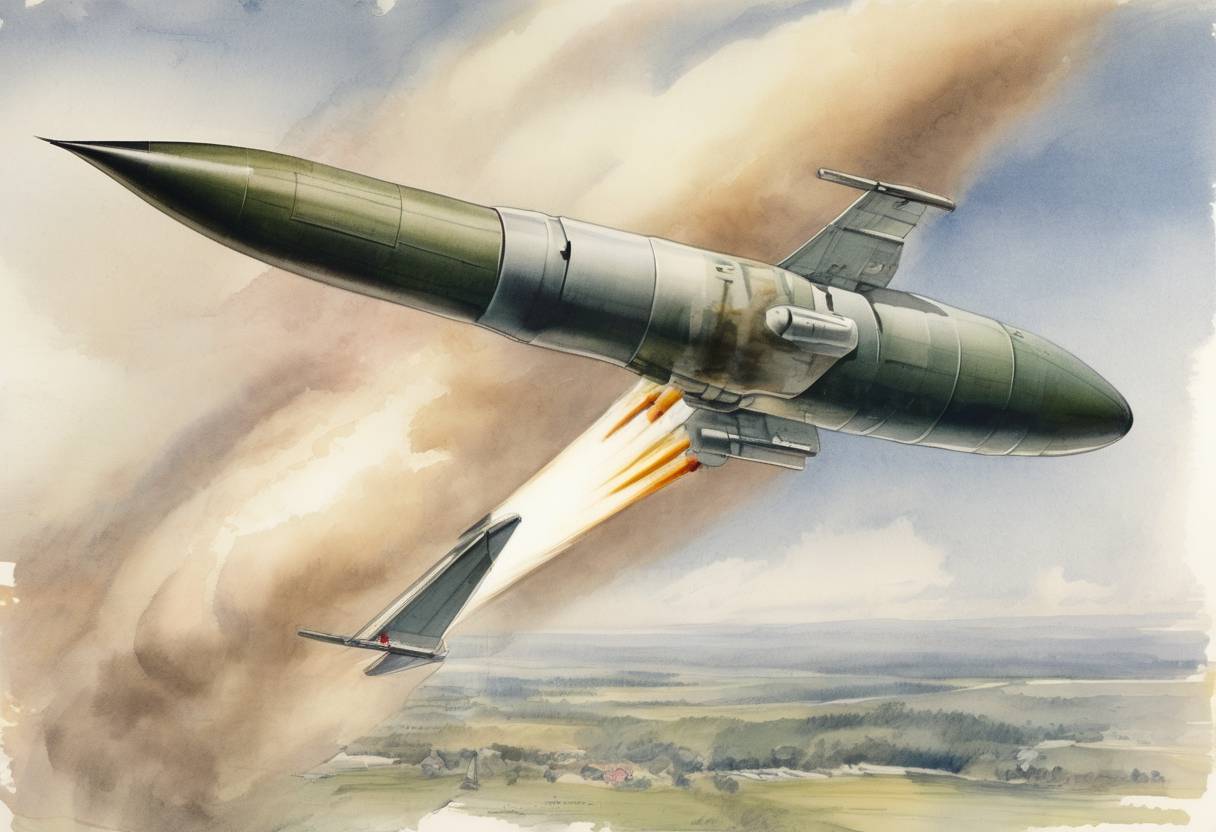
On October 3, 1942, Germany conducted the first successful test flight of the V-2 rocket, marking a pivotal moment in the history of rocket technology and warfare. The V-2, known as the Vergeltungswaffe 2 or “Vengeance Weapon 2,” was the world’s first long-range guided ballistic missile, representing a significant technological advancement during World War II.
The development of the V-2 rocket was spearheaded by the German engineer Wernher von Braun and his team at the Peenemünde Army Research Center. The project was part of Nazi Germany’s efforts to create advanced weaponry that could turn the tide of the war in their favor. The V-2 was designed to deliver a one-ton warhead over a distance of up to 320 kilometers (about 200 miles), targeting enemy cities and military installations.
Early Rocketry Efforts: The roots of the V-2 can be traced back to the early 1930s when von Braun and other engineers began experimenting with liquid-fueled rockets. Their work laid the foundation for the development of more sophisticated missile technology.
Peenemünde Research Center: Established in 1937, Peenemünde became the hub for Germany’s rocket research. It was here that von Braun and his team refined their designs and conducted numerous tests to perfect the V-2.
Technical Challenges: The development of the V-2 faced numerous technical challenges, including issues with propulsion, guidance systems, and materials that could withstand the intense heat and pressure of flight.
On October 3, 1942, the V-2 rocket, designated as A-4, was launched from Peenemünde. The test was a success, with the rocket reaching an altitude of 84.5 kilometers (about 52.5 miles) and covering a distance of 190 kilometers (approximately 118 miles). This successful flight demonstrated the feasibility of using rockets as long-range weapons and marked a significant milestone in the history of aerospace engineering.
Military Use: Following the successful test, the V-2 was deployed in combat, with Germany launching thousands of these rockets against Allied targets, including London and Antwerp, causing significant destruction and civilian casualties.
Post-War Impact: After the war, the technology and expertise developed for the V-2 were instrumental in the advancement of space exploration. Many of the scientists involved, including von Braun, were brought to the United States under Operation Paperclip, where they contributed to the development of the U.S. space program, including the Apollo missions.
Legacy: The V-2 rocket is considered a precursor to modern ballistic missiles and space launch vehicles. Its development marked the beginning of the missile age and laid the groundwork for future advancements in rocketry and space exploration.
The successful test flight of the V-2 on October 3, 1942, remains a landmark event in the history of technology, illustrating both the potential and the perils of scientific advancement during wartime.
Source: en.wikipedia.org