Austria Declares War on France: The Start of the War of the Second Coalition
1799 · Vienna, Austria
Austria declared war on France, signaling the start of the War of the Second Coalition.
October 1, 1814
The Congress of Vienna is opened to redraw the continent's political map after the defeat of Napoleonic France.
Vienna, Austria | Congress of Vienna
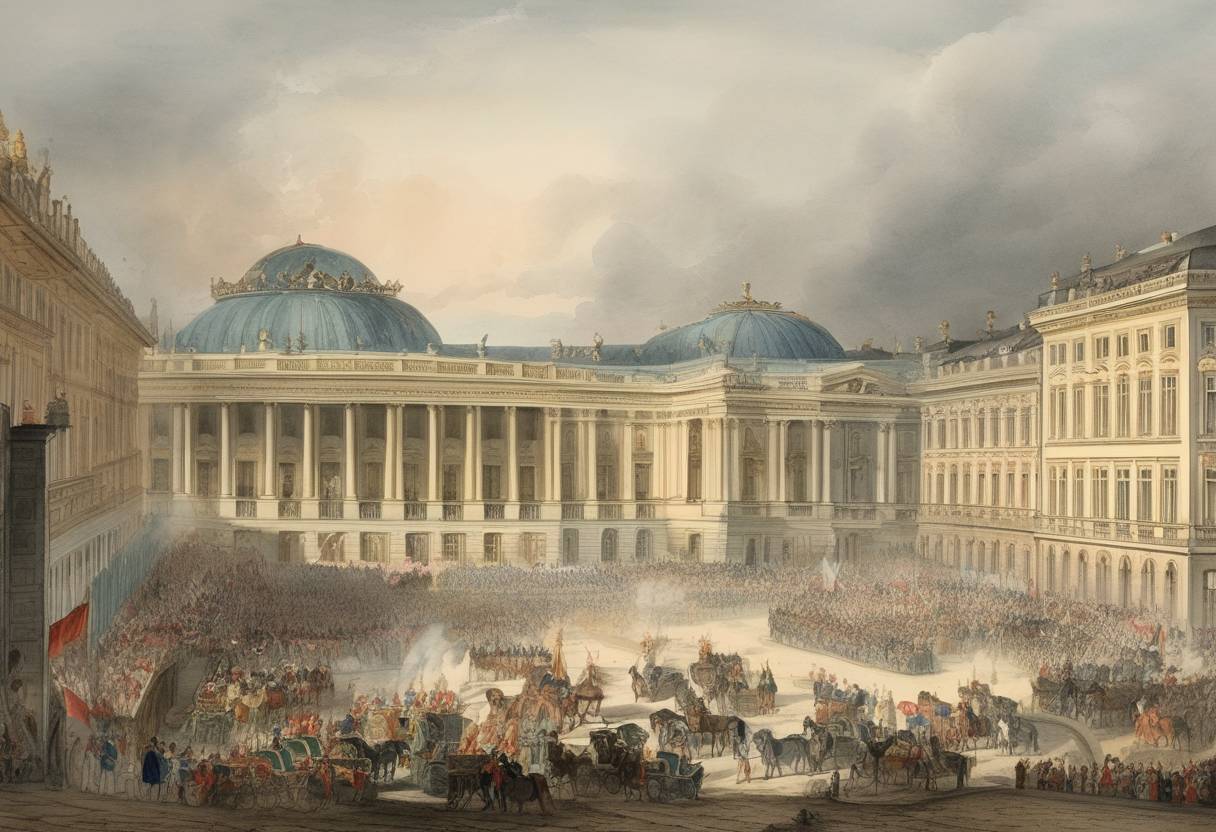
The Congress of Vienna commenced on October 1, 1814, marking the beginning of a significant diplomatic conference hosted by the major European powers. The aim was to settle the territorial and political questions arising from the aftermath of the Napoleonic Wars.
In the early 19th century, Europe had been convulsed by years of wars sparked by the French Revolution and the expansive ambitions of Napoleon Bonaparte. His defeat by the Sixth Coalition in 1814 precipitated a need to restore stability and reconfigure Europe’s political landscape. The Congress of Vienna was devised to address these issues, an unprecedented assembly of ambassadors from major European states.
The Congress’s primary objective was to create a balanced power system to prevent future conflicts like the Napoleonic Wars. This entailed redrawing the borders of Europe to reflect a balance of power among the major states. Additionally, many sought to restore the royal families ousted by Napoleon’s conquests and invest in creating buffer states to contain future French aggression.
The negotiations that took place were complex and involved various bilateral and multilateral agreements. While the congress formally opened in October, many significant decisions flowed through informal discussions preceding the plenary sessions.
The decisions made at the Congress of Vienna shaped the European political landscape for nearly a century, establishing a framework for international diplomacy. The settlements contributed to a period known as the “Concert of Europe,” a precursor concept to modern collective security arrangements, by establishing a balance of power that minimized large-scale conflicts in the continent until World War I.
Through these efforts, the Congress of Vienna successfully fostered an era of relative peace in Europe, often considered a diplomatic triumph in maintaining stability after decades of warfare.
Despite its positive contributions, the Congress also faced criticism for disregarding national self-determination, as many smaller ethnic groups were subsumed within larger empires, setting the stage for future nationalist movements across Europe.
Source: www.britannica.com