George Washington's First Cabinet Meeting on February 25, 1793
1793 · Philadelphia, United States
George Washington holds the first Cabinet meeting as the President of the United States.
September 19, 1796
President George Washington's Farewell Address was published, advising the United States to avoid permanent alliances with foreign nations and to rely on temporary alliances for emergencies.
Philadelphia, United States | United States Government
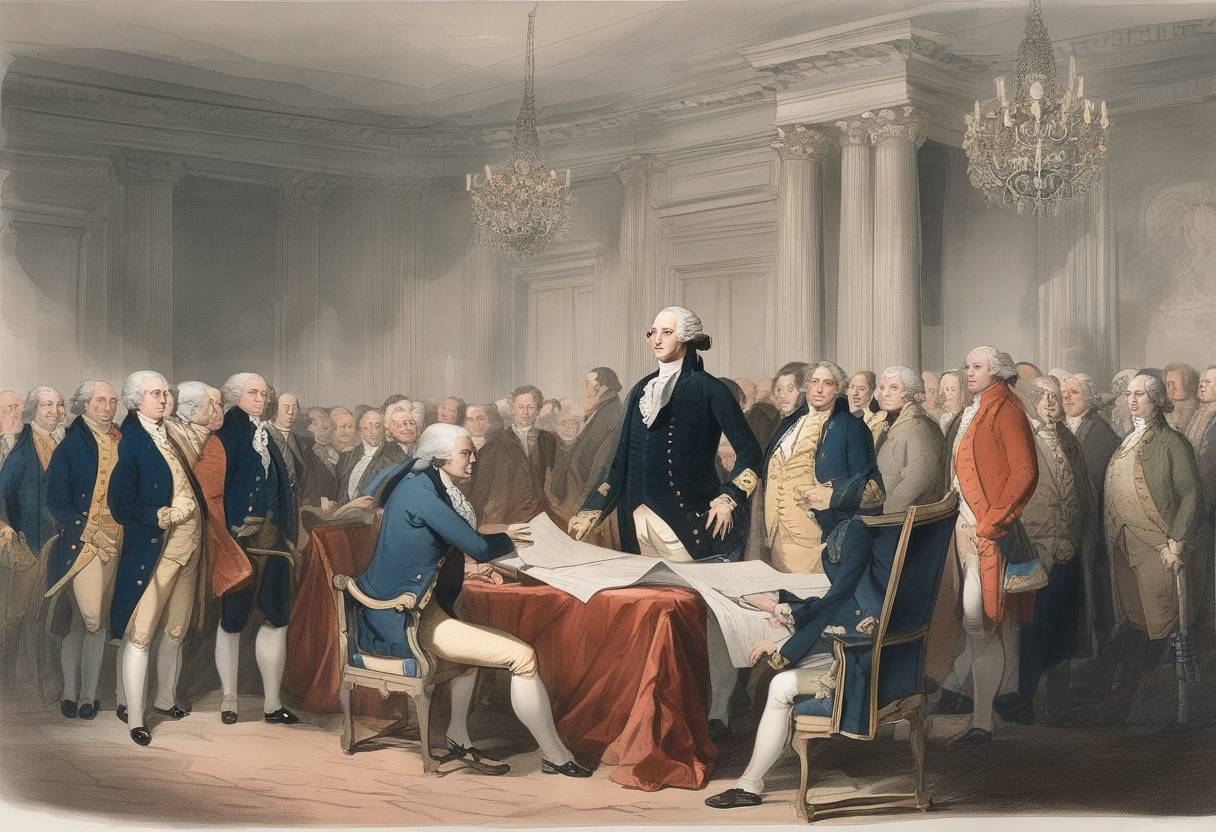
On September 19, 1796, President George Washington’s Farewell Address was published, marking a significant moment in American history. This address was not delivered as a speech but rather published in the American Daily Advertiser, a Philadelphia newspaper, and subsequently reprinted in newspapers across the country. It provided guidance and warnings to the young nation as Washington prepared to step down from the presidency after two terms in office.
Unity and Sectionalism: Washington emphasized the importance of national unity and warned against the dangers of sectionalism and political factions. He believed that internal divisions could weaken the nation.
The Dangers of Political Parties: Washington cautioned against the divisive nature of political parties, which he feared could lead to despotism and undermine the government’s ability to function effectively.
Foreign Alliances: One of the most enduring aspects of the Farewell Address is Washington’s advice on foreign policy. He urged the United States to avoid permanent alliances with foreign nations, advocating instead for temporary alliances in extraordinary emergencies. This principle of neutrality became a cornerstone of American foreign policy for many years.
Public Morality and Education: Washington stressed the importance of religion, morality, and education as foundations for a successful republic. He believed that a well-informed and virtuous citizenry was essential for the nation’s prosperity.
Fiscal Responsibility: Washington advised the government to practice fiscal responsibility, warning against the accumulation of public debt and emphasizing the need for sound financial management.
Washington’s Farewell Address remains a seminal document, offering timeless insights into governance, unity, and the challenges of maintaining a republic. Its themes continue to resonate in contemporary discussions about American identity and foreign policy.
Source: en.wikipedia.org