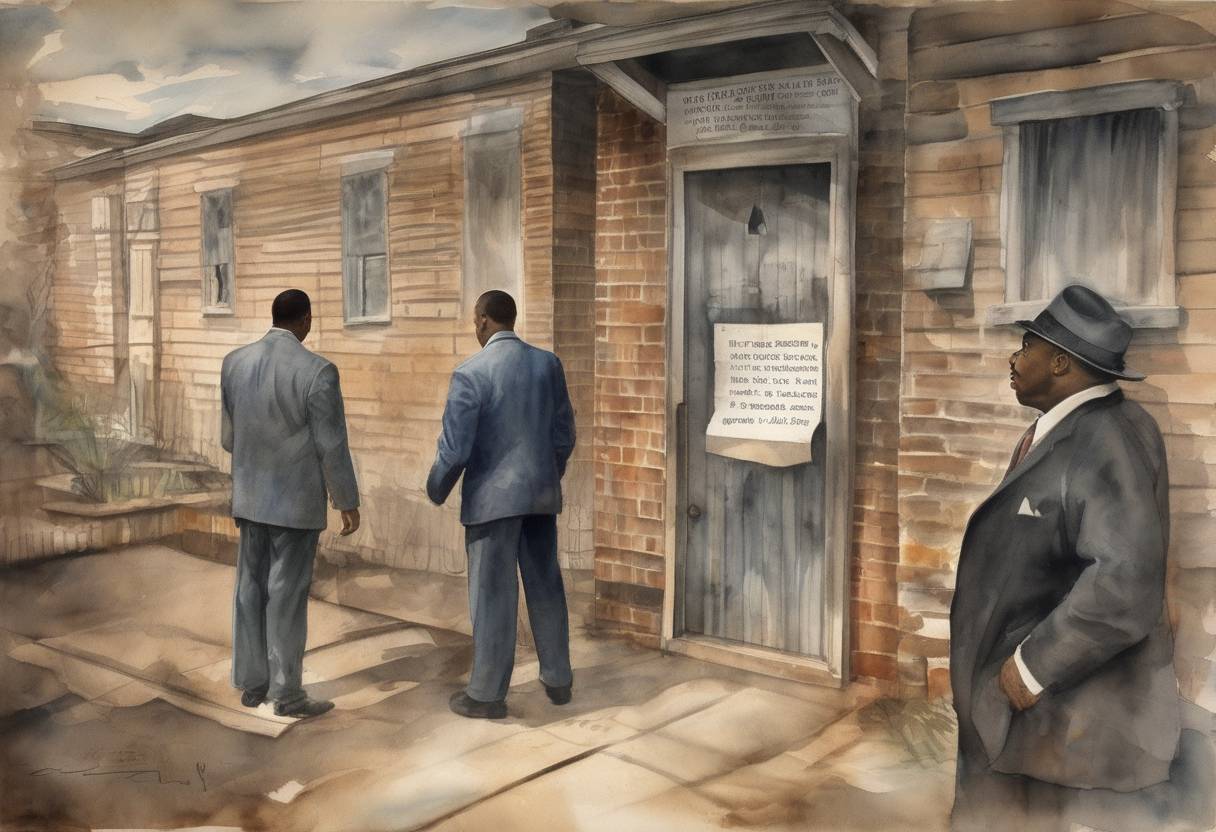
Martin Luther King Jr.’s “Letter from Birmingham Jail” - April 16, 1963
On April 16, 1963, Martin Luther King Jr. penned his seminal “Letter from Birmingham Jail,” a powerful defense of nonviolent resistance to racial segregation and injustice. This letter was written during King’s imprisonment in Birmingham, Alabama, following his arrest on April 12, 1963, for participating in nonviolent demonstrations against racial segregation.
Context and Background
The early 1960s were a pivotal period in the American Civil Rights Movement, marked by widespread protests and civil disobedience aimed at dismantling systemic racism and segregation, particularly in the Southern United States. Birmingham, Alabama, was one of the most segregated cities in America and a focal point for civil rights activism.
King, along with the Southern Christian Leadership Conference (SCLC) and local activists, organized a series of nonviolent protests in Birmingham to challenge the city’s discriminatory laws and practices. These demonstrations were met with harsh responses from local authorities, including the use of police dogs and fire hoses against protestors.
The Letter
While in solitary confinement, King responded to a public statement made by eight white Alabama clergymen who criticized the protests as “unwise and untimely.” In his letter, King articulated the philosophical and moral foundations of the civil rights movement, emphasizing the necessity and urgency of direct action.
Key Themes
Just vs. Unjust Laws: King distinguished between just and unjust laws, arguing that individuals have a moral responsibility to disobey unjust laws. He cited historical and religious figures who practiced civil disobedience as a means of enacting social change.
The Urgency of Action: King addressed the criticism of being an “outsider” and the call for patience, asserting that African Americans had waited long enough for their constitutional and God-given rights. He famously wrote, “Injustice anywhere is a threat to justice everywhere.”
Nonviolent Resistance: King defended nonviolent resistance as a powerful tool for confronting and dismantling systemic racism. He explained that nonviolent direct action seeks to create a crisis and foster tension that forces a community to confront and negotiate the issue at hand.
Disappointment with the White Moderate: King expressed frustration with the white moderate, whom he saw as more devoted to order than to justice. He criticized their preference for a “negative peace” that is the absence of tension over a “positive peace” that is the presence of justice.
Impact and Legacy
The “Letter from Birmingham Jail” became a foundational text for the Civil Rights Movement and is considered one of the most important documents in American history. It eloquently articulated the rationale for civil disobedience and inspired activists across the nation and the world.
King’s letter not only addressed the immediate concerns of the civil rights struggle but also provided a universal framework for understanding and confronting injustice. It remains a powerful testament to the enduring struggle for equality and human rights.
The events in Birmingham, including King’s letter, helped galvanize national support for the Civil Rights Movement, leading to significant legislative changes, such as the Civil Rights Act of 1964 and the Voting Rights Act of 1965.