Founding of Lima by Francisco Pizarro
1535 · Lima, Peru
Spanish conquistador Francisco Pizarro founded the city of Lima, which would become the capital of Peru.
November 16, 1532
Spanish conquistador Francisco Pizarro captures Inca Emperor Atahualpa at the Battle of Cajamarca.
Cajamarca, Peru | Spanish Empire
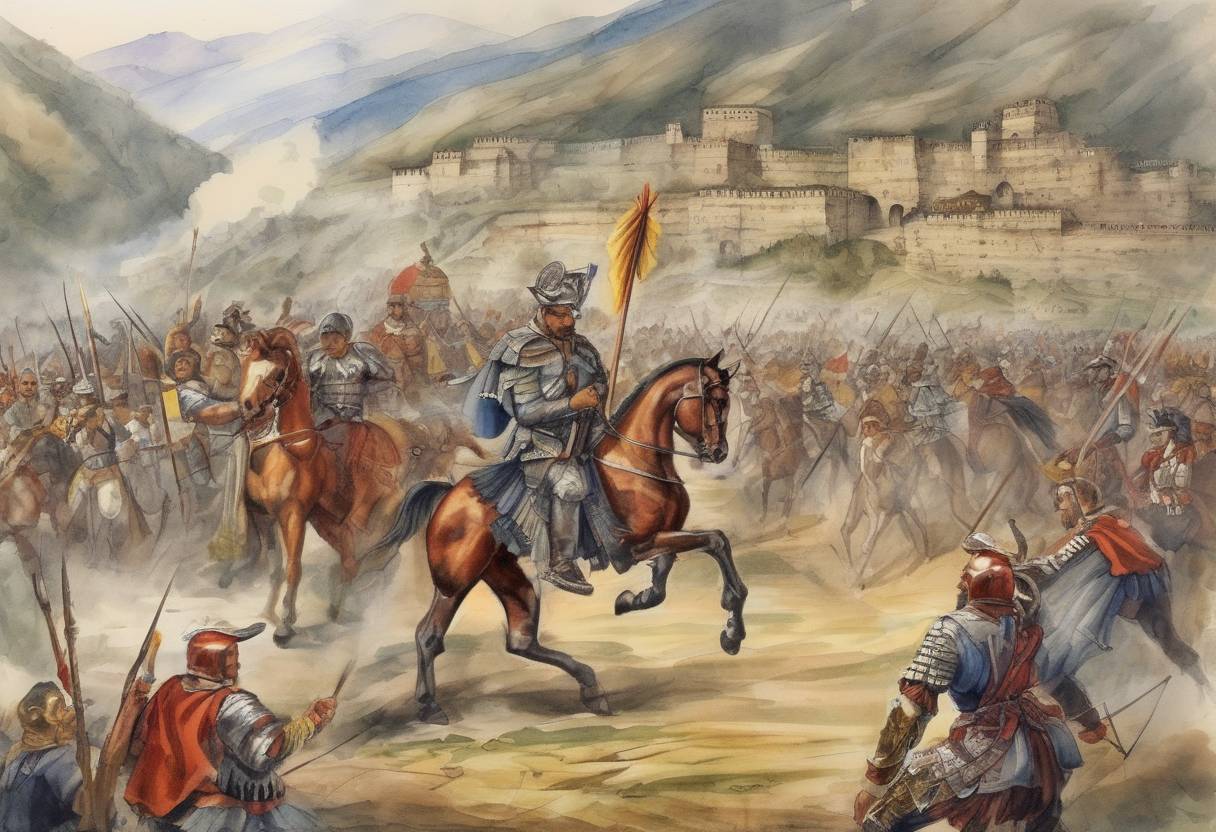
On November 16, 1532, a pivotal event unfolded in the history of the Americas when Spanish conquistador Francisco Pizarro captured the Inca Emperor Atahualpa at the Battle of Cajamarca. This encounter marked a significant turning point in the Spanish conquest of the Inca Empire.
The Inca Empire, at its height, was the largest empire in pre-Columbian America, stretching across modern-day Peru, Ecuador, Bolivia, and parts of Chile and Argentina. The empire was highly organized, with a sophisticated system of roads, agriculture, and governance. However, it was also in a state of internal strife due to a civil war between Atahualpa and his half-brother Huáscar, which weakened its defenses against external threats.
Francisco Pizarro, inspired by the successes of Hernán Cortés in Mexico, embarked on expeditions to the South American continent in search of wealth and glory. By 1532, Pizarro had made several forays into the region and had gathered intelligence about the riches of the Inca Empire.
Pizarro and his small force of approximately 168 men, including cavalry and infantry, arrived in the town of Cajamarca in the Andes. Atahualpa, having recently emerged victorious in the civil war, was camped nearby with an army of thousands. Despite the numerical disadvantage, Pizarro planned a bold and audacious move to capture the emperor.
On November 16, Pizarro invited Atahualpa to a feast in Cajamarca’s main square. The Inca emperor, confident in his power and unaware of the Spaniards’ intentions, arrived with a large but unarmed retinue. Pizarro’s forces, hidden in the buildings surrounding the square, launched a surprise attack. The Spanish cavalry charged, and the infantry fired their arquebuses, creating chaos among the Inca.
Amidst the confusion, Pizarro himself seized Atahualpa. The capture was a masterstroke of military strategy and deception, as it effectively decapitated the leadership of the Inca Empire. Despite the overwhelming odds, the Spaniards suffered minimal casualties due to their superior weaponry and tactics.
Atahualpa, realizing his predicament, attempted to negotiate his release by offering a ransom. He promised to fill a room with gold and silver, which the Spaniards accepted. Over the next months, the Incas delivered vast amounts of precious metals, but Pizarro, fearing Atahualpa’s potential to rally his people, ultimately decided to execute him in 1533.
The capture and subsequent execution of Atahualpa marked the beginning of the end for the Inca Empire. It paved the way for Spanish colonization and the spread of European influence in South America. The event also highlighted the devastating impact of European conquest on indigenous civilizations, leading to significant cultural and demographic changes.
The Battle of Cajamarca remains a significant episode in the history of the Americas, illustrating the clash of civilizations and the dramatic shifts that occurred during the Age of Exploration.
Source: en.wikipedia.org