The Continental Congress Votes for Independence: July 2, 1776
1776 · Philadelphia, United States
The Continental Congress votes in favor of independence from Great Britain, leading to the adoption of the Declaration of Independence two days later.
June 7, 1776
Richard Henry Lee of Virginia proposed to the Continental Congress a resolution calling for independence of the American colonies from Great Britain.
Philadelphia, United States | Continental Congress
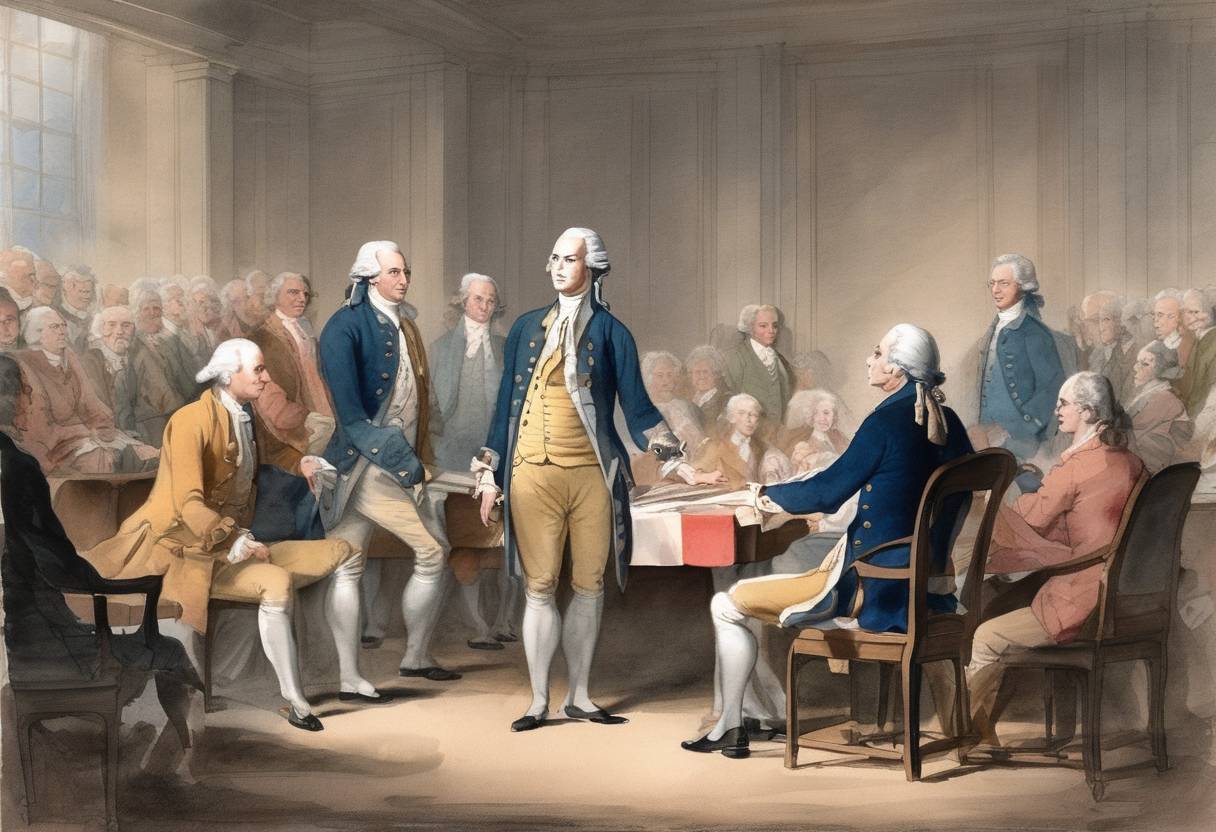
On June 7, 1776, Richard Henry Lee, a delegate from Virginia, introduced a pivotal resolution to the Second Continental Congress in Philadelphia. This resolution called for the American colonies’ independence from British rule, marking a significant step towards the formation of the United States.
The American colonies had been experiencing escalating tensions with Great Britain for over a decade. Key events leading up to Lee’s resolution included:
By 1776, the sentiment for independence had grown significantly, influenced by Thomas Paine’s pamphlet “Common Sense,” which argued for complete separation from Britain.
Richard Henry Lee’s resolution was straightforward yet profound. It proposed:
The exact wording of the resolution was:
“Resolved, that these United Colonies are, and of right ought to be, free and independent States, that they are absolved from all allegiance to the British Crown, and that all political connection between them and the State of Great Britain is, and ought to be, totally dissolved.”
The introduction of Lee’s resolution led to intense debate within the Continental Congress. Some delegates were hesitant, fearing the consequences of such a bold move. To allow time for further deliberation and to gain consensus, Congress postponed the vote on the resolution.
Richard Henry Lee’s resolution was a crucial catalyst in the American quest for independence. It set the stage for the formal declaration that would follow, uniting the colonies in their fight for freedom and laying the foundation for the United States of America. The resolution underscored the colonies’ commitment to self-governance and their willingness to break away from British rule, influencing the course of history.
Source: en.wikipedia.org