Proclamation of King Felipe VI of Spain
2014 · Madrid, Spain
Felipe VI was proclaimed King of Spain following the abdication of his father, King Juan Carlos I.
June 15, 1977
Spain held its first democratic elections after the death of dictator Francisco Franco, marking a significant step in the country's transition to democracy.
Madrid, Spain | Spanish government
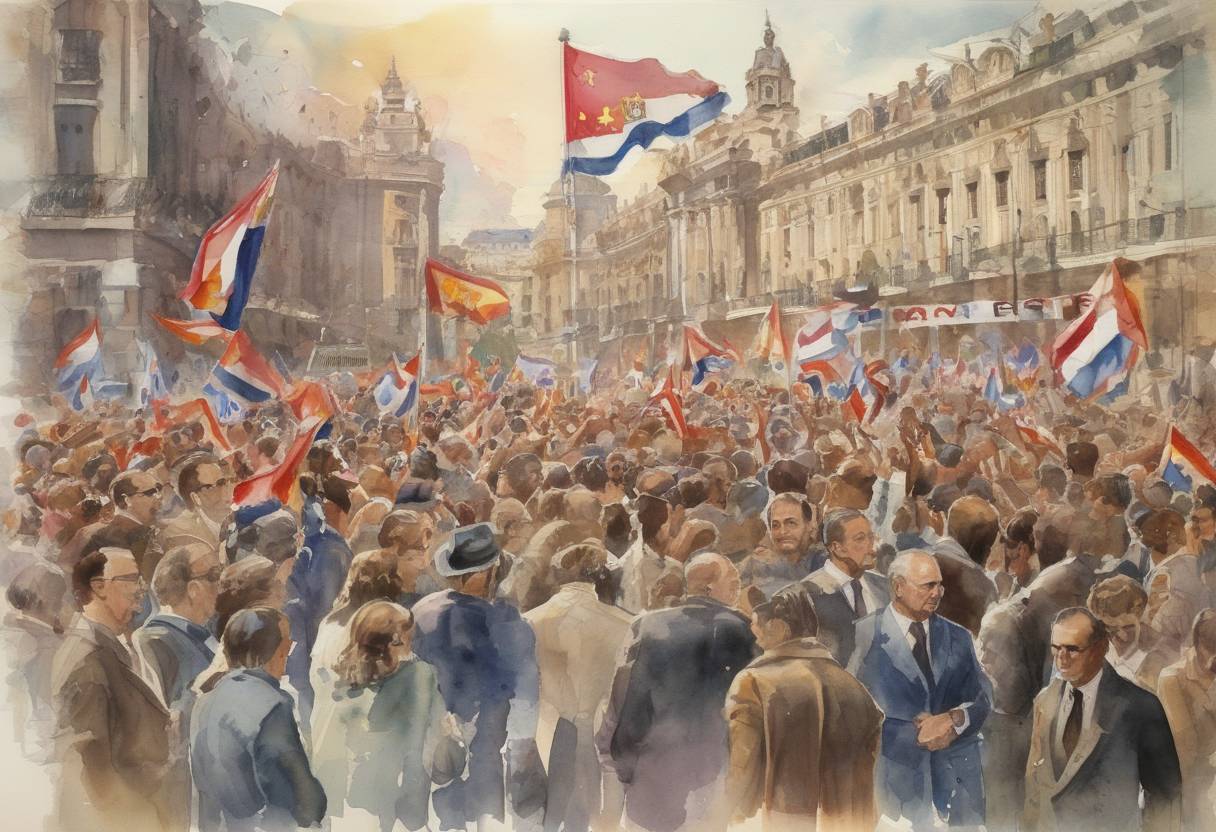
On June 15, 1977, Spain held its first democratic elections after the death of the dictator Francisco Franco, marking a pivotal moment in the country’s transition from authoritarian rule to democracy. This event was a cornerstone in Spain’s modern history, symbolizing the nation’s commitment to democratic governance and political pluralism.
Francisco Franco’s Regime: Franco ruled Spain as a dictator from 1939 until his death in 1975. His regime was characterized by authoritarianism, censorship, and the suppression of political dissent.
Transition to Democracy: Following Franco’s death, King Juan Carlos I, who had been appointed by Franco as his successor, played a crucial role in steering Spain towards democracy. He appointed Adolfo Suárez as Prime Minister in 1976, who was instrumental in initiating political reforms.
Political Reforms: Suárez’s government passed the Political Reform Act, which dismantled Francoist structures and paved the way for democratic elections. This act was approved by a national referendum in December 1976, receiving overwhelming support from the Spanish populace.
Significance: These elections were the first free elections in Spain since 1936, prior to the Spanish Civil War. They were a critical step in the peaceful transition from dictatorship to democracy.
Political Parties: The elections saw the participation of various political parties, including the Union of the Democratic Centre (UCD), the Spanish Socialist Workers’ Party (PSOE), the Communist Party of Spain (PCE), and others. This diversity marked a stark contrast to the single-party rule under Franco.
Results: The UCD, led by Adolfo Suárez, emerged victorious, winning a plurality of seats in the newly established Cortes Generales (Spanish Parliament). This victory allowed Suárez to continue his reformist agenda and further consolidate democratic institutions.
Constitution of 1978: The elections set the stage for the drafting of a new democratic constitution, which was ratified in 1978. This constitution established Spain as a parliamentary monarchy and enshrined civil liberties and political freedoms.
Consolidation of Democracy: The successful conduct of the elections and the peaceful transition of power were crucial in stabilizing Spain’s political landscape. It demonstrated the country’s commitment to democratic principles and helped gain international legitimacy.
Legacy: The 1977 elections are often seen as a model for peaceful democratic transitions. They underscored the importance of dialogue and compromise in overcoming political divisions and building a democratic society.
In summary, the democratic elections held on June 15, 1977, were a landmark event in Spain’s history, marking the end of decades of authoritarian rule and the beginning of a new era of democracy and political freedom. This transition laid the foundation for Spain’s modern democratic institutions and its integration into the broader European community.
Source: en.wikipedia.org