The First Issue of National Geographic Magazine: September 22, 1888
1888 · Washington, D.C., United States
The first issue of National Geographic Magazine is published.
August 28, 1845
The first issue of Scientific American magazine is published, marking the beginning of one of the oldest continuously published magazines in the United States.
New York City, United States | Scientific American
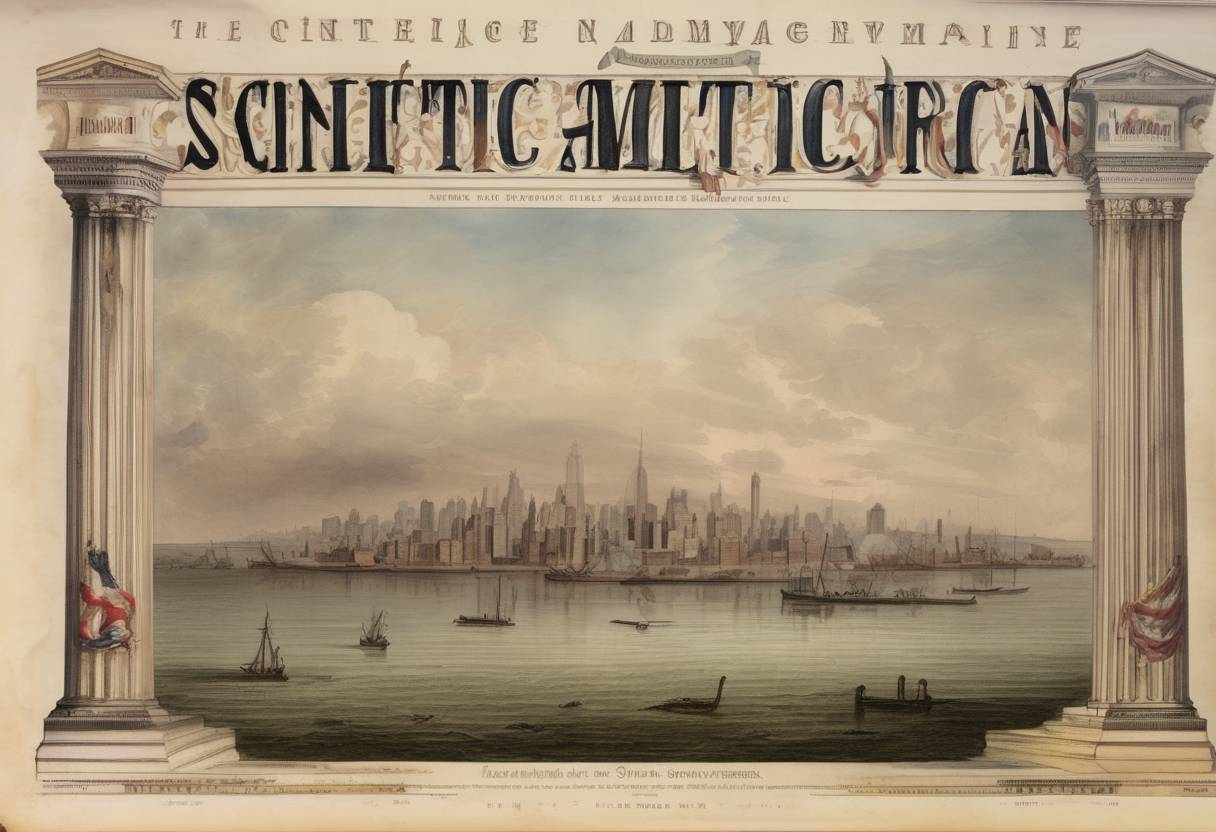
On August 28, 1845, the first issue of Scientific American was published, marking the inception of one of the oldest continuously published magazines in the United States. This event is significant not only for its contribution to the dissemination of scientific knowledge but also for its role in shaping public understanding of science and technology over the years.
Scientific American was founded by Rufus Porter, an inventor and painter, who initially envisioned the magazine as a platform to share information about new inventions and innovations. The mid-19th century was a period of rapid industrialization and technological advancement in the United States, and there was a growing public interest in science and technology.
The inaugural issue of Scientific American was a four-page weekly publication priced at four cents. It featured articles on various topics, including new inventions, scientific discoveries, and patents. The magazine aimed to provide practical information that could be of interest to inventors, engineers, and the general public.
Over the years, Scientific American evolved from a focus on inventions and patents to a broader coverage of scientific topics. It became a respected source of information on a wide range of scientific disciplines, including physics, biology, and environmental science.
Today, Scientific American is recognized for its authoritative and comprehensive coverage of science and technology. It continues to publish articles by leading scientists and experts, maintaining its commitment to educating and informing the public about scientific advancements.
The publication of the first issue on August 28, 1845, marked the beginning of a legacy that has significantly contributed to the public’s understanding of science and its impact on society.
Source: en.wikipedia.org