United Nations Security Council Endorses the Iran Nuclear Deal
2015 · New York City, United States
The United Nations Security Council endorses the Iran nuclear deal, formally known as the Joint Comprehensive Plan of Action.
December 5, 2006
The United Nations Security Council votes to impose sanctions on Iran due to its refusal to suspend its uranium enrichment program, marking a significant moment in the international community's efforts to curb nuclear proliferation.
New York City, United States | United Nations
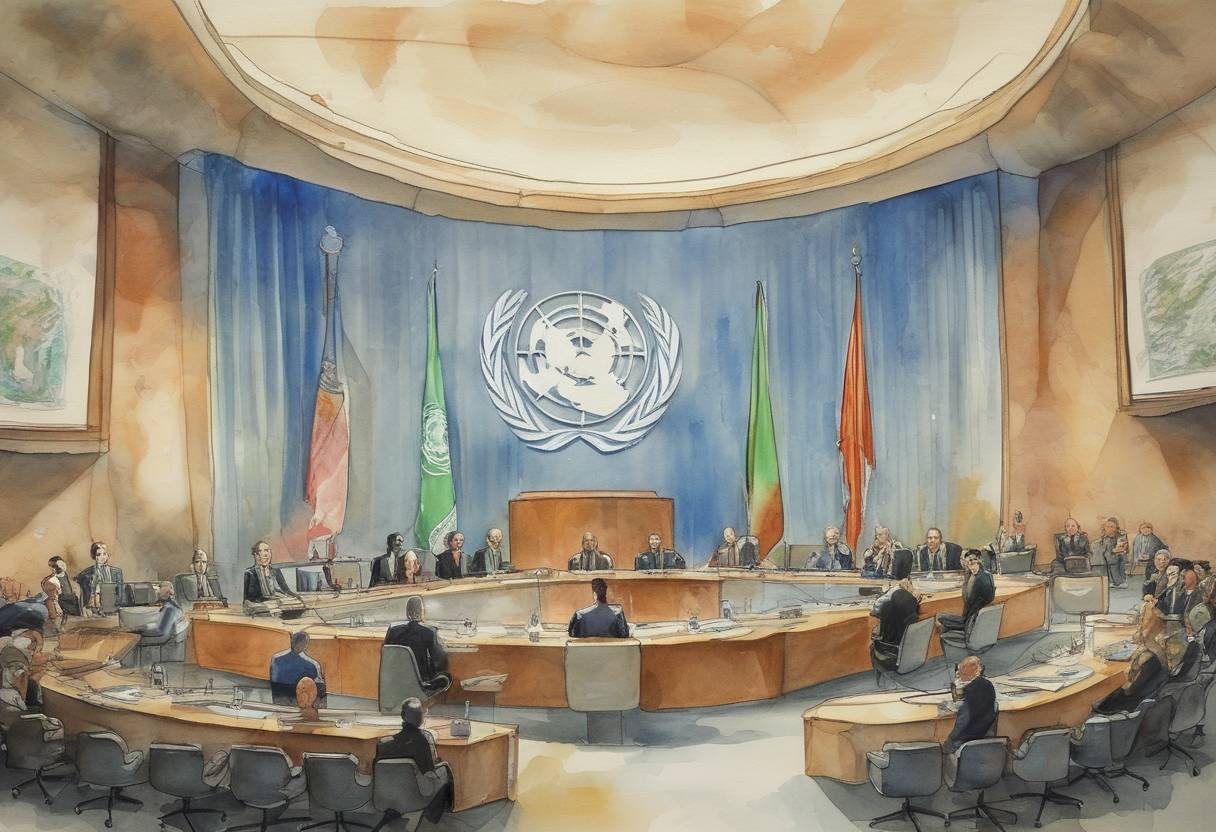
On December 5, 2006, the United Nations Security Council (UNSC) took a decisive step in the international community’s efforts to address nuclear proliferation by voting to impose sanctions on Iran. This action was in response to Iran’s refusal to suspend its uranium enrichment program, which had raised global concerns about the potential for nuclear weapons development.
Iran’s Nuclear Program: Iran’s nuclear ambitions had been a point of contention since the early 2000s. The country maintained that its nuclear program was for peaceful purposes, such as energy production. However, the international community, particularly Western nations, expressed concerns over the potential for weaponization.
International Negotiations: Prior to the sanctions, there were numerous diplomatic efforts to persuade Iran to halt its enrichment activities. The International Atomic Energy Agency (IAEA) had been involved in monitoring Iran’s nuclear sites, and several rounds of negotiations had taken place involving the EU3 (France, Germany, and the United Kingdom) and later the P5+1 (the five permanent UNSC members plus Germany).
Resolution 1696: In July 2006, the UNSC adopted Resolution 1696, which demanded that Iran suspend all enrichment-related and reprocessing activities. Iran’s non-compliance with this resolution set the stage for further action.
UNSC Resolution 1737: On December 5, 2006, the UNSC unanimously adopted Resolution 1737, which imposed sanctions on Iran. The resolution was a significant diplomatic effort to pressure Iran into compliance with international nuclear standards.
Key Provisions: The sanctions targeted Iran’s nuclear and missile programs. They included a ban on the supply of nuclear-related materials and technology, as well as the freezing of assets of key individuals and companies involved in Iran’s nuclear activities.
Diplomatic Implications: The resolution demonstrated a unified stance by the international community, including both Western powers and countries like Russia and China, which had previously been more reluctant to impose sanctions.
Iran’s Response: Iran condemned the sanctions, asserting its right to develop nuclear technology for peaceful purposes. The Iranian government vowed to continue its enrichment activities despite international pressure.
Further Developments: The sanctions marked the beginning of a series of escalating measures by the UNSC and individual countries, particularly the United States and the European Union, which imposed additional unilateral sanctions over the following years.
Impact on Negotiations: The sanctions played a crucial role in bringing Iran back to the negotiating table, eventually leading to the Joint Comprehensive Plan of Action (JCPOA) in 2015, an agreement aimed at limiting Iran’s nuclear capabilities in exchange for the lifting of economic sanctions.
The UNSC’s decision to impose sanctions on Iran in 2006 was a pivotal moment in the global effort to prevent nuclear proliferation. It highlighted the challenges of balancing diplomatic negotiations with coercive measures and underscored the complexities of international relations concerning nuclear non-proliferation. The events surrounding the sanctions continue to influence geopolitical dynamics in the Middle East and beyond.
Source: www.un.org