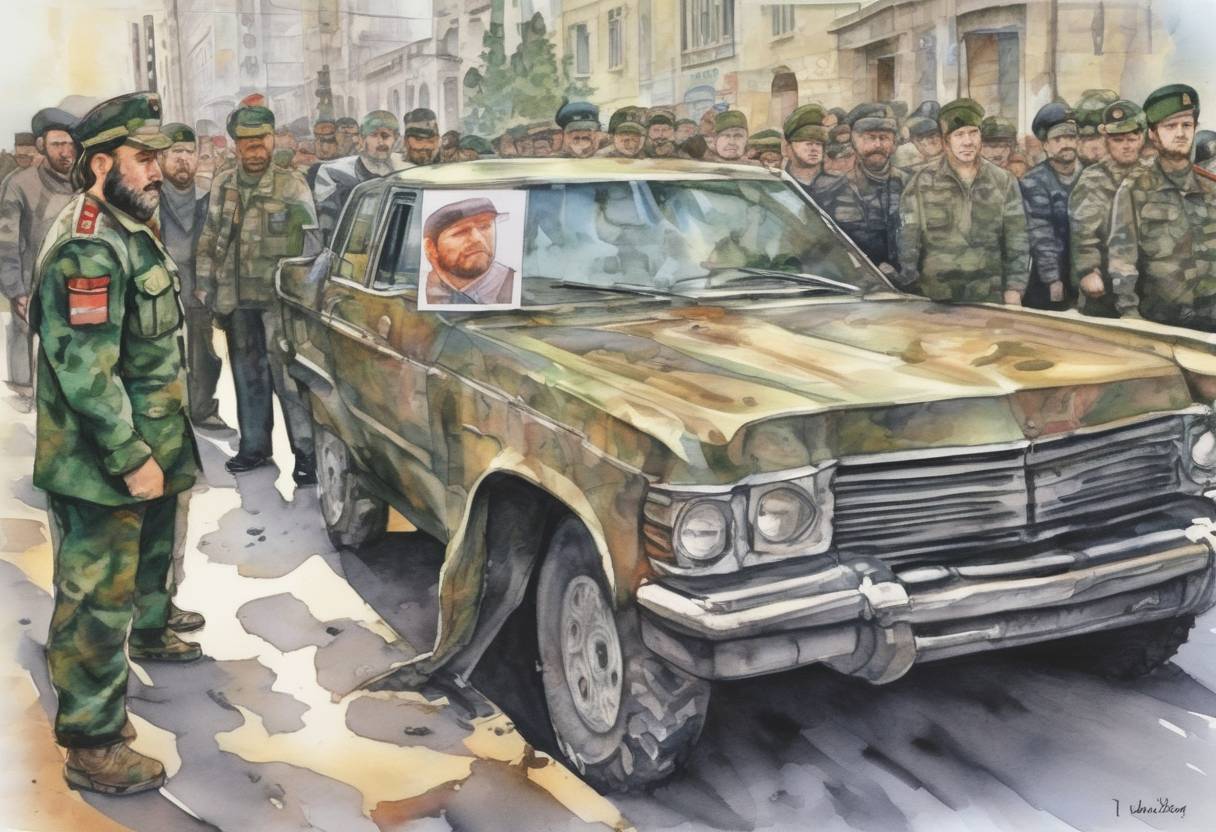
Assassination of Akhmad Kadyrov - May 9, 2004
On May 9, 2004, Akhmad Kadyrov, the President of the Chechen Republic, was assassinated in a bomb attack during a World War II memorial parade in Grozny, the capital of Chechnya. This event marked a significant moment in the ongoing conflict in Chechnya, which had been characterized by violence and instability since the dissolution of the Soviet Union.
Background
Akhmad Kadyrov was a key figure in Chechnya’s turbulent political landscape. Originally a separatist mufti during the First Chechen War (1994-1996), Kadyrov switched allegiances to the Russian government during the Second Chechen War, which began in 1999. In 2000, he was appointed as the head of the Chechen administration by Russian President Vladimir Putin, and in 2003, he was elected as the President of Chechnya in a controversial election.
Kadyrov’s presidency was marked by efforts to stabilize the region and rebuild its infrastructure, but his administration was also accused of human rights abuses and corruption. His alignment with Moscow made him a target for Chechen separatists and insurgents who opposed Russian influence in the region.
The Assassination
The assassination took place during a parade commemorating the Soviet victory in World War II, a significant event celebrated across Russia. The bomb was planted under a VIP section of the Dynamo Stadium in Grozny, where Kadyrov and other dignitaries were seated. The explosion killed Kadyrov and several others, including members of his security detail and civilians, and injured many more.
The attack was a sophisticated operation, highlighting the ongoing security challenges in Chechnya. It underscored the persistent threat posed by insurgent groups, despite efforts by Russian and Chechen authorities to quell the violence.
Aftermath and Consequences
The assassination of Akhmad Kadyrov had several immediate and long-term consequences:
Political Impact: The death of Kadyrov led to a power vacuum in Chechnya. His son, Ramzan Kadyrov, who was a prominent figure in his father’s administration, eventually rose to power. Ramzan was appointed as the Prime Minister in 2005 and later became the President of Chechnya in 2007. Under his leadership, Chechnya has seen a degree of stability, albeit amid allegations of authoritarianism and human rights violations.
Security Concerns: The attack highlighted the ongoing security issues in Chechnya and the North Caucasus region. It demonstrated the capability of insurgent groups to carry out high-profile attacks, challenging the narrative of a pacified Chechnya.
Russian Policy: The assassination reinforced the Russian government’s resolve to maintain control over Chechnya and combat separatist movements. It also led to increased military and security measures in the region.
Broader Historical Significance
The assassination of Akhmad Kadyrov was a pivotal moment in the Chechen conflict, illustrating the complexities of regional politics and the challenges of post-Soviet state-building. It also highlighted the intricate relationship between local leaders and the central Russian government, a dynamic that continues to influence the political landscape of the North Caucasus.
Overall, the event is a stark reminder of the enduring legacy of conflict in Chechnya and the broader implications for Russian federalism and regional stability.