The Wright Brothers' Patent for Their Flying Machine: May 22, 1906
1906 · Washington, D.C., United States
The Wright brothers were granted a patent for their flying machine, marking a significant milestone in aviation history.
November 11, 1930
Patent number US1781541 was granted to Albert Einstein and Leó Szilárd for their invention of a refrigerator, showcasing their contributions beyond theoretical physics.
Washington, D.C., United States | United States Patent Office
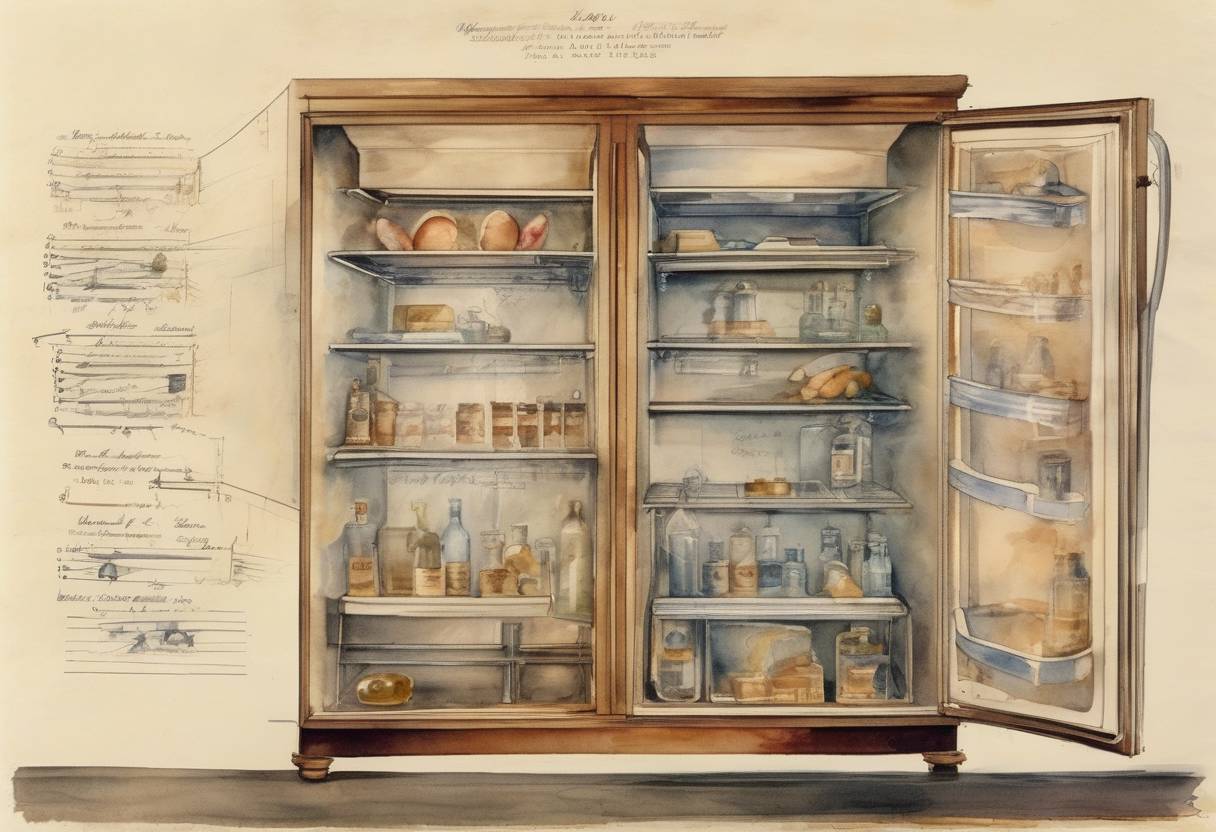
On November 11, 1930, Albert Einstein and Leó Szilárd were granted U.S. Patent No. 1781541 for their innovative design of a refrigerator. This invention highlights the duo’s contributions beyond the realm of theoretical physics, showcasing their ability to apply scientific principles to practical problems.
Albert Einstein: Renowned for his groundbreaking work in theoretical physics, including the theory of relativity, Einstein’s curiosity and intellect extended into various scientific and technological fields.
Leó Szilárd: A physicist and inventor, Szilárd is best known for his role in the development of nuclear chain reactions and his contributions to the Manhattan Project. His collaboration with Einstein on the refrigerator project demonstrates his versatility as a scientist.
Motivation: The Einstein-Szilárd refrigerator was developed in response to safety concerns associated with the use of toxic gases in conventional refrigeration systems of the time. A tragic incident involving a family in Berlin, who died due to a refrigerator leak, spurred their interest in creating a safer alternative.
Design: The refrigerator they designed was an absorption refrigerator, which operated without moving parts and used a combination of ammonia, butane, and water. This design aimed to eliminate the risk of gas leaks and improve the safety and reliability of refrigeration technology.
Principle: The refrigerator worked on the principle of absorption, where heat is used to drive the refrigeration cycle, rather than mechanical compression. This made it quieter and potentially more durable than traditional refrigerators.
Innovation: The Einstein-Szilárd refrigerator was a novel approach to refrigeration technology, emphasizing safety and efficiency. Although it was not commercially successful at the time, it demonstrated the potential for alternative refrigeration methods.
Legacy: The patent reflects Einstein and Szilárd’s commitment to applying scientific knowledge to solve real-world problems. Their work in this area is a testament to their ingenuity and interdisciplinary approach to science and technology.
Impact: While the refrigerator did not achieve widespread use, the principles behind it have influenced modern refrigeration technologies and continue to inspire innovations in energy-efficient and environmentally friendly cooling systems.
The granting of Patent No. 1781541 to Einstein and Szilárd on November 11, 1930, is a remarkable example of how these two eminent physicists extended their intellectual pursuits beyond theoretical physics to address practical challenges. Their collaboration on the refrigerator project underscores the importance of interdisciplinary research and innovation in advancing technology for societal benefit.
Source: en.wikipedia.org