1776 · New York, United States
The first submarine attack in history takes place during the American Revolutionary War, when the American submarine Turtle attempts to attach a time bomb to the hull of HMS Eagle in New York Harbor.
September 11, 1776
The first submarine attack in history took place during the American Revolutionary War.
New York, United States
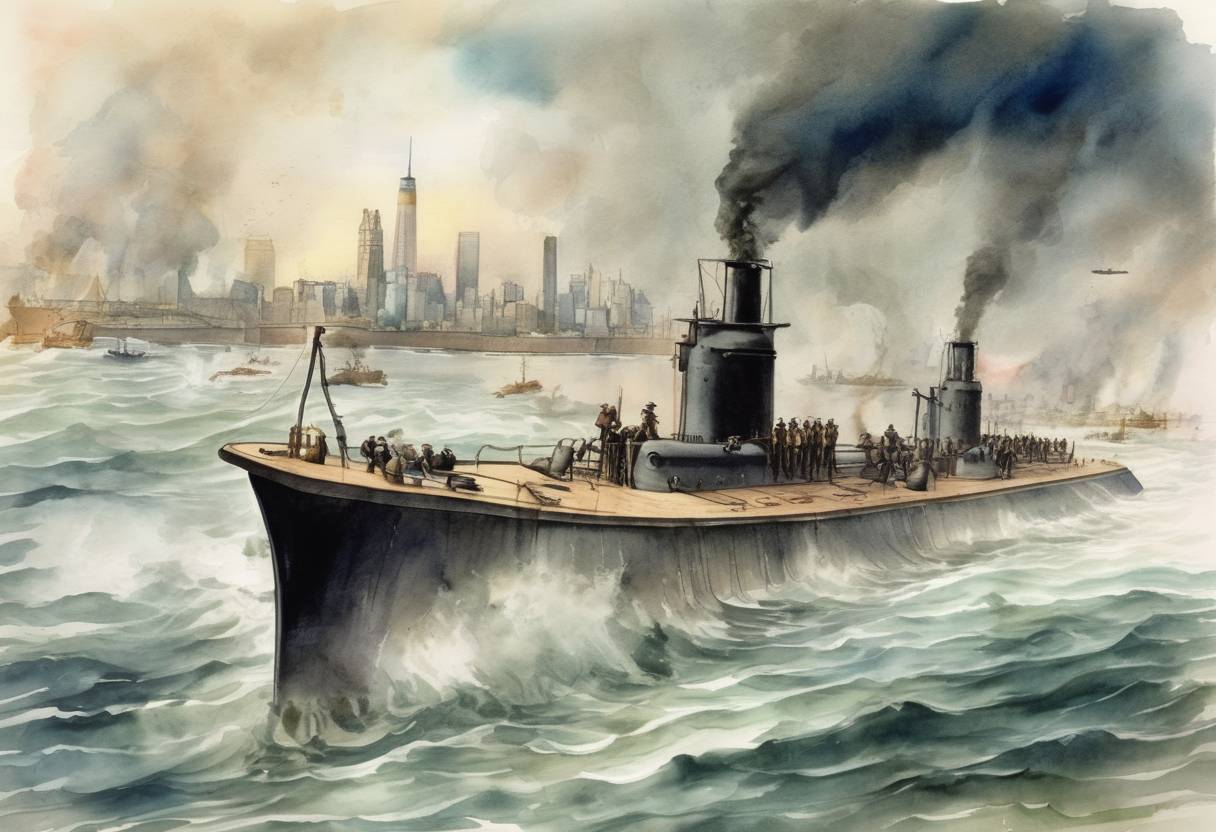
On September 11, 1776, during the American Revolutionary War, the first recorded submarine attack in history took place. This innovative military endeavor involved the American submarine known as the Turtle, designed by American inventor David Bushnell. The attack targeted the British warship HMS Eagle, which was anchored in New York Harbor.
The American Revolutionary War, which began in 1775, was a conflict between the thirteen American colonies and Great Britain. The colonies sought independence from British rule, and the war saw numerous battles and military innovations. One such innovation was the Turtle, a one-man submarine intended to break the British naval blockade.
The mission to attack HMS Eagle was undertaken by Sergeant Ezra Lee, a volunteer from the Continental Army. On the night of September 6, 1776, Lee piloted the Turtle toward the British flagship.
Although the attack was unsuccessful in damaging the HMS Eagle, it marked a significant moment in naval warfare history. The Turtle demonstrated the potential of submarines as a tool for naval combat, influencing future developments in submarine technology.
Despite its failure, the Turtle remains a symbol of early American innovation and determination in the face of overwhelming odds. The event is a testament to the evolving nature of warfare and the continuous quest for technological advancement in military strategy.
Source: en.wikipedia.org