1933 · Asmara, Eritrea
The first use of aircraft in combat was demonstrated by Italy when planes dropped bombs during the Siege of Asmara.
November 1, 1911
The first dropping of a bomb from an aircraft in combat occurs during the Italo-Turkish War.
Tripoli, Libya | Italian Air Force
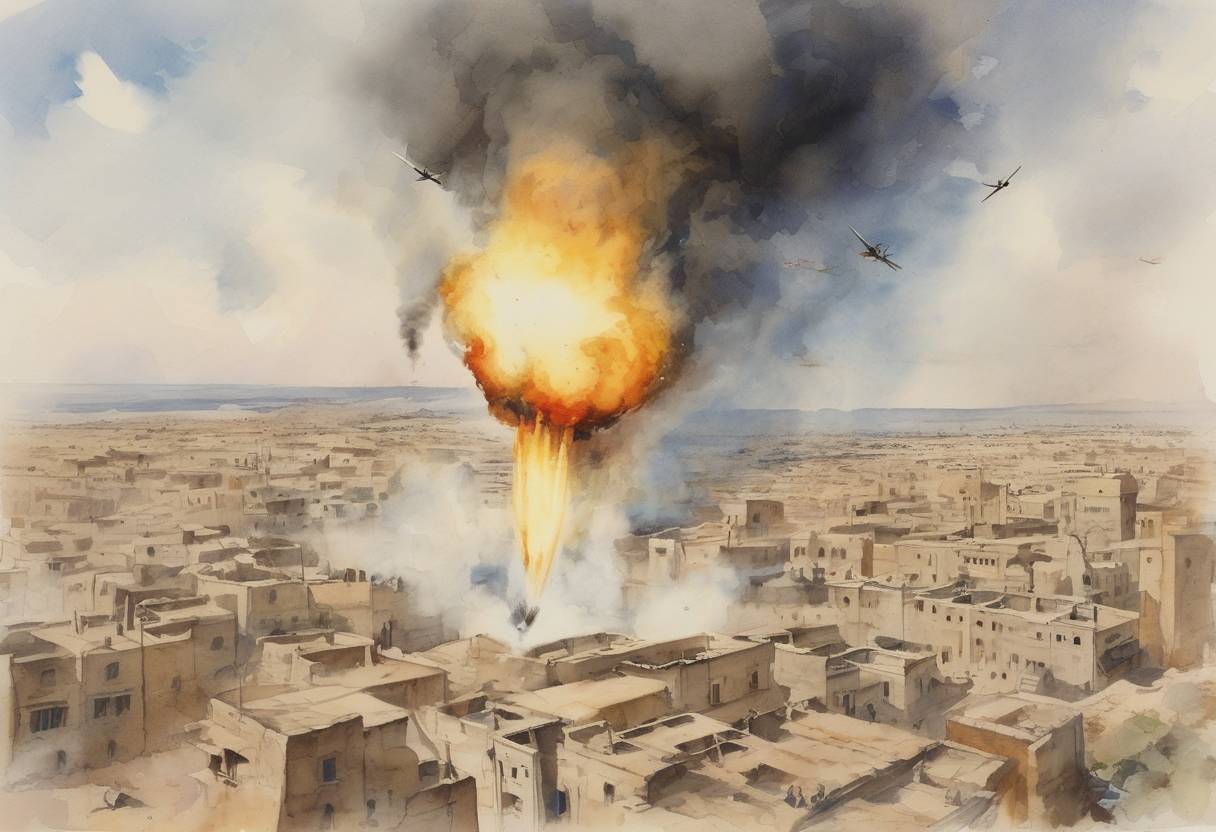
On November 1, 1911, a significant milestone in military history was achieved during the Italo-Turkish War, marking the first instance of a bomb being dropped from an aircraft in combat. This event took place near Ain Zara, Libya, and was carried out by the Italian Air Force.
The Italo-Turkish War, fought between the Kingdom of Italy and the Ottoman Empire from 1911 to 1912, was primarily over control of territories in North Africa, specifically modern-day Libya. The conflict is notable for being one of the first to see the use of aircraft in military operations, heralding a new era in warfare.
Aircraft and Pilot: The aircraft used was a Taube monoplane, piloted by Lieutenant Giulio Gavotti of the Italian Air Force. The Taube, a German-designed aircraft, was known for its distinctive bird-like shape and was one of the few aircraft available at the time capable of carrying out such a mission.
The Bombing: On this day, Gavotti flew over the Turkish camp at Ain Zara and manually dropped four grenades, each weighing approximately 4.5 pounds (2 kilograms). This act marked the first time an aircraft was used to deliver an explosive device in combat, setting a precedent for future military aviation tactics.
Military Innovation: The bombing demonstrated the potential of aircraft as offensive weapons, leading to rapid developments in military aviation technology and strategy. It highlighted the strategic advantage of air superiority and the ability to strike targets from the sky.
Impact on Warfare: This event foreshadowed the extensive use of aerial bombing in future conflicts, particularly during World War I and World War II. It underscored the changing nature of warfare, where technological advancements would increasingly shape military tactics and outcomes.
Ethical and Legal Considerations: The use of aircraft for bombing raised ethical and legal questions about the conduct of war, particularly concerning civilian casualties and the rules of engagement. These issues continue to be relevant in discussions about the use of air power in modern conflicts.
The Italo-Turkish War concluded in 1912 with the Treaty of Ouchy, resulting in Italy gaining control of Libya. The war’s legacy, particularly the introduction of aerial bombing, had lasting implications for military strategy and international relations.
In summary, the first dropping of a bomb from an aircraft in combat on November 1, 1911, was a pivotal moment in military history. It marked the beginning of a new era in warfare, where the skies became a crucial theater of operations, fundamentally altering the dynamics of military conflict.
Source: en.wikipedia.org