Muhammad Ali's Third World Heavyweight Title Victory
1978 · New Orleans, United States
Muhammad Ali won the world heavyweight boxing title for the third time by defeating Leon Spinks in New Orleans.
February 25, 1964
Cassius Clay (later Muhammad Ali) defeated Sonny Liston to win the world heavyweight boxing title, marking the start of his legendary career.
Miami Beach, United States | World Boxing Association
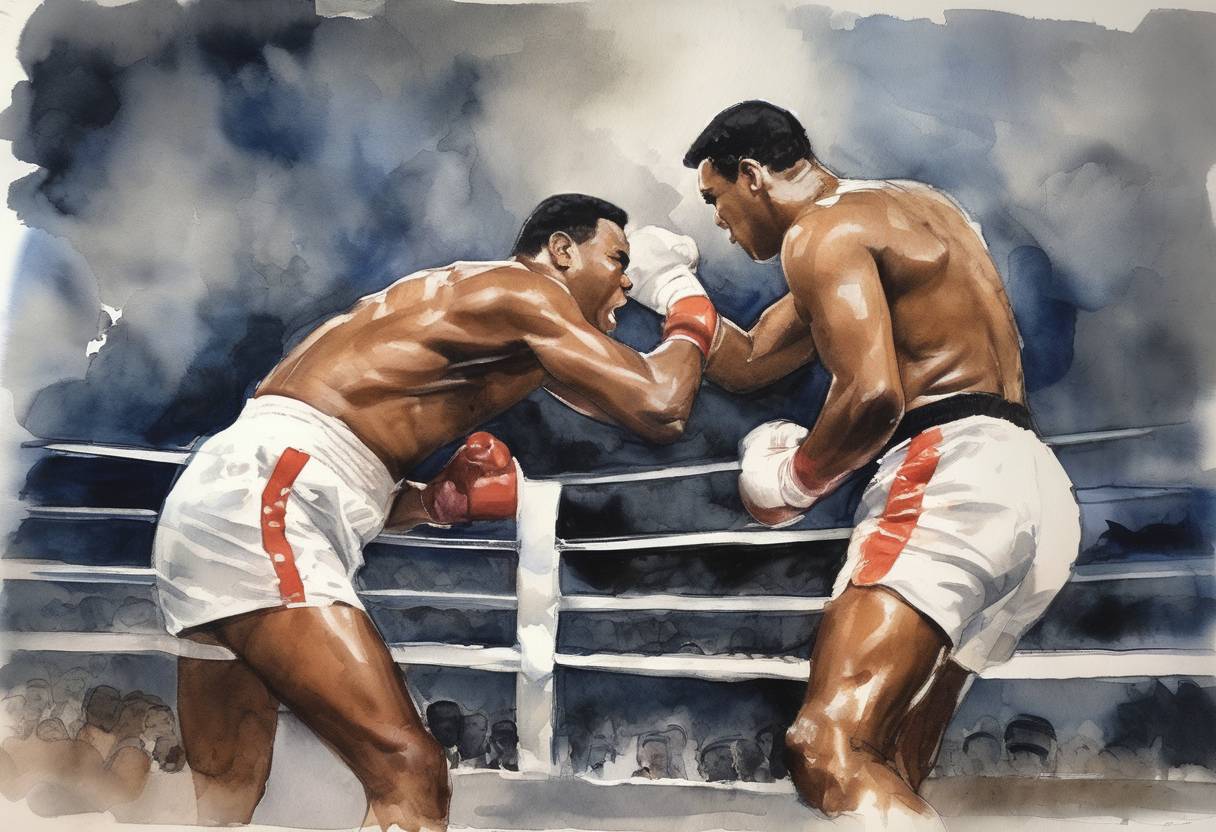
On February 25, 1964, Cassius Clay, who would later become known as Muhammad Ali, shocked the world by defeating Sonny Liston to win the world heavyweight boxing title. This victory marked the beginning of Ali’s legendary career and a transformative moment in the history of boxing.
Sonny Liston: At the time, Sonny Liston was the reigning heavyweight champion, known for his formidable punching power and intimidating presence. He had won the title in 1962 by defeating Floyd Patterson and was considered one of the most feared fighters in the sport.
Cassius Clay: At just 22 years old, Clay was known for his brash personality, quick footwork, and unorthodox fighting style. Despite his Olympic gold medal win in 1960, many doubted his ability to defeat the experienced Liston.
Location: The bout took place at the Convention Hall in Miami Beach, Florida.
Pre-Fight Build-Up: Clay’s pre-fight antics, including his famous declaration, “I am the greatest,” and his prediction that he would “float like a butterfly, sting like a bee,” captured public attention. Many viewed him as an underdog, with Liston heavily favored to win.
Fight Dynamics: From the start, Clay’s speed and agility troubled Liston. Clay used his superior footwork and quick jabs to keep Liston at bay, frustrating the champion.
Turning Point: In the fourth round, Clay experienced a temporary blinding sensation, possibly due to a substance on Liston’s gloves. Despite this setback, he managed to evade Liston’s attacks and regained his vision by the fifth round.
Victory: At the end of the sixth round, Liston, unable to answer the bell for the seventh round due to a shoulder injury, conceded defeat. Clay was declared the winner by technical knockout (TKO).
Name Change: Shortly after the fight, Clay announced his conversion to Islam and changed his name to Muhammad Ali, aligning himself with the Nation of Islam and marking a significant cultural shift.
Legacy: This victory was the first of many defining moments in Ali’s career. He went on to become a three-time world heavyweight champion and is widely regarded as one of the greatest boxers of all time.
Cultural Impact: Ali’s victory and subsequent name change were emblematic of the broader social changes occurring in the United States during the 1960s, including the Civil Rights Movement.
Ali’s triumph over Liston not only established him as a dominant force in boxing but also as a significant cultural and political figure, whose influence extended far beyond the ring.
Source: en.wikipedia.org