Sherman's March to the Sea: November 15, 1864
1864 · Atlanta, United States
Union General William Tecumseh Sherman begins his 'March to the Sea' during the American Civil War, leaving Atlanta and heading toward Savannah, Georgia.
September 2, 1864
Union forces under General William T. Sherman captured Atlanta during the American Civil War.
Atlanta, United States | Union Army
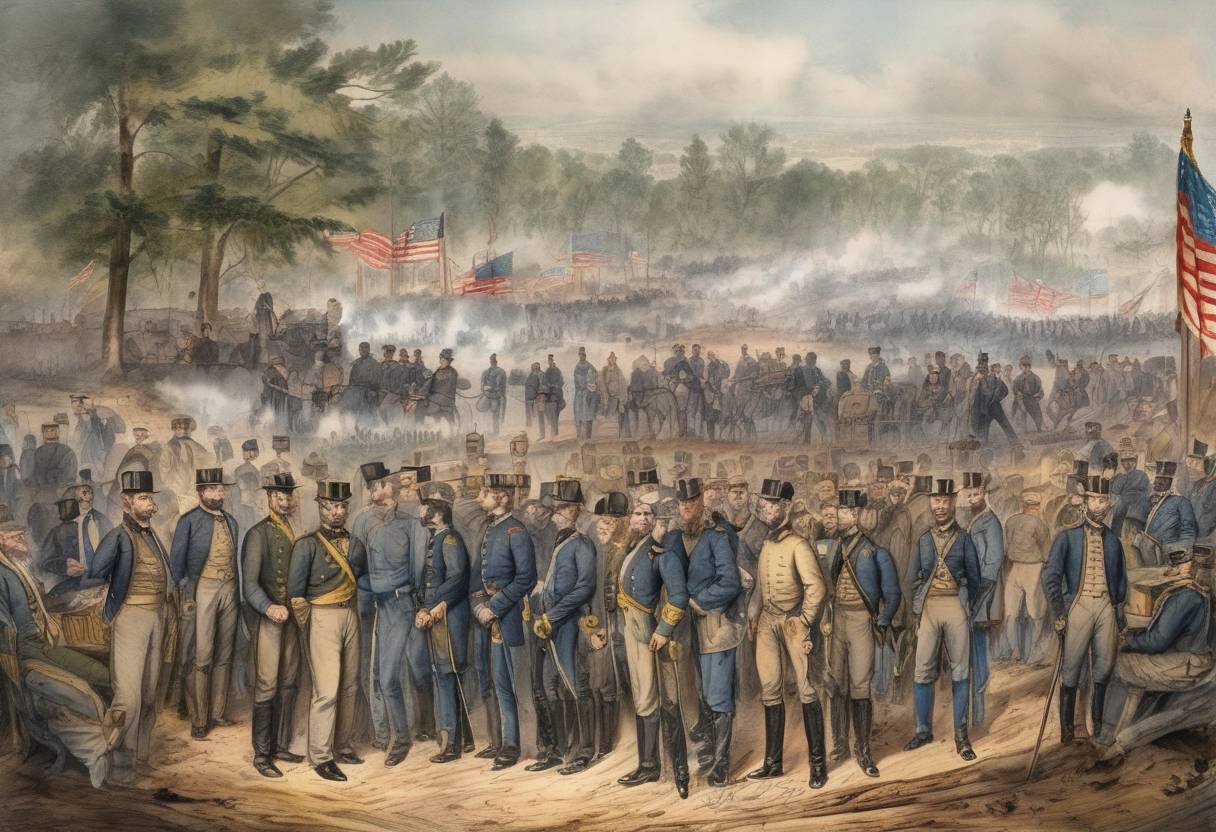
The capture of Atlanta on September 2, 1864, was a pivotal moment in the American Civil War, marking a significant Union victory. The city was a crucial industrial and railroad hub for the Confederacy, making it a strategic target for Union forces. The campaign to seize Atlanta was part of General William Tecumseh Sherman’s larger military strategy to cripple the Confederate war effort.
Sherman’s Atlanta Campaign: Beginning in May 1864, General Sherman led the Union’s Military Division of the Mississippi in a series of battles and maneuvers aimed at capturing Atlanta. His forces engaged Confederate troops commanded by General Joseph E. Johnston and later General John Bell Hood.
Tactics and Strategy: Sherman employed a strategy of flanking maneuvers and direct assaults to outmaneuver Confederate forces. His approach aimed to cut off supply lines and force the Confederates to retreat.
Battle of Atlanta: On July 22, 1864, one of the major battles of the campaign took place. Although the Confederates launched a fierce counterattack, Union forces held their ground, inflicting heavy casualties.
Siege and Bombardment: Throughout August, Sherman laid siege to the city, bombarding it with artillery and cutting off its supply lines, further weakening Confederate defenses.
Evacuation and Capture: On September 1, 1864, Confederate General Hood evacuated his forces from Atlanta, recognizing the untenable position. The following day, Union forces entered the city, marking its official capture.
Destruction of Military Assets: Before leaving, Confederate forces destroyed military supplies and infrastructure to prevent them from falling into Union hands.
Boost to Northern Morale: The capture of Atlanta was a significant morale booster for the Union and contributed to the re-election of President Abraham Lincoln in November 1864.
Sherman’s March to the Sea: Following the capture, Sherman embarked on his famous “March to the Sea,” a campaign of total war aimed at further crippling the Confederacy by destroying resources and infrastructure from Atlanta to Savannah.
Impact on the Confederacy: The loss of Atlanta was a severe blow to the Confederate war effort, disrupting supply lines and diminishing their capacity to sustain prolonged military engagements.
The fall of Atlanta was a turning point in the Civil War, demonstrating the effectiveness of Sherman’s strategies and the Union’s growing dominance. It underscored the importance of industrial and logistical capabilities in modern warfare and set the stage for the eventual Union victory in 1865.
Source: en.wikipedia.org