Vladimir Putin's Return to the Presidency: March 4, 2012
2012 · Moscow, Russia
Vladimir Putin won the Russian presidential election, marking his return to the presidency after serving as Prime Minister.
September 5, 1698
Tsar Peter I of Russia imposed a tax on beards as part of his efforts to modernize Russian society and align it more closely with Western European customs.
Moscow, Russia | Russian government
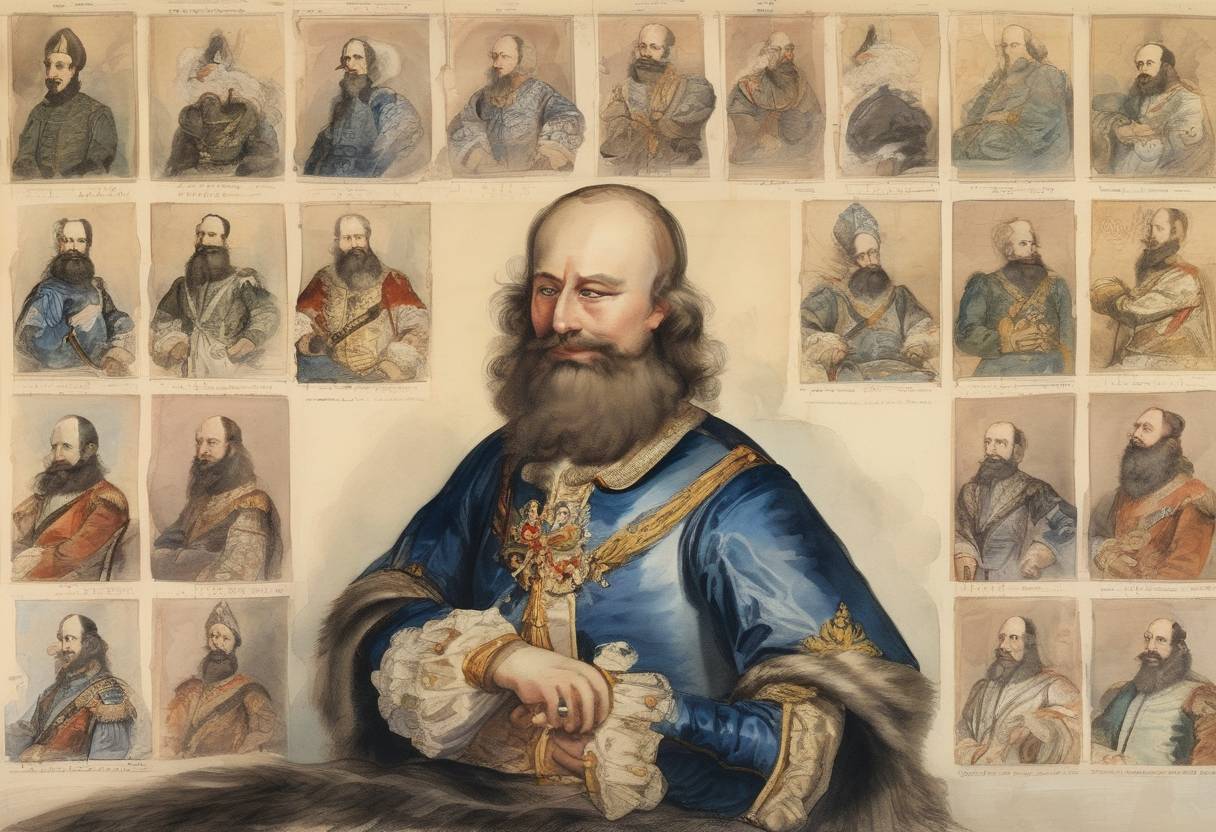
On September 5, 1698, Tsar Peter I of Russia, commonly known as Peter the Great, implemented a tax on beards as part of his sweeping reforms aimed at modernizing Russian society. This move was part of a broader effort to align Russia more closely with Western European customs and practices.
Peter the Great ascended to the Russian throne in 1682 and was determined to transform Russia into a major European power. He embarked on the “Grand Embassy,” a diplomatic mission across Europe from 1697 to 1698, where he studied Western technologies, governance, and culture. Inspired by what he observed, Peter sought to reform Russian society, which he viewed as backward compared to its Western counterparts.
The beard tax was one of several measures Peter introduced to encourage Western-style grooming and attire among Russian men. Beards were traditionally seen as a symbol of Russian identity and Orthodox Christian piety. However, Peter viewed them as emblematic of the old ways he sought to reform.
The beard tax was part of a series of reforms known as the “Westernization” of Russia. These included:
The beard tax and associated reforms were met with resistance from traditionalists and the Orthodox Church, who saw them as an affront to Russian customs and religious values. Despite this opposition, Peter’s reforms laid the groundwork for Russia’s emergence as a significant European power.
In summary, the beard tax of 1698 was a small but symbolic part of Peter the Great’s ambitious agenda to modernize Russia and integrate it into the European cultural and political sphere.
Source: www.britannica.com