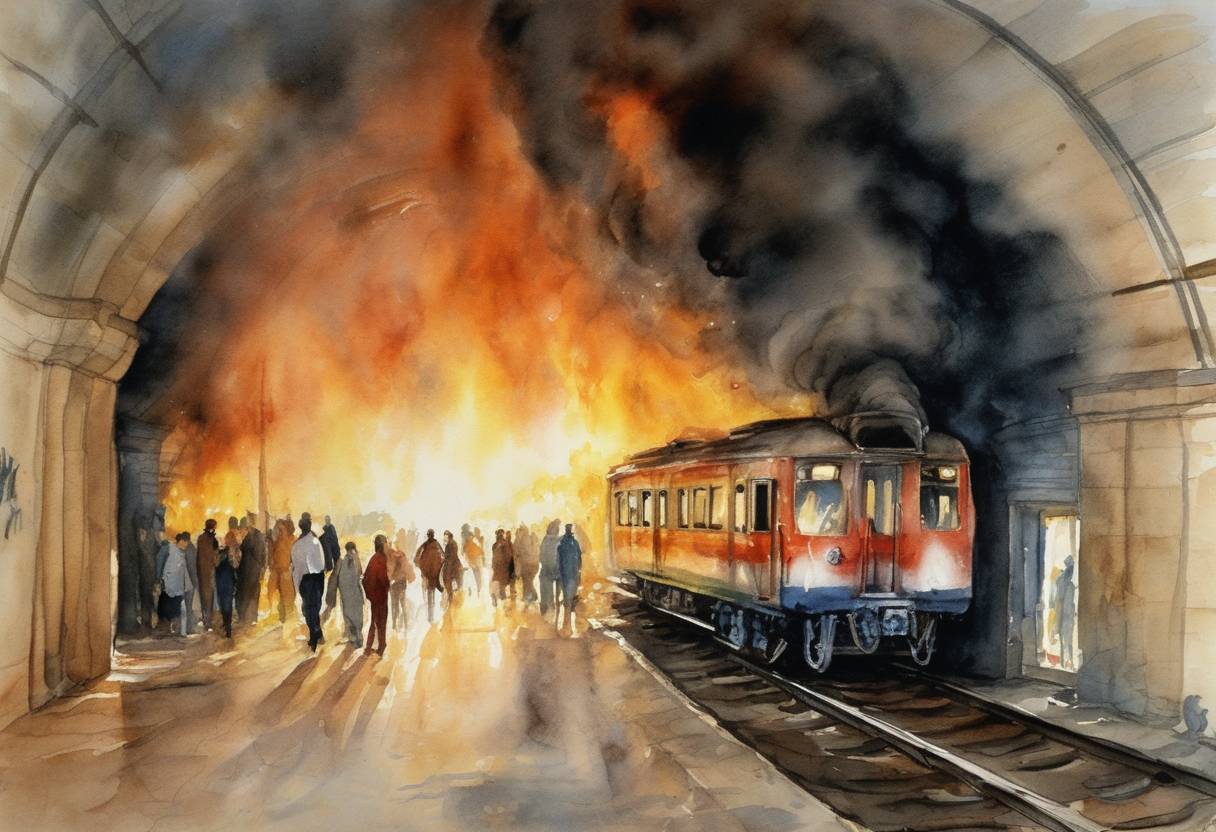
Baku Metro Fire: October 28, 1995
On October 28, 1995, a catastrophic fire erupted in the Baku Metro, the capital city of Azerbaijan, marking one of the deadliest incidents in the history of metro systems worldwide. The tragedy unfolded in the evening on a train traveling between the Ulduz and Nariman Narimanov stations.
Details of the Incident
- Location: The fire broke out in the Baku Metro system, specifically in a train between the Ulduz and Nariman Narimanov stations.
- Casualties: The devastating incident claimed the lives of 289 individuals and injured over 270 others.
- Cause: The fire was reportedly caused by an electrical fault. It resulted in the ignition of highly flammable materials within the train cars, rapidly spreading due to the high-pressure conditions in the tunnel.
- Response and Rescue: The response was severely hampered by the challenges of maneuvering within the cramped and smoke-filled tunnel environment. Rescue efforts were further obstructed by damage to the train’s emergency systems and poor visibility.
Context and Aftermath
- Infrastructure Issues: The Baku Metro, like other Soviet-era transit systems at the time, suffered from aging infrastructure and a lack of proper maintenance, which were factors that contributed to the severity and spread of the fire.
- Public Reaction: This incident led to widespread public mourning and brought significant attention to the safety standards of underground transit systems not just in Azerbaijan, but across the former Soviet states.
- Government Action: Following the disaster, there were comprehensive investigations into the safety protocols of the metro system. This sparked a series of emergency measures and upgrades aimed at preventing such tragedies in the future, including the installation of modern safety equipment and improved emergency response strategies.
The Baku Metro fire highlighted critical vulnerabilities in urban infrastructure safety and served as a grim reminder of the potential dangers present in public transportation systems, influencing metro safety regulations worldwide.