Russia's Military Intervention in the Syrian Civil War: September 30, 2015
2015 · Damascus, Syria
Russia begins its military intervention in the Syrian Civil War, conducting its first airstrikes against anti-government forces.
March 31, 2011
The United Nations authorized airstrikes against forces loyal to Ivorian President Laurent Gbagbo, who refused to concede defeat in the presidential elections.
Abidjan, Ivory Coast | united nations
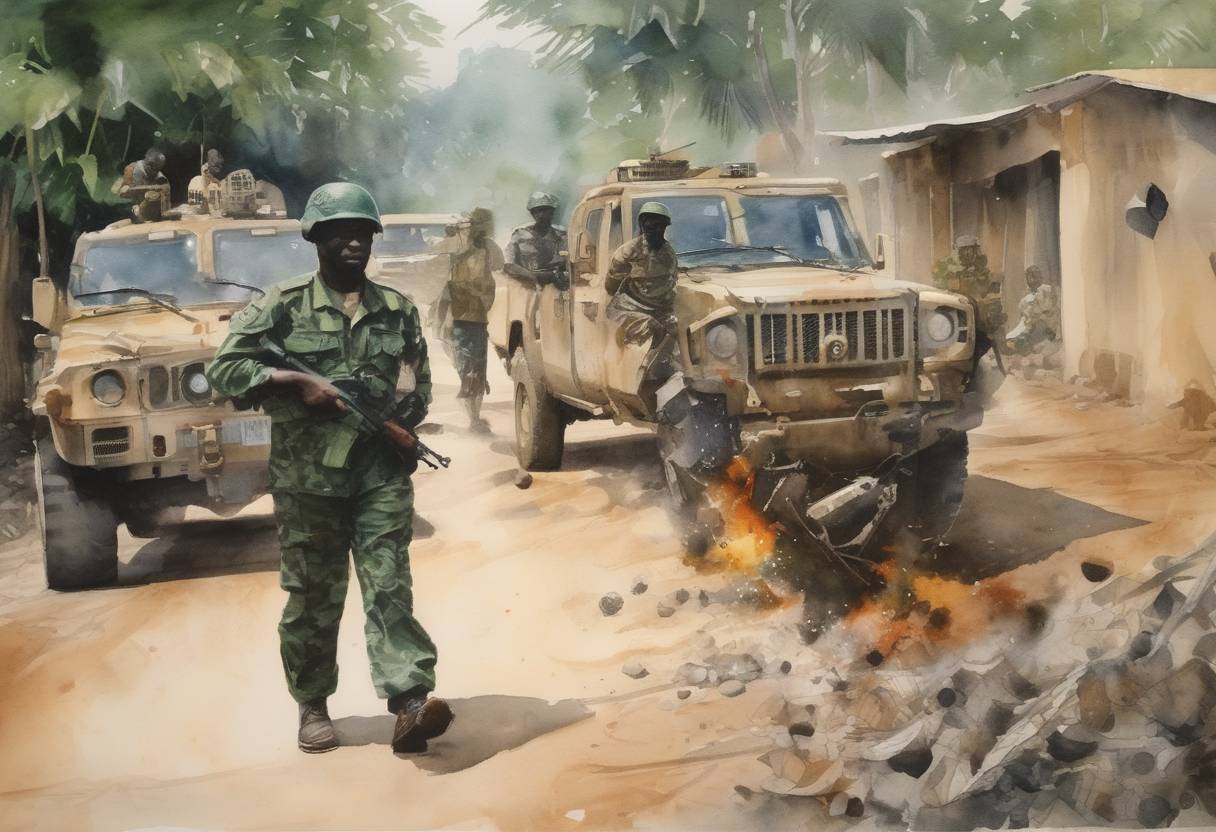
On March 31, 2011, the United Nations Security Council took decisive action by authorizing airstrikes against military forces loyal to the incumbent Ivorian President, Laurent Gbagbo. This decision was pivotal in the context of the political crisis in Côte d’Ivoire following the disputed presidential election held in November 2010.
Presidential Election: The presidential election held on November 28, 2010, was aimed at reuniting the country, divided by civil war since 2002. However, the results escalated into a crisis when both candidates, the incumbent Laurent Gbagbo and opposition leader Alassane Ouattara, claimed victory.
Election Results: Internationally recognized election results endorsed by the United Nations declared Alassane Ouattara as the winner. Despite this, Gbagbo refused to cede power, leading to increasing violence and instability in the country.
Escalating Conflict: The impasse triggered a significant resurgence in armed conflict between forces loyal to Gbagbo and Ouattara, resulting in civilian casualties and widespread displacement.
Security Council Resolution: The UN Security Council stepped in, recognizing the dire humanitarian situation and the threat to international peace and security. They passed a resolution allowing the use of “all necessary means” to protect civilians, leading to the authorization of airstrikes.
Objectives of the Airstrikes: The primary aim of the airstrikes was to neutralize heavy weaponry belonging to Gbagbo’s forces, which posed a threat to civilians and the personnel of the peacekeeping mission, UNOCI (United Nations Operation in Côte d’Ivoire).
Military Pressure on Gbagbo: The authorized airstrikes by French and UN forces increased pressure on Gbagbo, whose restricted regime began to falter under combined military assaults and international isolation.
Resolution of the Standoff: Eventually, this military intervention, along with diplomatic pressures and sanctions, led to the arrest of Laurent Gbagbo on April 11, 2011, marking the end of the power struggle and paving the way for Alassane Ouattara to assume the presidency.
Impact on Côte d’Ivoire: The intervention helped to restore relative stability, although the country continued to grapple with the aftermath of electoral violence and social divisions.
The UN’s military involvement in Côte d’Ivoire was a crucial factor in the peaceful resolution of the political crisis, underlining the international community’s role in responding to severe electoral disputes.
Source: www.un.org