Calvin Coolidge's Historic Radio Broadcast
1924 · Washington D.C., United States
Calvin Coolidge becomes the first President of the United States to deliver a radio broadcast from the White House.
November 20, 1894
The International Meridian Conference time zone system, including the standardization of Greenwich Mean Time (GMT), is formally adopted by the United States.
Washington D.C., United States | U.S. Government
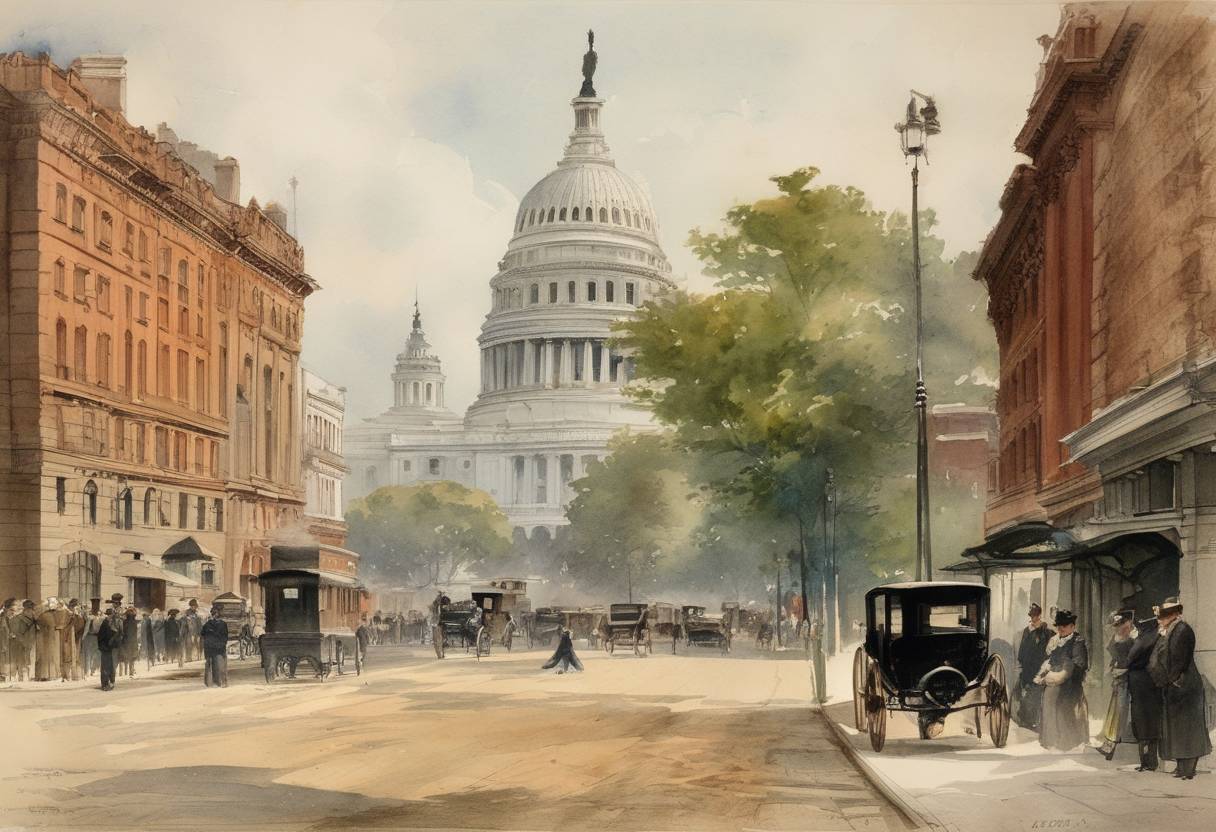
On November 20, 1894, the United States formally adopted the system established by the International Meridian Conference, which included the standardization of time zones and the adoption of Greenwich Mean Time (GMT) as the basis for the international standard time.
International Meridian Conference (1884): Held in Washington, D.C., this conference sought to establish a global standard for timekeeping and longitudinal reference. The principal aim was to establish a prime meridian for universal use in navigation and timekeeping.
Greenwich Meridian (Prime Meridian): The conference chose the meridian passing through the Royal Observatory in Greenwich, England, as the prime meridian, establishing its longitude at 0 degrees. This choice was influenced by the dominance of British nautical charts and the widespread use of GMT by mariners and shipping industries.
Time Zones System: The conference introduced the division of the world into 24 time zones, each one covering 15 degrees of longitude. This organized system facilitated synchronizing clocks across different regions globally.
Significance of GMT: GMT became the baseline for the world’s time zones, with each zone being defined as GMT plus or minus a certain number of hours. This standardization allowed for more consistent and reliable scheduling for international travel and communications.
Legislation and Implementation: On November 20, 1894, the United States legally recognized the system, thus promoting uniformity across states and consolidating national schedules in transportation, communication, and commerce.
Impact on Society: The adoption improved coordination across multiple sectors. Railroads, in particular, benefited greatly from standardized time, which helped prevent accidents and ensured more efficient scheduling of trains.
The adoption of the international time zone system marked a critical shift in global coordination. It reflected the increasing interconnectedness of the world at the end of the 19th century and laid the groundwork for future developments in international relations and technology. The decision by the United States to adopt GMT was part of a broader movement toward globalization and the standardization of international practices.
Source: www.timeanddate.com