1818 · London, United Kingdom
The Convention of 1818 was signed between the United States and the United Kingdom, establishing the 49th parallel as the border between the U.S. and British North America.
November 19, 1794
The Jay Treaty is signed between the United States and Great Britain, intending to resolve lingering issues from the American Revolutionary War and to facilitate ten years of peaceful trade between the United States and Britain.
London, United Kingdom | U.S. Government, British Government
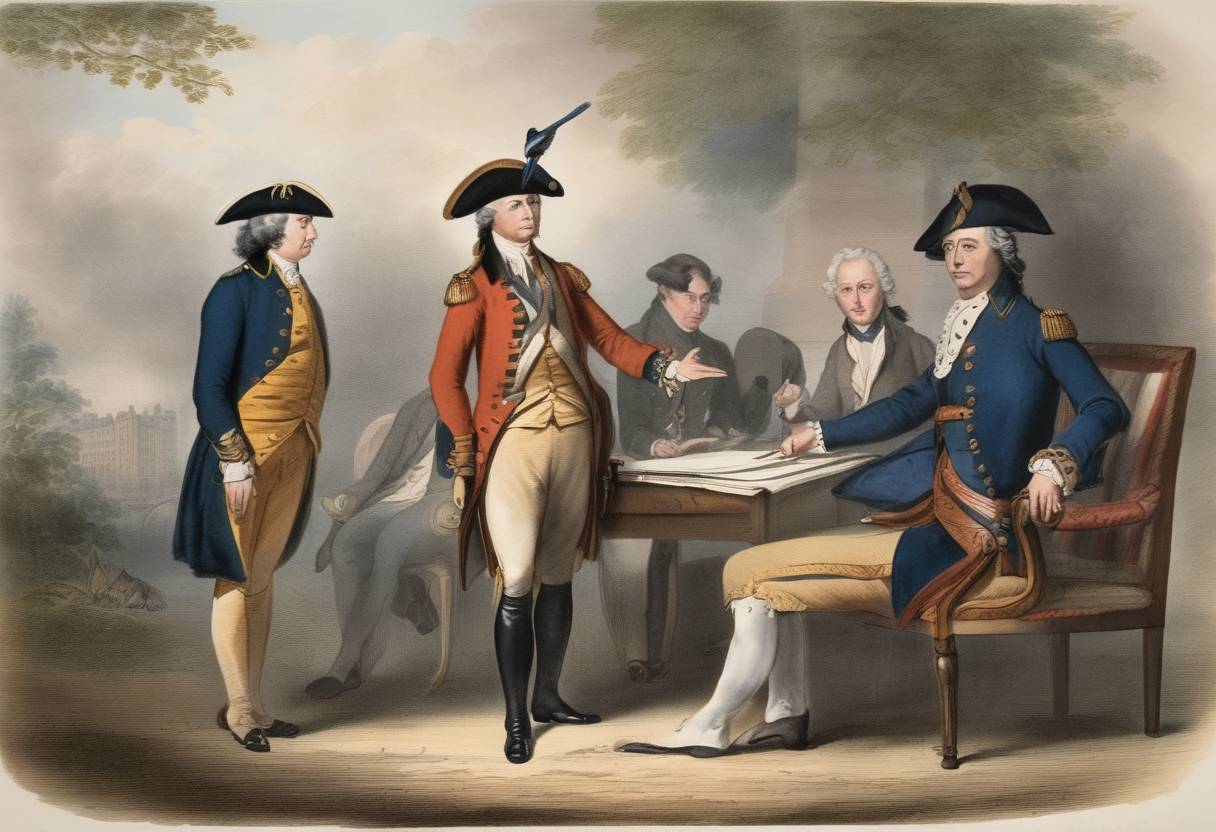
On November 19, 1794, the United States and Great Britain signed the Treaty of Amity, Commerce, and Navigation, commonly known as the Jay Treaty. This pivotal agreement aimed to resolve outstanding issues between the two nations that had persisted since the American Revolutionary War. The treaty was named after John Jay, the Chief Justice of the United States, who spearheaded the negotiations.
Following the end of the American Revolutionary War with the Treaty of Paris in 1783, tensions lingered between the United States and Great Britain. Several issues remained unresolved, including:
The Jay Treaty sought to address these issues through various stipulations, which included:
The Jay Treaty was highly controversial in the United States, sparking vehement debate among political factions. Federalists, led by Alexander Hamilton, supported the treaty as a pragmatic approach to stabilize relations and secure economic benefits. In contrast, the Democratic-Republicans, led by Thomas Jefferson, denounced it as overly conciliatory to Great Britain, potentially compromising U.S. sovereignty.
Despite domestic opposition, the ratification of the treaty helped avert potential military conflict with Britain and is credited with fostering a decade of peaceful trade, contributing to the stabilization of the early U.S. economy. The treaty also set a precedent for utilizing diplomacy to resolve international conflicts.
The Jay Treaty, although partially effective and fraught with controversy, demonstrated the complexities of international diplomacy during this formative period in American history, underscoring the young nation’s efforts to assert its independence and navigate the geopolitical landscape of the late 18th century.
Source: en.wikipedia.org