NATO Air Strikes Against Yugoslavia: Beginning of the Kosovo War Intervention
1999 · Belgrade, Yugoslavia
NATO launched air strikes against Yugoslavia, marking the beginning of the Kosovo War intervention.
April 17, 1941
Yugoslav forces surrendered to Germany, marking the end of the Axis invasion of Yugoslavia during World War II.
Belgrade, Yugoslavia | German Army
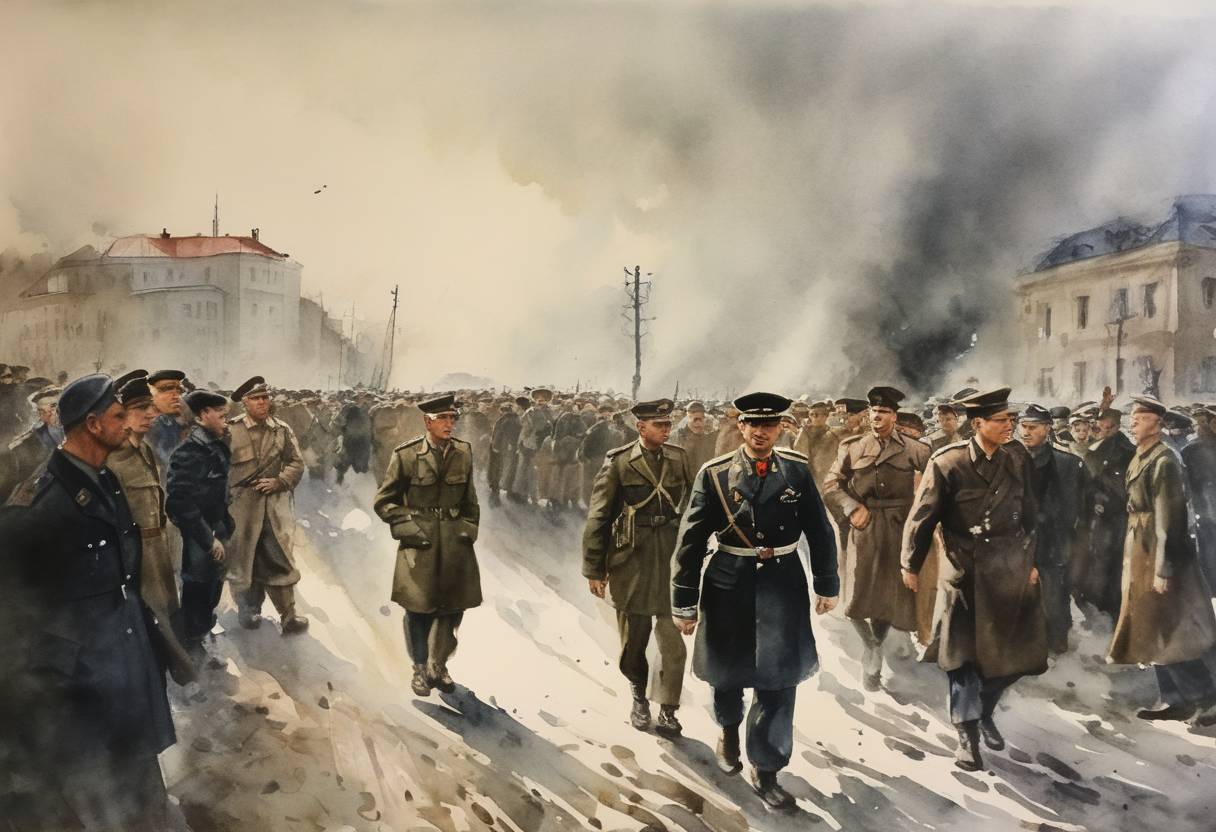
The Axis invasion of Yugoslavia in World War II reached a pivotal conclusion on April 17, 1941, when Yugoslav forces formally surrendered to Germany. This event marked the end of a swift and decisive military campaign initiated by Axis powers primarily led by Nazi Germany, with contributions from Italy and Hungary.
The invasion of Yugoslavia was precipitated by a coup in late March 1941, which overthrew the Yugoslav government that had aligned with the Axis powers by signing the Tripartite Pact. The coup, led by pro-Allied officers, angered Adolf Hitler, prompting him to order immediate military action against the country.
On April 6, 1941, German forces invaded Yugoslavia, launching a series of coordinated attacks from Austria, Hungary, and Romania. The Luftwaffe heavily bombed the capital city of Belgrade, causing significant destruction and civilian casualties, as part of Operation Retribution.
Overwhelmed by the speed and magnitude of the German blitzkrieg tactics, Yugoslav forces were unable to form a coordinated and effective defense. The military resistance quickly crumbled under the pressure of the Axis onslaught. Within 11 days of the initial invasion, the Yugoslav government sought peace, leading to the formal surrender on April 17, 1941.
The surrender document was signed by Yugoslav General Danilo Kalafatović at Belgrade. Following the surrender, the German High Command orchestrated the occupation and partitioning of Yugoslavia, dividing it among several Axis allies including Hungary and Bulgaria, while Germany and Italy took control of significant portions of territory.
The quick and decisive defeat of Yugoslavia had several consequences:
Partition and Occupation: Yugoslavia was dismembered, with territories annexed or placed under puppet regimes. The Independent State of Croatia was established by the Ustaše, a fascist organization aligned with Hitler.
Resistance Movements: The occupation spurred the rise of partisan resistance movements. The Partisans, led by Josip Broz Tito, and the Chetniks, a royalist resistance group, became active in the fight against Axis forces, engaging in a complex and often contentious relationship.
Strategic Shifts: The Axis victory in Yugoslavia allowed for the redirection of German military efforts towards the Balkans, facilitating subsequent invasions, including Greece.
The invasion and subsequent occupation of Yugoslavia became a significant episode in the broader narrative of the Axis expansion in World War II, showcasing the devastating effectiveness of blitzkrieg tactics and setting the stage for prolonged resistance and conflict in the region.
Source: en.wikipedia.org