Christopher Columbus Lands on Jamaica - May 5, 1494
1494 · Jamaica, Jamaica
Christopher Columbus lands on the island of Jamaica and claims it for Spain.
November 15, 1492
Christopher Columbus noted in his journal that he observed tobacco for the first time among the indigenous people of Cuba.
Cuba, Cuba
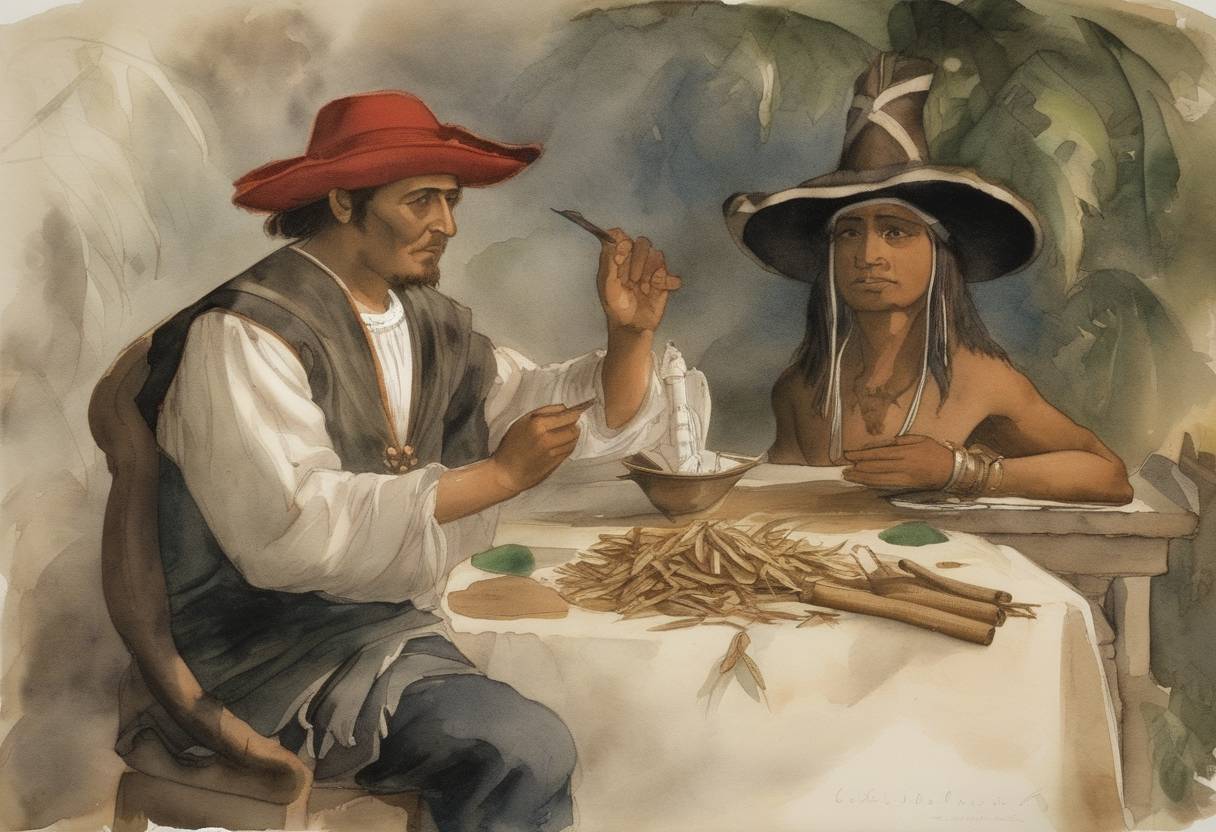
On November 15, 1492, the Genoese navigator Christopher Columbus, during his first voyage to the New World under the auspices of Spanish monarchs Ferdinand and Isabella, recorded an encounter that would bear significant yet unforeseen consequences for Europe and beyond. While exploring what he believed might be India, Columbus and his crew were on the island now known as Cuba. It was here that they observed the custom of smoking tobacco among the indigenous people, specifically the Taíno - a significant cultural moment that marked the first documented European sighting of tobacco.
Columbus embarked on his transatlantic voyage with the aim of finding a western sea route to the East Indies. During this expedition, he inadvertently landed in the Bahamas, later moving on to explore parts of what are now Cuba and Hispaniola. At this juncture in mid-November, while journeying through Cuba, his exploration was marked by interactions with the native inhabitants who introduced him to various aspects of their culture.
In his journal entry for November 15, Columbus noted that the Taíno people used a form of tobacco they called “cohiba.” Upon meeting the indigenous population, two of Columbus’s men, Rodrigo de Jerez and Luis de Torres, were sent inland and observed the natives wrapping dried leaves in palm or maize husks, then lighting one end and inhaling the smoke from the other, a practice completely alien to Europeans at the time.
Though Columbus himself paid little attention to the habit of smoking tobacco during the journey, deeming it merely a curio of the natives’ lifestyle, the introduction of tobacco to Europe would have vast economic and cultural implications. Within a few decades, tobacco became a staple crop in several European colonies, utilizing the plant both for its medicinal value—falsely believed to cure a variety of ailments—and as a recreational substance. The crop’s popularity spurred plantations and shaped colonial economies, notably in the Americas, ultimately playing a role in the complex trade networks that fueled global interaction during the Age of Exploration.
The observation of tobacco by Columbus was part of a larger exchange of goods, ideas, and cultures between the New and Old Worlds, often referred to as the Columbian Exchange. This dynamic period involved not only tobacco but also led to significant agricultural, culinary, and social transformations, along with disease exchanges that had profound demographic effects. Columbus’s incidental documentation of tobacco would lay the groundwork for a global industry and a lasting legacy in cultural and economic history.
Source: www.history.com