Christopher Columbus Discovers Jamaica - May 3, 1494
1494 · Jamaica, Jamaica
Christopher Columbus discovered the island of Jamaica during his second voyage to the Americas.
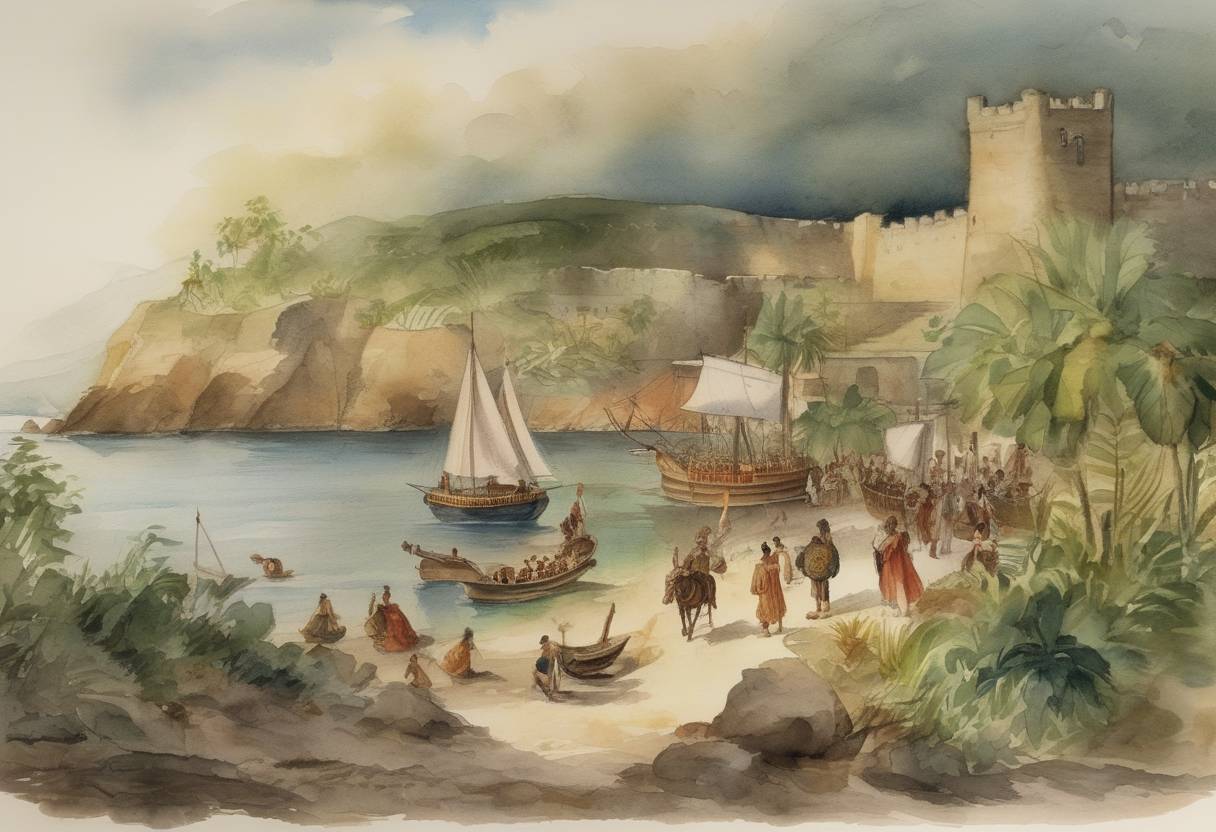
In 1493, Christopher Columbus embarked on his second voyage to the New World with a fleet of 17 ships and approximately 1,200 men. The primary goals of this expedition were to establish Spanish settlements in the New World and further explore the Caribbean region, which Columbus had encountered during his first voyage.
On November 18, 1493, Columbus and his fleet arrived at the island of Borikén, known today as Puerto Rico. This island was inhabited by the Taíno people, a subgroup of the Arawakan-speaking indigenous peoples of the Caribbean.
The arrival of Columbus in Puerto Rico was part of the larger Age of Exploration, a period characterized by European maritime exploration across the globe. It marked the beginning of sustained European engagement in the Caribbean, leading to widespread colonization and profound changes in the Americas.
Source: en.wikipedia.org