Founding of Rio de Janeiro: March 1, 1565
1565 · Rio de Janeiro, Brazil
The city of Rio de Janeiro was founded by the Portuguese as a strategic defense against French privateers who were attempting to control the area.
April 25, 1768
The Portuguese reestablish control over the island of Sainte-Marie, off the east coast of Madagascar, after ousting pirates who had occupied it.
Sainte-Marie Island, Madagascar | Portuguese Empire
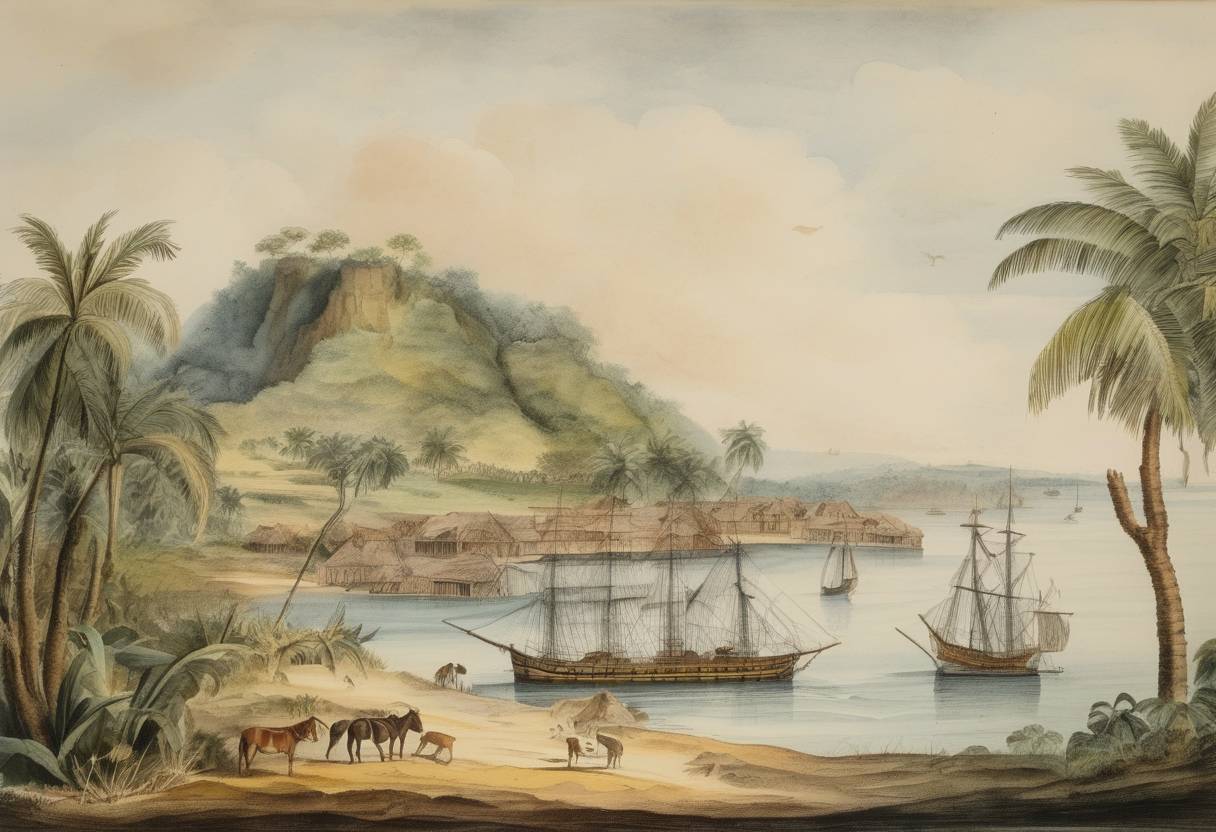
On April 25, 1768, a significant event unfolded as Portuguese forces successfully reestablished control over the island of Sainte-Marie in the Indian Ocean, situated off the east coast of Madagascar. This strategic victory marked the end of a prolonged period during which the island had been under the occupation of pirates.
Sainte-Marie, known locally as Nosy Boraha, had been a notable haven for pirates since the late 17th century. Its geographical position made it a convenient and strategic base for piratical activities along the busy trade routes of the Indian Ocean. The island’s natural harbor provided shelter and a supply point for pirate ships, making it a focal point for numerous infamous sea rogues, including pirates like William Kidd and Henry Every.
During the early 18th century, various European powers operated in the region, vying for control over trade routes and territories. The Portuguese, with a long-standing presence in the Indian Ocean, recognized the value of Sainte-Marie, both for its strategic location and for the necessity to curtail pirate activities that threatened their trading operations.
In the lead-up to the reoccupation of Sainte-Marie, the Portuguese undertook careful planning to dislodge the pirates. While specific accounts of the battles are limited, it is known that the Portuguese employed naval and land forces to subdue the pirate stronghold.
Their success on April 25, 1768, can be attributed to superior military organization and strategy, which ultimately overwhelmed the pirate resistance. The capture of Sainte-Marie enabled the Portuguese to restore order and secure the island as a part of their network of Indian Ocean territories.
With the expulsion of the pirates, the Portuguese were able to reinstate structured trade routes and a stable maritime presence in the region. The control of Sainte-Marie reinforced Portuguese influence over the crucial Indian Ocean maritime pathways and diminished the threat posed by piracy.
While this event marked a downturn in pirate activity in the region, piracy would continue to affect maritime operations worldwide. The Portuguese reoccupation of Sainte-Marie highlighted the ongoing struggle between European powers and non-state actors like pirates for control of global trade routes during this period.
This operation exemplified the broader geopolitical strategies employed by colonial powers in the 18th century, reflecting the complex interplay between commerce, military might, and territorial control.
Source: en.wikipedia.org