Empress Wu Zetian Abdicates the Throne
705 · Luoyang, China
Empress Wu Zetian, the only female emperor in Chinese history, abdicates the throne and is succeeded by her son, Emperor Zhongzong, marking the restoration of the Tang Dynasty.
February 15, 0706
Empress Wu Zetian, the only woman to ever officially reign as emperor in Chinese history, abdicates the throne and is succeeded by her son, Emperor Zhongzong, restoring the Tang Dynasty.
Luoyang, China | Tang Dynasty
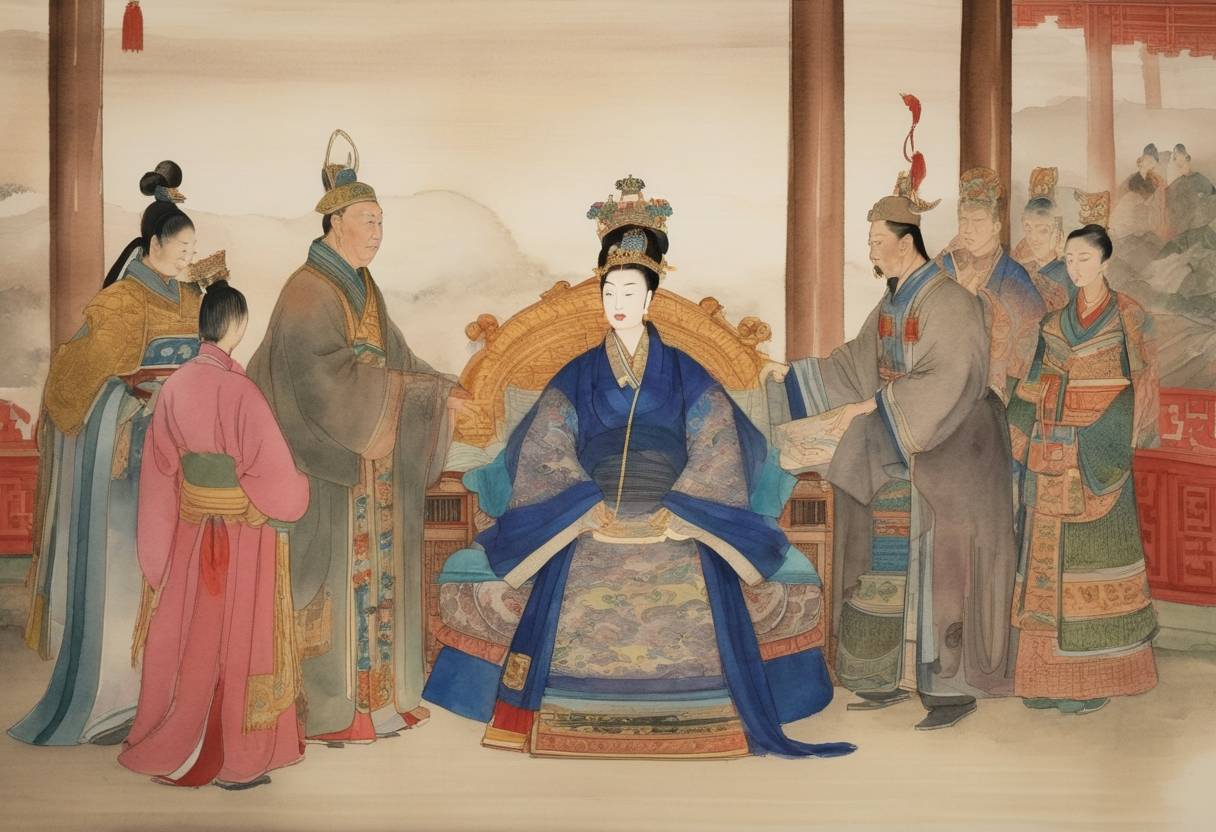
Wu Zetian, the first and only female emperor of China, officially abdicated the throne on February 15, 705. Her abdication marked the end of her self-proclaimed Zhou Dynasty (690–705) and led to the restoration of the Tang Dynasty under her son, Emperor Zhongzong.
Wu Zetian began her political life during the Tang Dynasty, where she gained significant influence as a consort to Emperor Taizong and later as a wife to his successor, Emperor Gaozong. Following Gaozong’s death, Wu Zetian effectively controlled the empire through her sons, who were nominal emperors, until she declared herself emperor in 690, founding the Zhou Dynasty. During her reign, Wu implemented numerous reforms, strengthened the civil service examination system, and expanded the empire’s borders.
Wu Zetian’s reign was marked by both achievements and controversies, including charges of cruelty against her opponents and manipulation in court politics. As she aged, Wu became increasingly reliant on favored court officials, particularly the Zhang brothers, whose influence led to widespread resentment among the other court factions.
In the early 8th century, a political conspiracy known as the Shenlong Coup, orchestrated by officials who had been removed or marginalized, aimed to restore the Tang dynasty. In 705, these officials, led by Chancellor Zhang Jianzhi, launched a coup at the imperial palace. They seized the Zhang brothers and forced Wu Zetian to abdicate. Ill and politically isolated, Wu Zetian retreated, leaving the throne to her son Zhongzong.
With Wu Zetian’s abdication on February 15, 705, Emperor Zhongzong was reinstated as ruler, marking the return of the Tang Dynasty. His restoration brought back some sense of stability and continuity in the Chinese empire, given the Tang’s previous administrative accomplishments and cultural flourishing.
The abdication of Wu Zetian is significant for several reasons:
Restoration of Dynasty: It re-established the Tang Dynasty, which would continue until 907, a period known for its cultural and political achievements.
Impact on Female Rule: Wu Zetian’s unprecedented reign as an empress in a male-dominated society showcased the complexities of female leadership and left a lasting legacy on Chinese history, including various reforms she implemented.
Historical Interpretation: Her rule has been the subject of debate, with historical narratives often influenced by later Confucian scholars who criticized her methods. However, recent historiography has taken a more nuanced view of her contributions and governance.
Wu Zetian died later that same year in December, closing a dramatic chapter in Chinese imperial history. Her life and reign remain a focal point of study for their unique challenges to traditional gender roles and political authority in ancient China.
Source: en.wikipedia.org