Explorer 6: The First Satellite Images of Earth
1959 · Cape Canaveral, United States
The United States launched Explorer 6, which was equipped with a photocell scanner and became the first satellite to send back images of Earth from space.
February 1, 1958
The United States successfully launches its first satellite, Explorer 1, marking the country's entry into the space race.
Cape Canaveral, United States | NASA
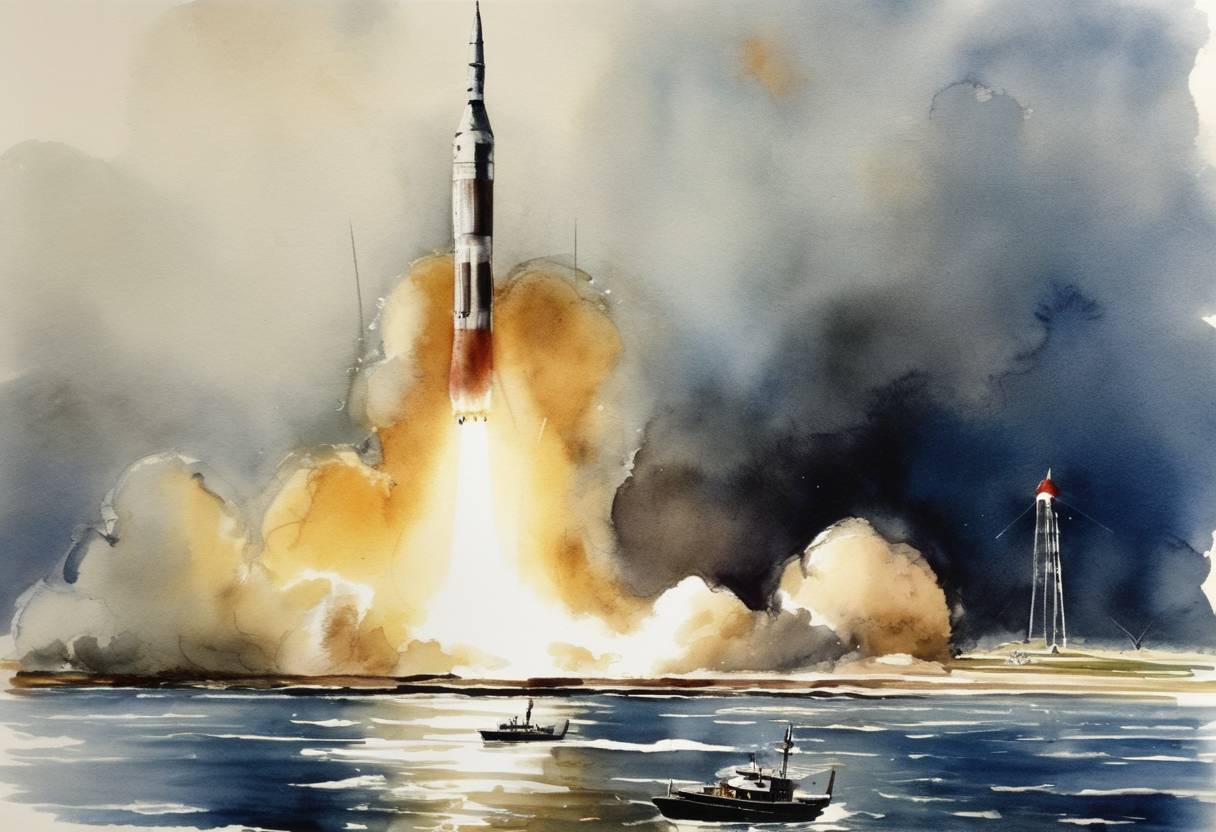
On February 1, 1958, the United States successfully launched its first satellite, Explorer 1, from Cape Canaveral, Florida, at 10:48 PM EST. This event marked a significant milestone in the early days of the space race, showcasing American scientific and technological capabilities in response to Soviet Union’s earlier achievements.
In the context of the Cold War, the launch of Sputnik 1 by the Soviet Union on October 4, 1957, had stunned the world and initiated the space race. The United States, feeling compelled to demonstrate its prowess, accelerated its efforts to develop and launch its own satellite.
Explorer 1 was developed by the Jet Propulsion Laboratory (JPL) at the California Institute of Technology, under the guidance of Dr. William H. Pickering, Dr. James A. Van Allen, and Dr. Wernher von Braun. It was the first successful mission of the United States’s satellite program and was carried into orbit by a modified Redstone missile, known as the Juno I launch vehicle.
The satellite itself was relatively small, measuring about 80 inches long and weighing approximately 30 pounds. Its primary scientific instrument was the cosmic ray detector, designed by Dr. James Van Allen, which played a crucial role in the discovery of the Earth’s Van Allen radiation belts.
The successful deployment of Explorer 1 not only confirmed the United States’ capability in space endeavors but also generated critical new knowledge about the Earth’s radiation environment. The discovery of the Van Allen belts—regions of trapped high-energy particles—was particularly significant, providing insights into planetary magnetospheres and their interactions with solar winds.
Explorer 1’s success prompted further advancements in space exploration by the US, laying the groundwork for NASA’s formation later that year on July 29, 1958. It also intensified the competition between the US and the Soviet Union, fueling progress in spaceflight technologies and celestial studies during the subsequent decades—critical components of the space race narrative.
This pivotal event highlighted the beginning of a new era in space exploration, underscoring the importance of orbital satellites for scientific inquiry and geopolitical strategies during the mid-20th century.
Source: www.nasa.gov