Edward III Becomes King of England
1327 · London, England
Edward III becomes King of England after his father, Edward II, is deposed.
January 13, 1328
Edward III of England is declared King of England after his father Edward II is deposed.
London, England | English Monarchy
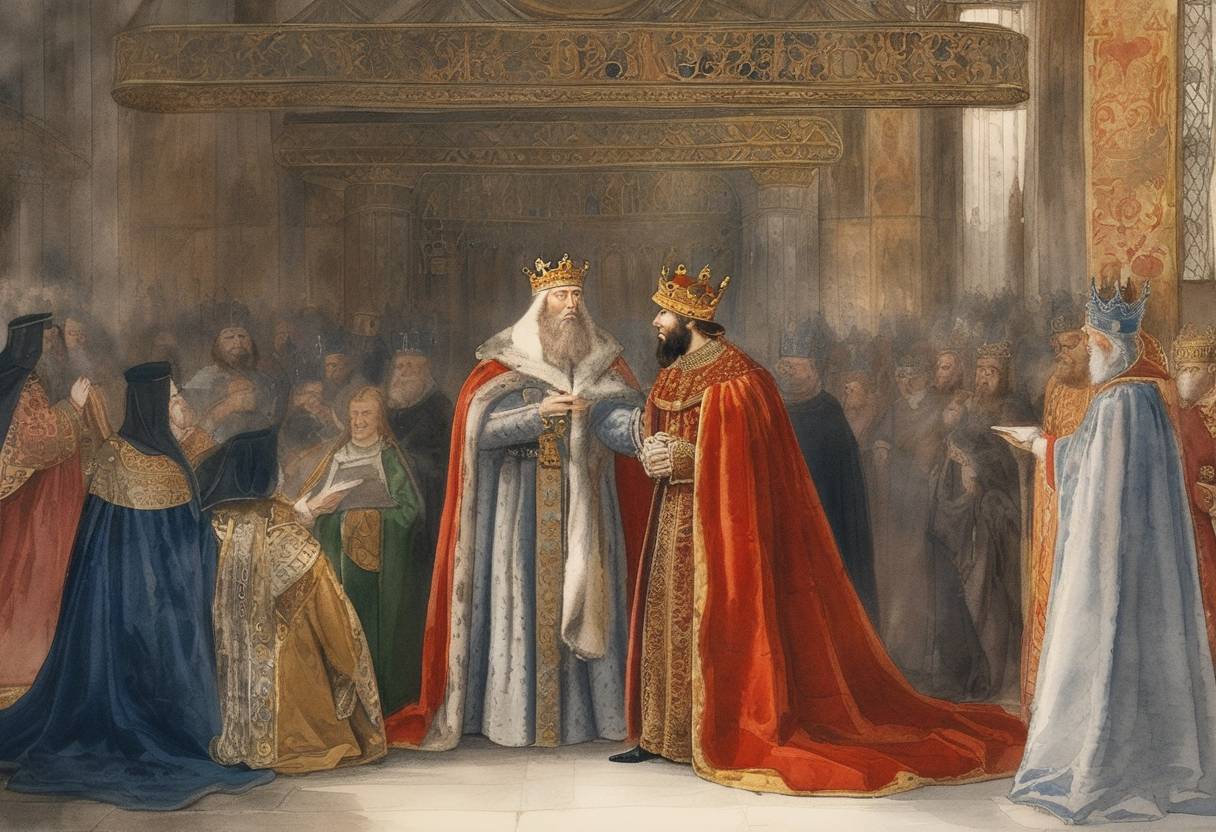
On January 13, 1328, Edward III was officially proclaimed King of England following the deposition of his father, Edward II. This event marked a significant turning point in English history, resulting from a turbulent period of internal strife and political maneuvering.
Edward II’s reign (1307–1327) had been characterized by military failures, notably in Scotland, where he suffered a humiliating defeat at the Battle of Bannockburn in 1314, and political mismanagement, which included favoritism towards court favorites such as Piers Gaveston and later, Hugh Despenser. These issues led to widespread dissatisfaction among the nobility and eventually fueled calls for his removal.
Queen Isabella of France, Edward II’s estranged wife, played a central role in the events leading up to the deposition. Having secured support from her lover, Roger Mortimer, and other disenfranchised nobles, they orchestrated a rebellion that culminated in Edward II’s arrest in 1327.
Edward II was deposed by Parliament on January 25, 1327, in a process that highlighted the growing power of the English Parliament, as well as the limits of royal authority. This deposition set a precedent for holding reigning monarchs accountable to their subjects and established the principle that a king could be removed if deemed incapable of ruling.
Edward III, born on November 13, 1312, ascended to the throne at the tender age of fourteen. Initially, his reign was under the regency of his mother Isabella and her ally Mortimer, as Edward was not old enough to rule independently. This period was marked by the dominance of Mortimer, who effectively controlled the government.
Edward III’s eventual majority in 1330 heralded the end of Mortimer’s influence. In a daring coup, Edward III arrested Mortimer, asserting his authority and beginning his personal rule. His reign ultimately restored royal prestige following his father’s troubled kingship and initiated a period of military success, most notably during the early years of the Hundred Years’ War against France.
Edward III’s ascension highlights the complex interplay of power, family dynamics, and political machinations in medieval England and set the stage for a reign that would significantly shape the nation’s history and identity.
Source: www.britannica.com