The Legislative Union of Great Britain and Ireland: Formation of the United Kingdom
1801 · London, United Kingdom
The legislative union of Great Britain and Ireland is completed to form the United Kingdom of Great Britain and Ireland.
August 4, 1805
William Pitt the Younger, British Prime Minister, enforced the Income Tax Act, reintroducing income tax in the UK after public opposition had led to its previous abolition.
London, United Kingdom | British Parliament
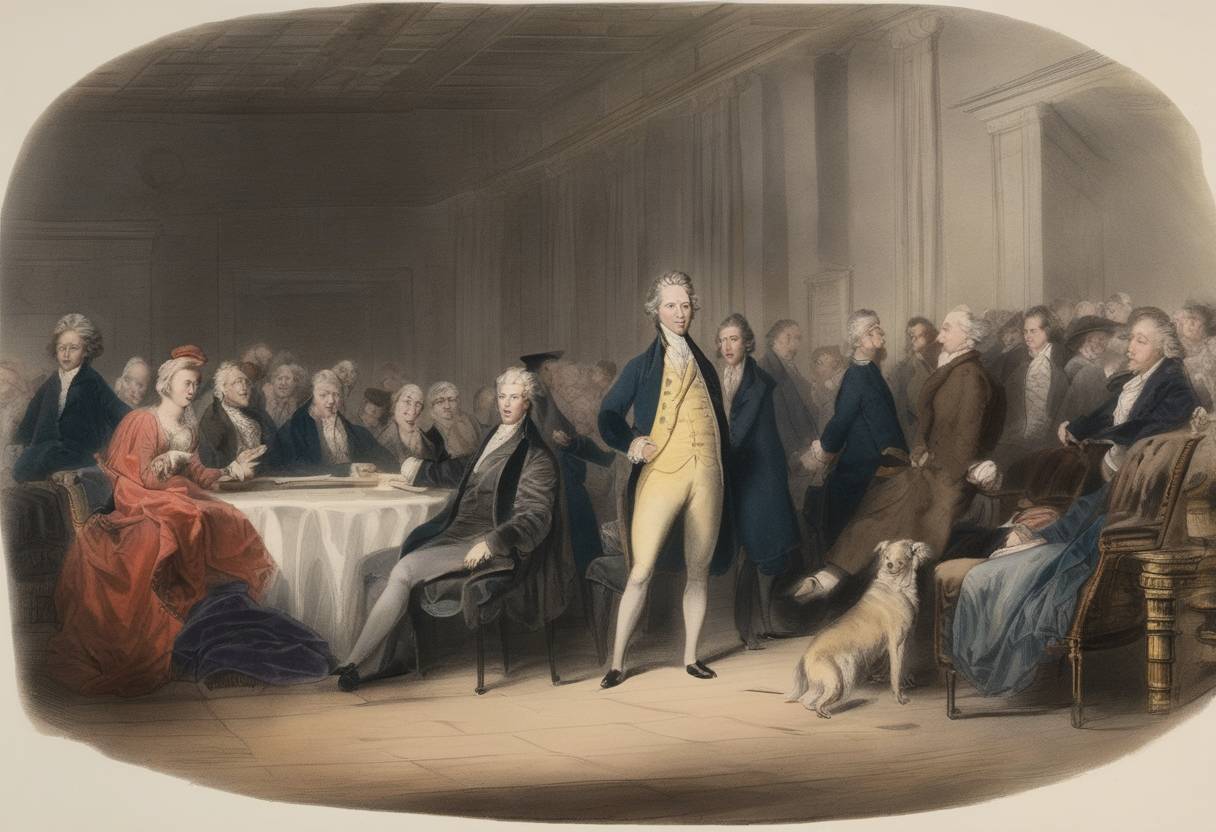
On April 8, 1805, William Pitt the Younger, the Prime Minister of the United Kingdom, played a crucial role in cementing the reintroduction of the Income Tax Act during a period marked by the Napoleonic Wars. This financial measure was reintroduced to support Britain’s war effort against Napoleonic France and to stabilize the national economy, which was under significant strain from ongoing military expenditures.
Early Income Tax: The concept of income tax was first introduced by Pitt in 1799, primarily as a temporary measure to fund military campaigns against Revolutionary France. This tax required individuals to contribute a percentage of their income above a certain threshold.
Abolition and Reintroduction: The original income tax was abolished in 1802 following the Treaty of Amiens, which temporarily ended hostilities between Britain and France. However, tensions soon resumed, leading to a renewed conflict with the outbreak of the Napoleonic Wars. As military costs soared, Pitt recognized the necessity of reinstating the tax to supplement governmental revenues.
Legislative Action: On April 8, 1805, Pitt successfully navigated the complexities of British politics to pass the Income Tax Act. This effort was critical to bolstering the financial foundation required to sustain the war effort.
Tax Structure: The Act imposed a graduated tax on all incomes over £60, marking a shift from previous flat-rate taxation systems and broadening the tax base to include more individuals as contributors to the nation’s fiscal needs.
Financial Stabilization: The reintroduction of the income tax provided the British government with a tangible revenue stream, which was vital for financing military operations and reducing the national debt during wartime.
Long-Term Significance: The 1805 Income Tax Act set a precedent for modern taxation in Britain. Despite its unpopularity among some economic and political circles, it demonstrated the government’s ability to implement direct taxation as a legitimate tool for national financing.
Legacy of Pitt’s Policy: The principles enshrined in the 1805 legislation laid the groundwork for Britain’s later adoption of permanent income taxation, illustrating how short-term policy shifts can have enduring impacts on fiscal policy.
William Pitt the Younger’s actions in reintroducing income tax exemplified a pragmatic approach to governance, as he balanced the immediate needs of wartime financing with establishing foundations for long-term economic policy within the United Kingdom.
Source: www.parliament.uk