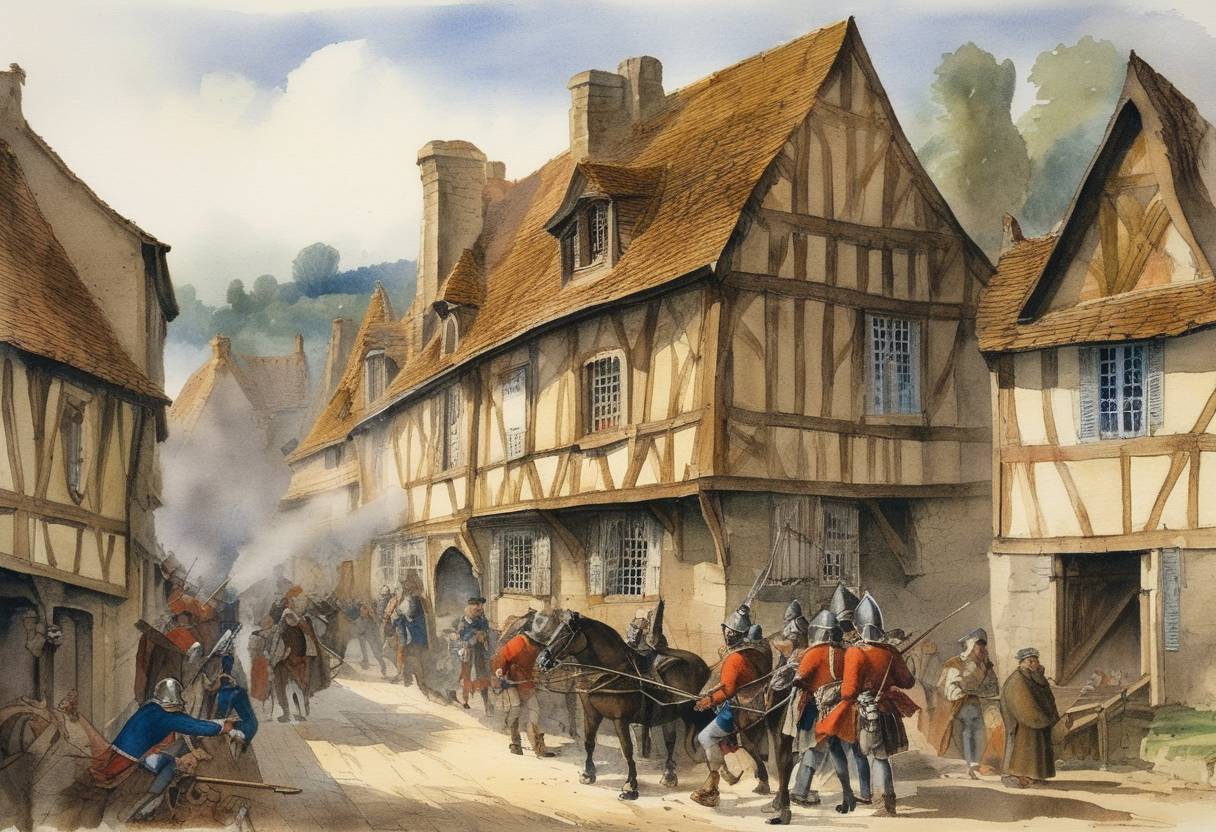
The Battle of the Herrings: February 12, 1429
The Battle of the Herrings, a significant engagement during the Hundred Years’ War, occurred on February 12, 1429. This clash marked a crucial moment in the long-standing conflict between England and France. The battle is named intriguingly after herrings because of the unusual circumstances surrounding it.
Background
The Hundred Years’ War (1337-1453) was a prolonged series of conflicts between the Kingdom of England and the Kingdom of France, primarily over claims to the French throne. By the late 1420s, England had achieved significant victories and held large portions of France, but the conflict was far from over, with both sides vying for strategic advantage.
Context and Lead-Up
The Battle of the Herrings took place near the village of Rouvray, close to Orléans, a key French stronghold under siege by the English from 1428 to 1429. The English were determined to support their forces at Orléans, which was a pivotal point in their campaign to conquer more of northern France.
A supply convoy, led by Sir John Fastolf, was on its way to Orléans from Paris. The convoy was loaded with much-needed supplies for the besieging English army, including barrels of salted herring—a staple for Lent.
The Battle
The French, aware of the convoy’s importance, sought to intercept it to cut off the supply line to the besieging forces. The French-Scottish army, commanded by Charles de Bourbon and Sir John Stewart of Darnley, attempted to halt the convoy. However, Fastolf anticipated an attack and prepared defensive measures.
When the French and Scottish forces engaged, Fastolf’s troops constructed a makeshift defensive formation using the supply wagons, fortifying their position. Despite multiple attacks and the numerical superiority of the French-Scottish army, the English forces effectively repelled the assault.
Outcome and Significance
The English successfully defended the convoy, and the supplies—including the barrels of herring—reached the besieging army at Orléans. The victory ensured the English maintained pressure on Orléans, although it ultimately remained out of their grasp, especially following the resurgence of French fortunes thanks in part to Joan of Arc later in 1429.
The battle demonstrated the effectiveness of English military tactics and their ability to protect vital supply routes. It also highlighted the challenges faced by the French and their allies in overcoming English dominance during this period of the war.
The “Battle of the Herrings” persists as a notable moment in military history due to its strategic implications and the curious circumstances that led to its memorable name.