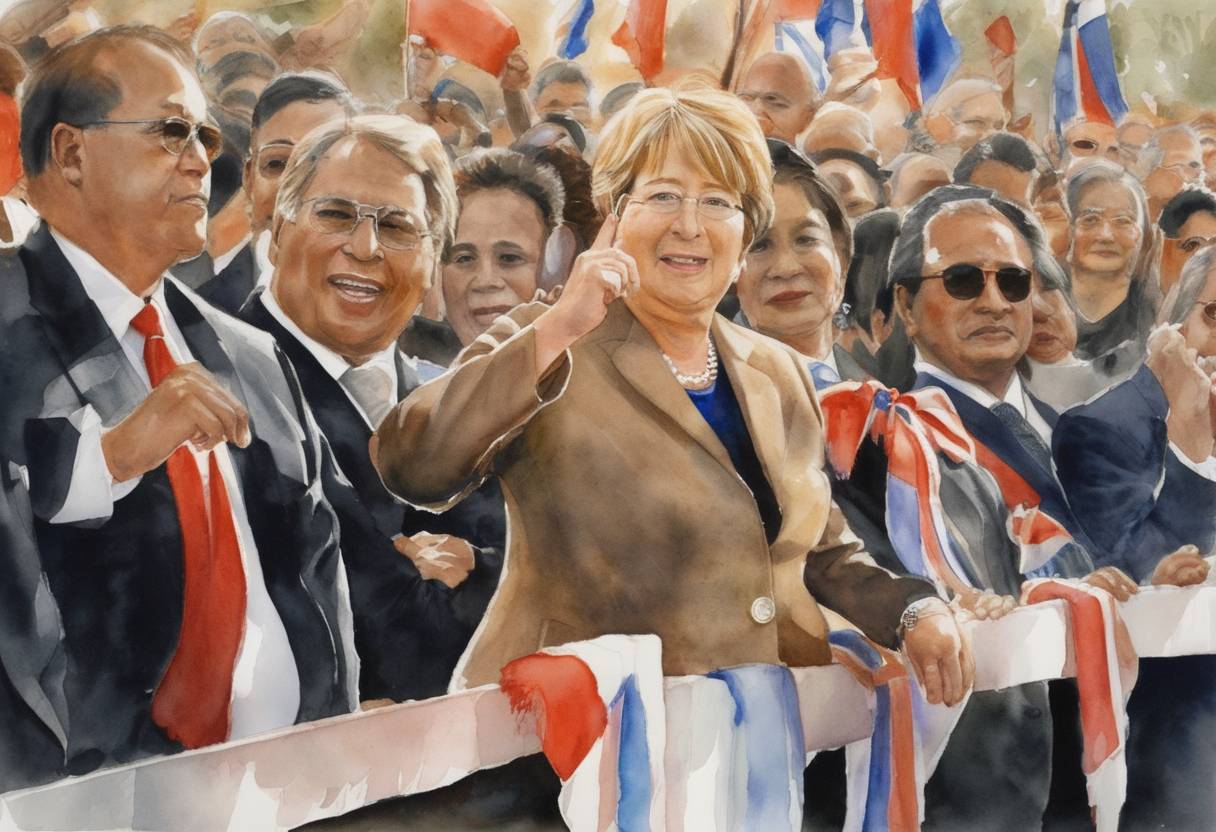
Michelle Bachelet’s Inauguration as President of Chile
On March 11, 2006, Michelle Bachelet was inaugurated as the first female President of Chile, marking a monumental milestone in the nation’s political history. Her ascension to the presidency represented a significant shift in a country with a history of male-dominated leadership, emerging as a symbol of progress for gender equality in Chile and Latin America at large.
Political Context
Michelle Bachelet’s election came after the rule of President Ricardo Lagos, a fellow member of the Socialist Party of Chile. Lagos had served from 2000 to 2006, and his administration was part of the broader Concertación coalition, a center-left political alliance that had governed Chile since the end of Augusto Pinochet’s military dictatorship in 1990. Bachelet’s campaign focused on themes of social justice, economic equality, and the strengthening of social welfare programs.
Campaign and Election
Bachelet’s journey to the presidency concluded in a runoff election held on January 15, 2006, where she secured approximately 53.5% of the vote, defeating Sebastián Piñera, a center-right businessman and candidate. Her victory was viewed as groundbreaking, as she became not only the first woman to hold Chile’s highest office but also one of the few women globally to preside over a nation.
Inauguration Ceremony
The inauguration took place in the National Congress in Valparaíso, attended by a prestigious gathering of world leaders and dignitaries, highlighting Bachelet’s reputable standing on the international stage. In her inaugural address, she emphasized objectives such as enhancing education, healthcare, and pension reforms, while also striving to bridge economic disparities and bolster the rights of women and minorities.
Historical Significance
Bachelet’s presidency symbolized sweeping social change within a traditionally conservative society. As a single mother and agnostic, her leadership style broke with several cultural and political norms. Her tenure has often been analyzed in the context of gender politics, embodying the expanding role of women in governance across the globe.
Legacy and Impact
During her first term (2006-2010), Bachelet accomplished significant reforms, including the introduction of a universal child care system and improvements in the Chilean health care framework. Although limited by constitutional constraints to one term at that time, she later returned for a second non-consecutive term from 2014 to 2018, continuing her work on social programs and economic reforms. Her leadership and achievements continue to serve as an inspiration for women aspiring to leadership roles worldwide.