Reopening of the Suez Canal: March 8, 1957
1957 · Suez, Egypt
Egypt reopened the Suez Canal after the Suez Crisis.
July 26, 1956
Egyptian President Gamal Abdel Nasser nationalized the Suez Canal, leading to the Suez Crisis.
Cairo, Egypt | Egyptian government
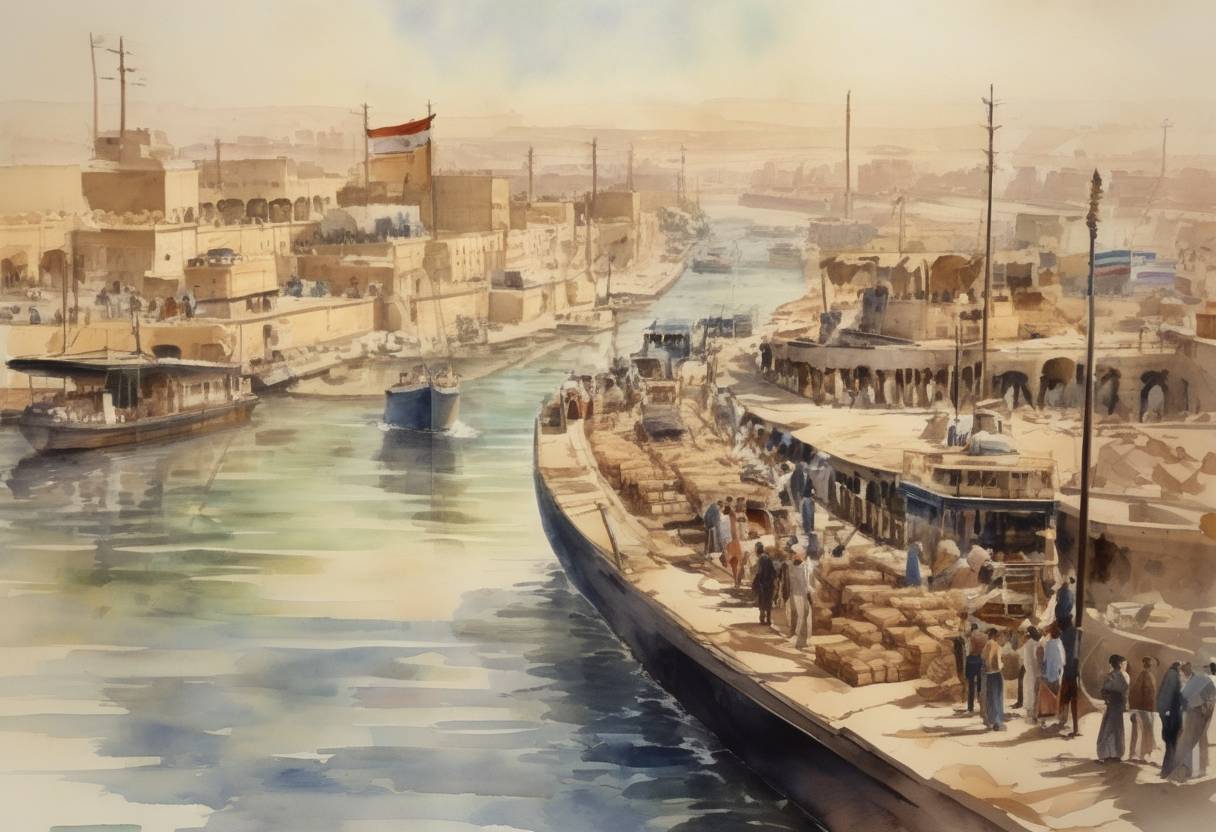
On July 26, 1956, Egyptian President Gamal Abdel Nasser announced the nationalization of the Suez Canal, a pivotal event that precipitated the Suez Crisis. This bold move had significant geopolitical implications and marked a turning point in Middle Eastern and global politics.
The Suez Canal: Completed in 1869, the Suez Canal is a crucial waterway connecting the Mediterranean Sea to the Red Sea, significantly reducing travel time for ships between Europe and Asia. It was initially controlled by the Suez Canal Company, a joint British-French enterprise.
Egyptian Independence and Nasser’s Rise: Egypt gained nominal independence from Britain in 1922, but British influence remained strong. Gamal Abdel Nasser, a charismatic leader, rose to power after the 1952 revolution, which overthrew the monarchy. He became President of Egypt in 1956.
Aswan Dam and Western Relations: Nasser’s plans to modernize Egypt included the construction of the Aswan High Dam. Initially, the United States and Britain offered financial support, but they withdrew their offer in July 1956, partly due to Egypt’s growing ties with the Soviet Union.
Announcement: On July 26, 1956, Nasser announced the nationalization of the Suez Canal during a speech in Alexandria. He declared that the revenues from the canal would fund the Aswan Dam project.
Motivations: Nasser’s decision was driven by a desire to assert Egyptian sovereignty, finance national projects, and retaliate against Western powers for withdrawing financial support.
International Reaction: The nationalization shocked Britain and France, who had significant economic and strategic interests in the canal. Israel also viewed the move with concern, fearing increased Egyptian influence.
Tripartite Invasion: In October 1956, Britain, France, and Israel launched a coordinated military operation to regain control of the canal and remove Nasser from power. Israel invaded the Sinai Peninsula, while British and French forces landed at Port Said.
Global Response: The invasion drew widespread international condemnation. The United States, the Soviet Union, and the United Nations pressured the invading forces to withdraw, fearing escalation into a broader conflict.
Withdrawal and UN Intervention: By March 1957, British, French, and Israeli forces had withdrawn, and a United Nations Emergency Force was deployed to supervise the ceasefire and ensure freedom of navigation.
Nasser’s Prestige: The crisis bolstered Nasser’s standing as a leader of Arab nationalism and a symbol of resistance against colonialism.
Shift in Global Power: The Suez Crisis marked a decline in British and French influence in the Middle East and highlighted the growing importance of the United States and the Soviet Union in global affairs.
Legacy: The nationalization of the Suez Canal remains a significant event in the history of decolonization and the assertion of national sovereignty in the post-World War II era.
Nasser’s actions and the subsequent crisis reshaped the geopolitical landscape, influencing international relations and the balance of power in the Middle East for decades to come.
Source: en.wikipedia.org