Establishment of the Smithsonian Institution
1846 · Washington, D.C., United States
The Smithsonian Institution was established in Washington, D.C., thanks to funds from the estate of British scientist James Smithson.
August 10, 1846
The Smithsonian Institution was established in Washington, D.C., with funds from the estate of James Smithson.
Washington, D.C., United States | Smithsonian Institution
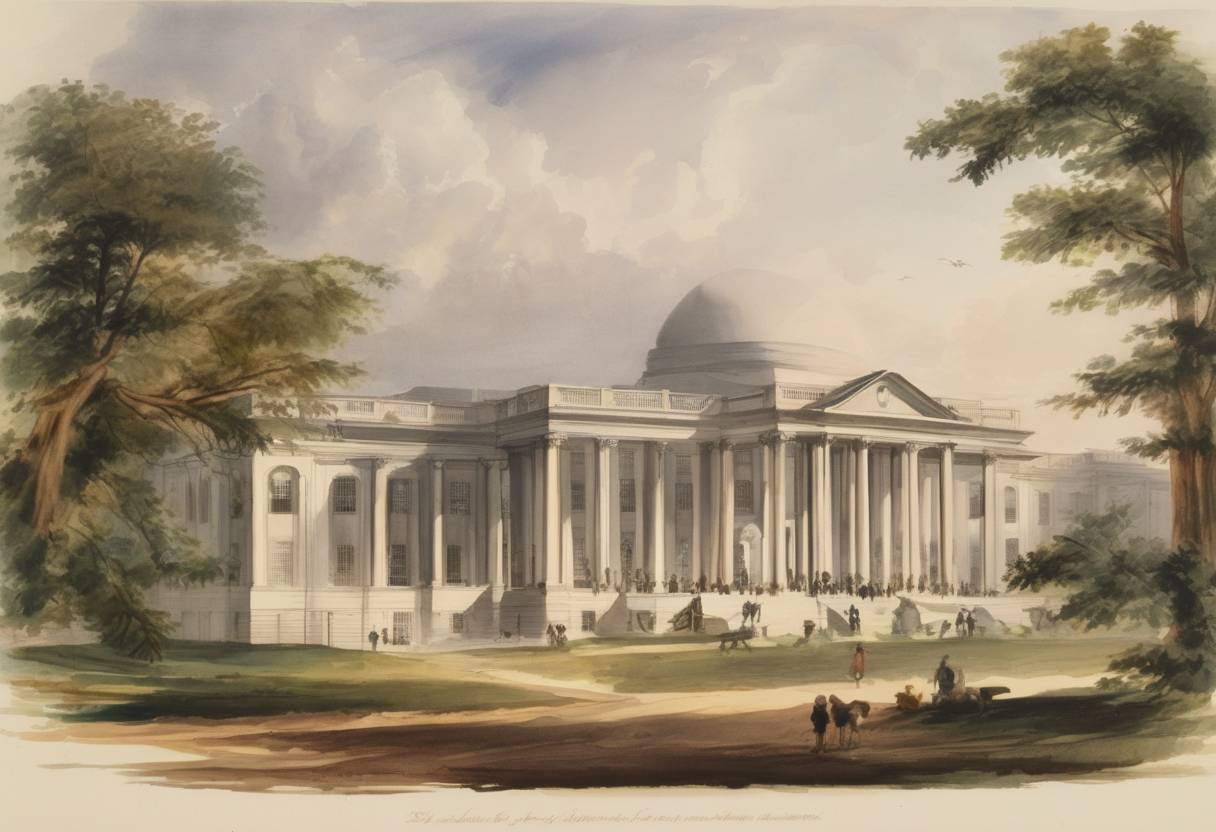
On August 10, 1846, the Smithsonian Institution was officially established in Washington, D.C. This significant event marked the creation of what would become the world’s largest museum, education, and research complex. The institution was founded with funds bequeathed by James Smithson, an English scientist who had never visited the United States.
James Smithson: Born in 1765, Smithson was a British scientist and the illegitimate son of Hugh Percy, 1st Duke of Northumberland. Despite his noble lineage, Smithson pursued a career in science, becoming a respected chemist and mineralogist.
Bequest: Upon his death in 1829, Smithson left his estate to his nephew, but with a peculiar clause. If his nephew died without heirs, the estate would go to the United States to create an “Establishment for the increase and diffusion of knowledge among men.” His nephew died childless in 1835, triggering the clause.
Congressional Action: After receiving the bequest, which amounted to over $500,000, Congress debated how best to use the funds. The discussions were lengthy and complex, reflecting differing opinions on how to fulfill Smithson’s vision.
Smithsonian Institution Act: On August 10, 1846, President James K. Polk signed the act into law, officially establishing the Smithsonian Institution. The act outlined the creation of a Board of Regents and a Secretary to oversee the institution.
Mission: The Smithsonian was founded with the mission to increase and diffuse knowledge. This mission has guided its growth and development into a multifaceted institution encompassing museums, research facilities, and educational programs.
Impact: Over the years, the Smithsonian has become a cornerstone of American cultural and scientific life. It houses millions of artifacts and specimens, conducts cutting-edge research, and provides educational resources to the public.
The establishment of the Smithsonian Institution was a pivotal moment in American history, reflecting a commitment to education and public access to knowledge. Today, it stands as a testament to the vision of James Smithson and the enduring value of his bequest.
The Smithsonian continues to expand its reach and influence, adapting to new challenges and opportunities in the 21st century while remaining true to its foundational mission.
Source: en.wikipedia.org