Coronation of Charles the Fat as Emperor of the Carolingian Empire
881 · Rome, Papal States
Pope John VIII crowns Charles the Fat as Emperor of the Carolingian Empire.
April 5, 0823
Lothair I is crowned King of Italy by Pope Paschal I.
Rome, Papal States | Catholic Church
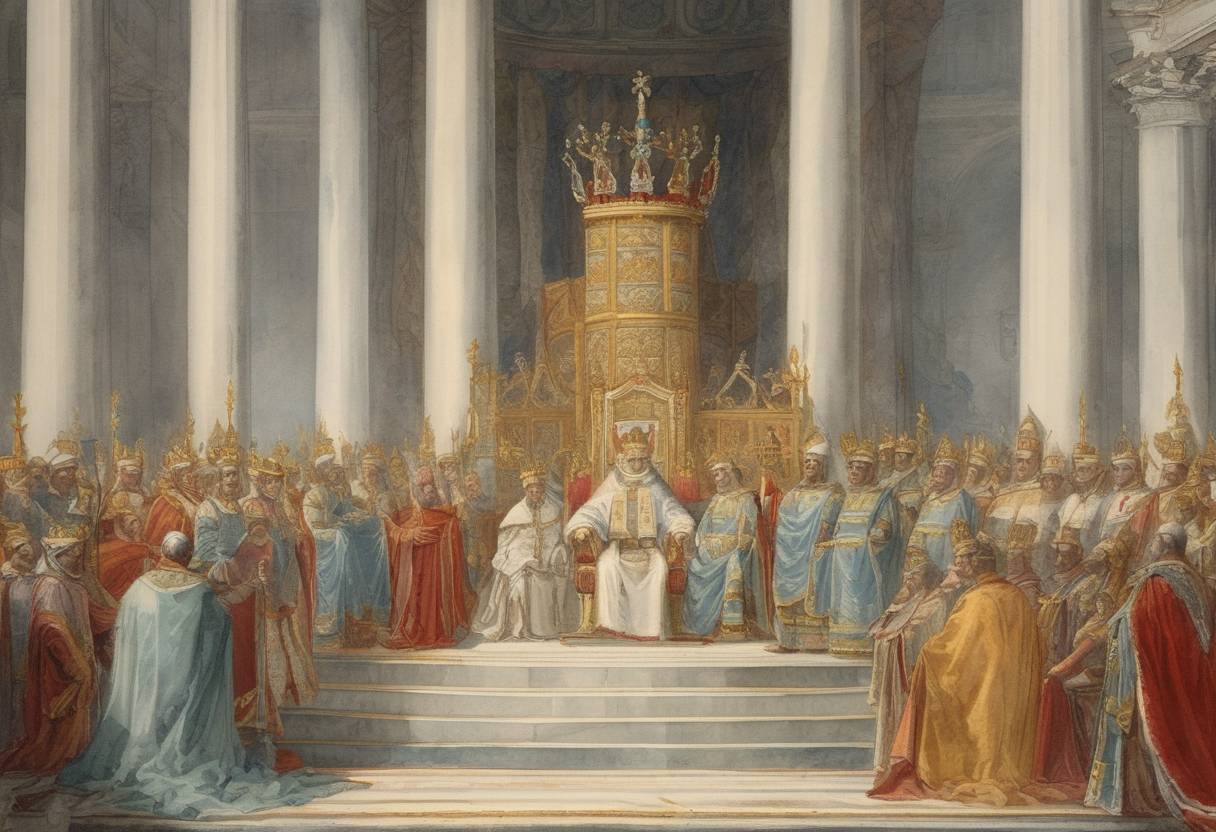
On April 5, 823, Lothair I was crowned King of Italy by Pope Paschal I. This event marked a significant moment in the Carolingian Empire’s history, reflecting the complex interplay between the Frankish monarchy and the papacy.
Lothair I was the eldest son of Louis the Pious, the Emperor of the Carolingian Empire, and grandson of Charlemagne. The Carolingian dynasty was at its height, having expanded its influence across much of Western Europe. The empire was characterized by its efforts to consolidate power and maintain unity among its vast territories.
Lothair’s coronation as King of Italy was part of Louis the Pious’s strategy to secure the succession and manage the empire’s vast territories. By crowning Lothair, Louis aimed to strengthen his son’s position and ensure loyalty among the Italian nobility.
Lothair’s coronation had lasting implications for the Carolingian Empire and its relationship with the papacy:
In summary, the coronation of Lothair I as King of Italy by Pope Paschal I was a pivotal event that illustrated the intertwined nature of religious and political power during the Carolingian era. It set the stage for future developments in the empire and the broader medieval European landscape.
Source: en.wikipedia.org