HMS Pandora: The Sinking on August 30, 1791
1791 · Great Barrier Reef, Australia
HMS Pandora, the ship sent to capture the Bounty mutineers, sinks after running aground on the Great Barrier Reef.
June 14, 1789
Mutiny on the Bounty survivors including Captain William Bligh reach Timor after a nearly 4,000-mile journey in an open boat.
Kupang, Indonesia
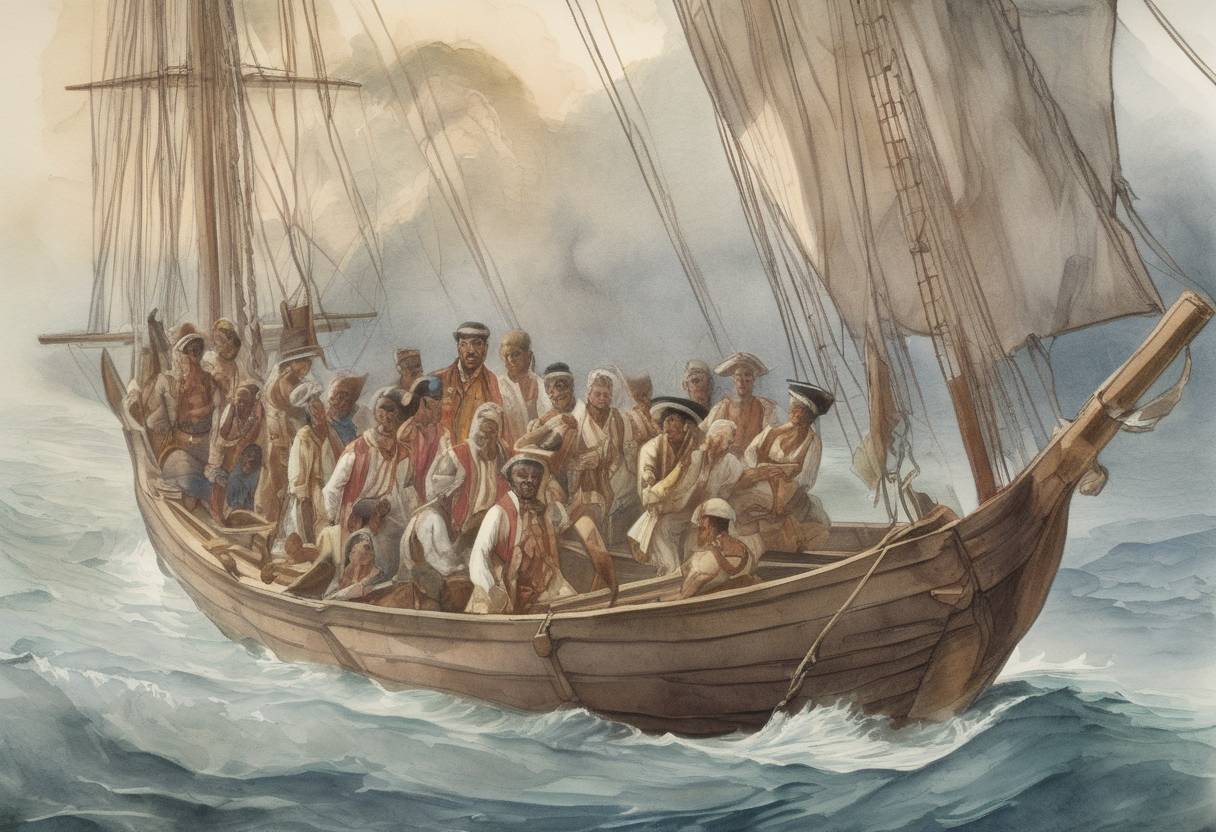
On June 14, 1789, Captain William Bligh and 18 loyal crew members reached the island of Timor after an extraordinary and perilous journey of nearly 4,000 miles in an open boat. This event followed the infamous mutiny on the HMS Bounty, which had occurred on April 28, 1789.
The HMS Bounty, under the command of Lieutenant William Bligh, had been tasked with transporting breadfruit plants from Tahiti to the West Indies. The mission aimed to introduce breadfruit as a cheap food source for enslaved people in the Caribbean. However, the voyage was fraught with challenges, including harsh weather and tensions between Bligh and his crew.
The mutiny was led by Fletcher Christian, Bligh’s acting lieutenant, who, along with a group of disaffected crew members, seized control of the ship. Bligh and 18 loyalists were set adrift in a small, overcrowded launch with minimal supplies.
Bligh’s navigation skills were put to the ultimate test as he led his men on a harrowing journey across the open sea. The small boat was only 23 feet long, and the crew had to endure extreme conditions, including storms, limited rations, and the constant threat of capsizing.
After 47 grueling days at sea, Bligh and his men reached the Dutch settlement of Kupang on the island of Timor. Their arrival marked the end of one of the most remarkable feats of survival and navigation in maritime history.
The journey of Bligh and his men is a testament to the resilience and determination of individuals in the face of adversity. It also serves as a pivotal moment in naval history, illustrating the complexities of leadership and the harsh realities of life at sea during the 18th century.
Bligh’s survival and the eventual capture of many of the mutineers underscored the British Navy’s reach and determination to maintain order and discipline within its ranks.
Source: en.wikipedia.org