2021 · Melbourne, Australia
A powerful 6.9-magnitude earthquake struck near the city of Melbourne, Australia, causing buildings to shake and damage to infrastructure. It was one of the largest earthquakes to hit the region in recent history.
August 14, 2021
A magnitude 7.2 earthquake struck Haiti, causing widespread destruction and resulting in over 2,200 deaths.
Les Cayes, Haiti | Haitian government
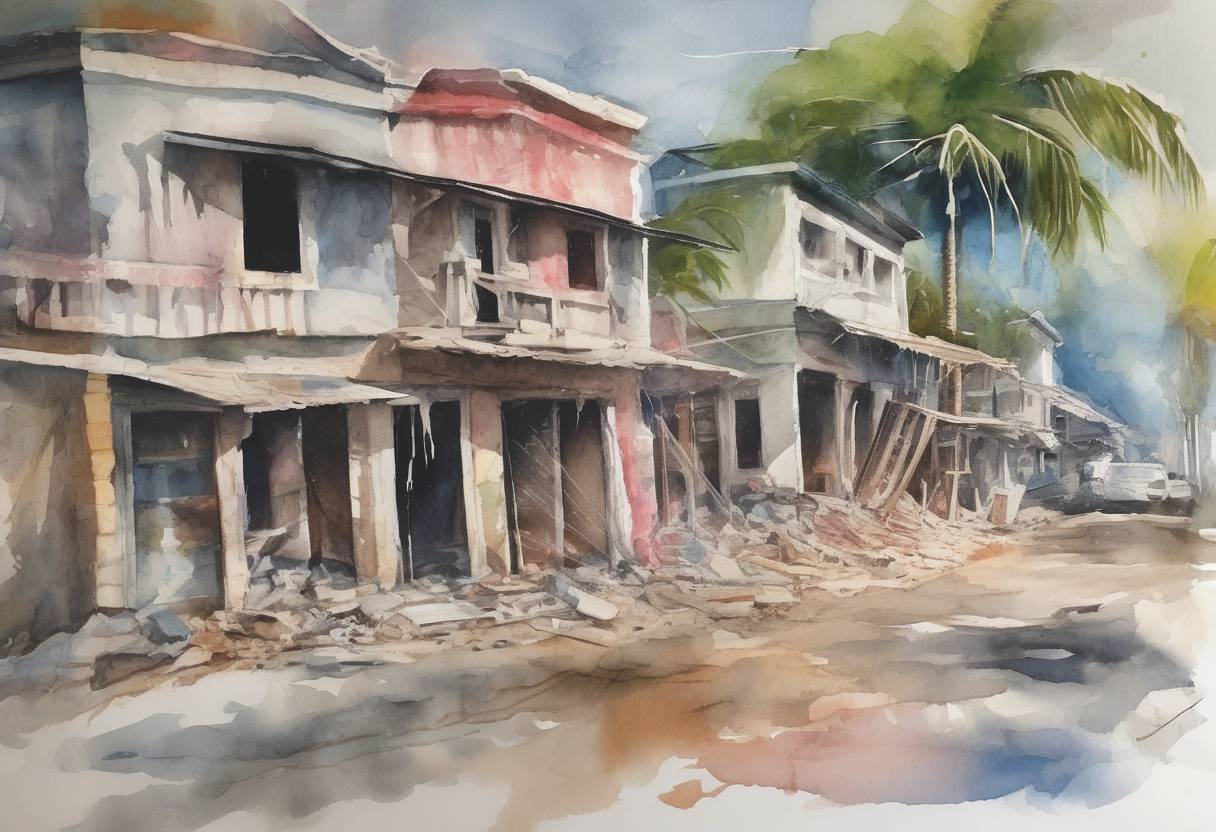
On August 14, 2021, a devastating earthquake with a magnitude of 7.2 struck the Caribbean nation of Haiti, causing widespread destruction and significant loss of life. This natural disaster occurred at 8:29 a.m. local time, with its epicenter located approximately 12 kilometers (7.5 miles) northeast of Saint-Louis-du-Sud, a town in the southwestern part of the country.
Haiti, situated on the island of Hispaniola, is no stranger to seismic activity due to its location along the boundary of the Caribbean and North American tectonic plates. The country had previously experienced a catastrophic earthquake in 2010, which resulted in massive casualties and destruction, particularly in the capital city of Port-au-Prince. The 2021 earthquake struck as Haiti was still grappling with political instability and the ongoing challenges of rebuilding from the 2010 disaster.
Magnitude and Depth: The earthquake registered a magnitude of 7.2 and occurred at a depth of approximately 10 kilometers (6.2 miles), making it a shallow earthquake with the potential for significant surface impact.
Affected Areas: The southwestern region of Haiti, including the departments of Sud, Grand’Anse, and Nippes, was severely affected. The cities of Les Cayes and Jérémie experienced extensive damage to infrastructure, homes, and public buildings.
Casualties and Damage: The earthquake resulted in over 2,200 confirmed deaths and injured more than 12,000 people. Thousands of buildings were destroyed or severely damaged, leaving tens of thousands of people homeless.
Rescue and Relief Efforts: In the immediate aftermath, local authorities, international organizations, and neighboring countries mobilized to provide emergency assistance. Rescue operations were hampered by damaged roads and infrastructure, complicating efforts to reach affected areas.
International Aid: The international community, including the United Nations, the United States, and various non-governmental organizations, pledged support and sent aid in the form of medical supplies, food, water, and temporary shelter.
Challenges: The response efforts faced significant challenges, including logistical difficulties, political instability, and the ongoing COVID-19 pandemic, which complicated the delivery of aid and the protection of vulnerable populations.
The 2021 earthquake underscored the vulnerability of Haiti to natural disasters and highlighted the ongoing need for sustainable development and disaster preparedness in the region. It also drew attention to the resilience of the Haitian people, who have repeatedly faced and overcome adversity.
In the broader context, the earthquake served as a reminder of the importance of international cooperation and the need for long-term strategies to address the underlying socio-economic issues that exacerbate the impact of such disasters.
The 2021 Haiti earthquake remains a poignant chapter in the country’s history, reflecting both the challenges and the enduring spirit of its people.
Source: en.wikipedia.org