The Naming of the United States: September 9, 1776
1776 · Philadelphia, United States
The Continental Congress officially named its new union of sovereign states the 'United States'.
August 2, 1776
The United States Declaration of Independence was signed by most of the Continental Congress members, marking a formal assertion of independence from British rule.
Philadelphia, United States | Continental Congress
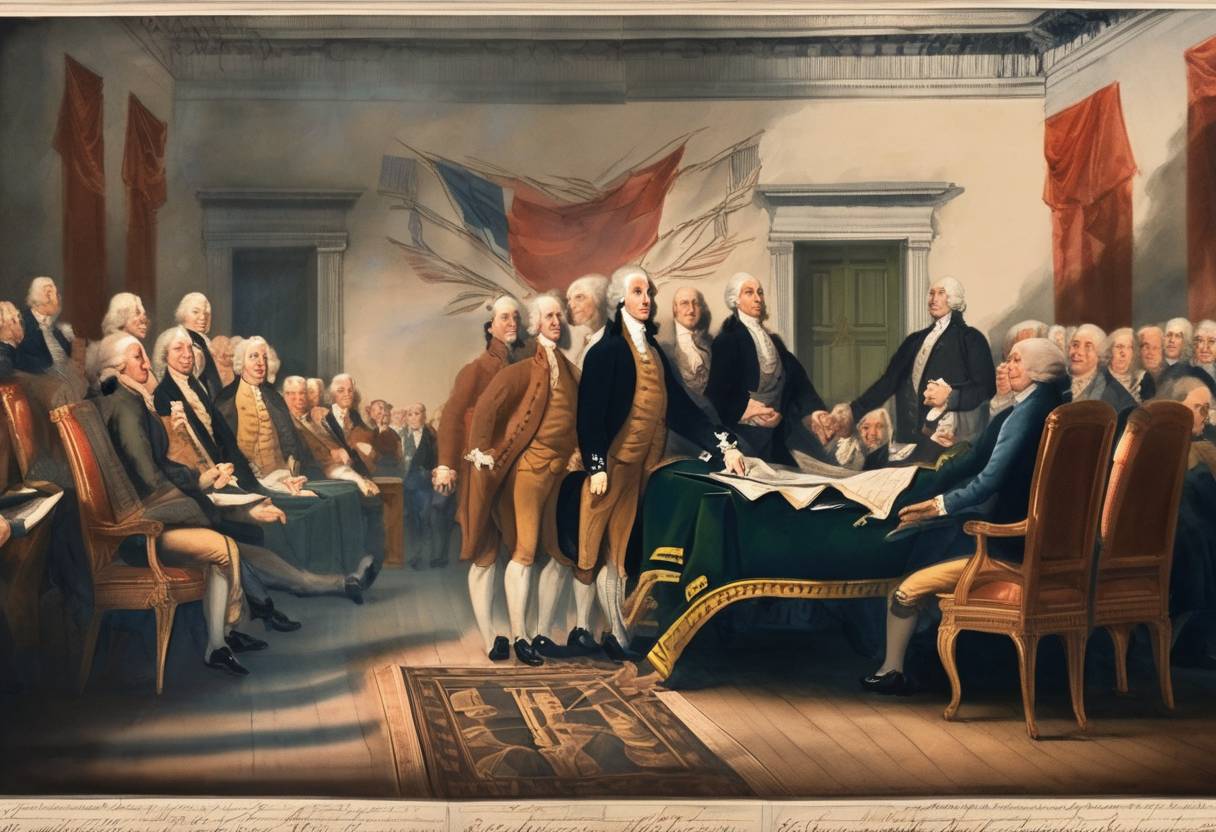
The Declaration of Independence is one of the most pivotal documents in American history, marking the formal assertion of the thirteen American colonies’ independence from British rule. The journey to independence was fueled by growing tensions between the colonies and the British government, primarily over issues such as taxation without representation, the imposition of British laws, and the lack of colonial input in governance.
The Continental Congress, a body representing the colonies, convened to address these grievances. On July 2, 1776, the Congress voted in favor of independence, and two days later, on July 4, the Declaration of Independence, primarily authored by Thomas Jefferson, was formally adopted.
While the Declaration was adopted on July 4, 1776, the actual signing by most members of the Continental Congress took place on August 2, 1776. This event was held in the Pennsylvania State House, now known as Independence Hall, in Philadelphia.
Signatories: The document was signed by 56 delegates from the thirteen colonies. Notable signatories included John Hancock, whose prominent signature became iconic, Benjamin Franklin, John Adams, and Thomas Jefferson.
Purpose: The signing was a formal endorsement of the colonies’ decision to break away from British rule. It was a bold and risky move, as the signatories were effectively committing an act of treason against the British Crown.
The signing of the Declaration of Independence was a crucial step in the American Revolutionary War, which had already begun in 1775. It unified the colonies under a common cause and provided a clear statement of their intentions to the world.
International Impact: The Declaration served as an inspiration for other nations and movements seeking independence and democratic governance. It articulated principles of individual liberty and government by consent, which resonated globally.
War Effort: The formal declaration bolstered the American war effort by solidifying support among the colonies and seeking assistance from foreign allies, notably France.
Legacy: The Declaration of Independence remains a foundational document of American political philosophy and identity. Its assertion that “all men are created equal” has been a guiding principle in the ongoing struggle for civil rights and equality.
The signing of the Declaration of Independence on August 2, 1776, was a defining moment in American history. It marked the colonies’ commitment to independence and set the stage for the United States’ emergence as a sovereign nation. The document’s enduring legacy continues to influence democratic movements worldwide.
Source: en.wikipedia.org